Eski Pano
There was a time when morning began not inside the house, but out in the street. Before the sun had fully settled on the walls, the steam of tea rose from the kitchen window while a ferry whistle from a distant pier announced the waking of the neighborhood. Those who stepped outside at that hour wore habit more than haste; women slipped string bags over their wrists, clerks fastened jacket buttons, students tucked their notebooks under one arm and joined the pavement. Yet the detail that completed the whole scene was often the smell of simit reaching all the way to the ferry. Warm rings of bread wrapped in paper mingled with the sea wind and left behind not merely breakfast, but a shared memory. The mornings that still feel vivid enough to make people open a window are remembered with ferries partly for this reason.
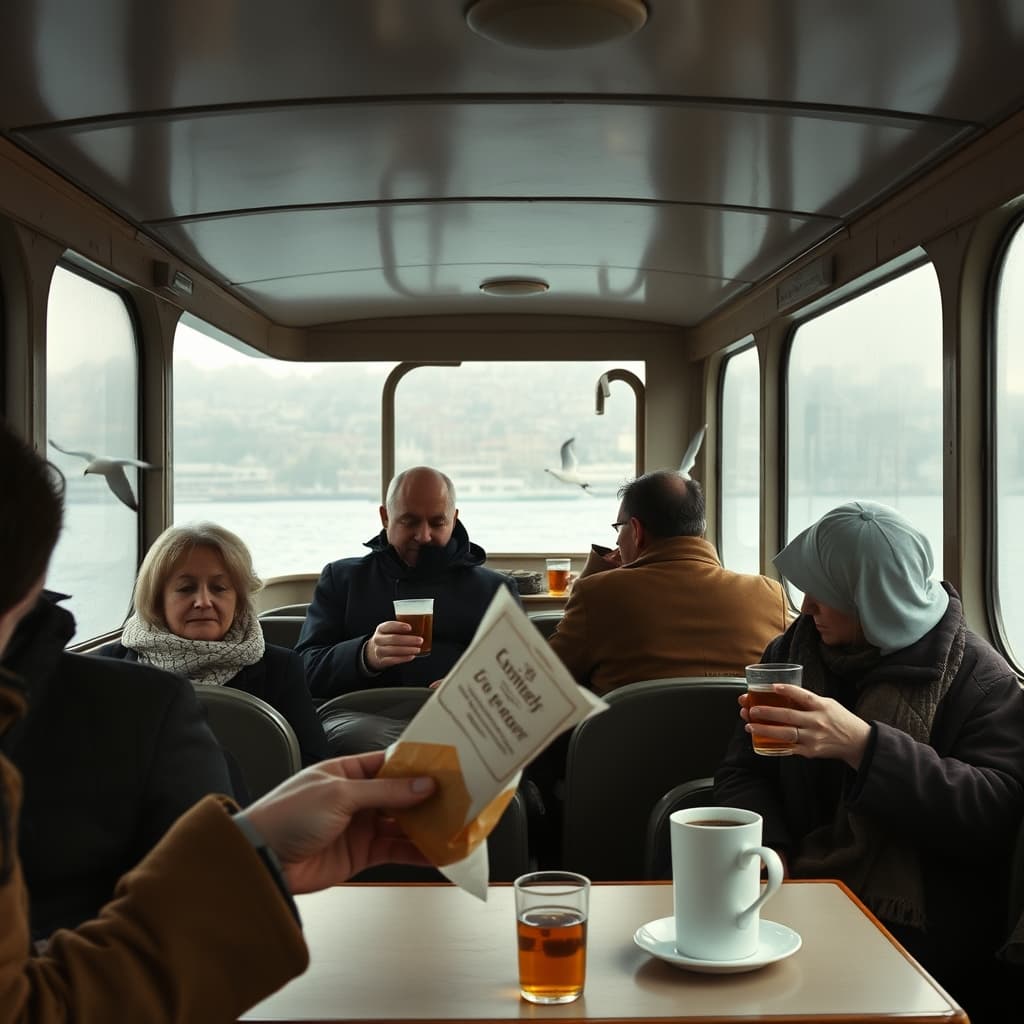
Seen through the trace of time, the ferry was not only a means of transport in old city life, but a moving square that gave the day its first lesson in manners. On the stone steps descending to the pier, people carried the same urgency, yet once aboard they slowed in an almost mysterious way and became more aware of one another. The cries of young simit sellers, the delicate clink of tea glasses, the salty scent rising from the damp wooden deck, and the quiet of passengers with folded newspapers together established the rhythm of the city. The smell of simit was the warmest part of that rhythm, because it did more than quiet hunger; it completed the emotional register of a morning lived in common. Sesame seeds falling beneath the benches, small pieces tossed to seagulls, and the steam of tea mixing with the bread’s aroma formed an everyday poetry of urban life.
Another reason these mornings remain so alive in memory is that the ferry carried not only people between two shores, but also the spirit of the districts themselves. While crossing from one side to the other, passengers transported the scents of their homes, the sounds of their streets, and the habits of their own quarters. Simit was one of the simplest yet strongest signs of that movement. Eating a ring of bread bought from the neighborhood bakery while aboard the ferry turned food into a circulating memory of the city. When the windows fogged over, someone would wipe a small round opening with the palm of a hand and, while looking at the water, take another bite. Children watched the seagulls, while adults retreated briefly into themselves. What touches us today is not only the objects of that world, but the common morning feeling those objects created.
In old urban life, those ferry rides in which the smell of simit mingled with the day also acted as quiet teachers of social conduct. People learned to share a seat, to open a window with regard for the wind and for others, to lower their voices, and to meet the chill of morning with a certain respect. For that reason, what remains vivid in memory is not only the sea view, but the way a city once lived its mornings together. The coolness we associate with mornings that make us open a window may actually be the lingering discipline of those earlier days. As the ferry moved away and the pier grew smaller, the smell of simit yielded to the salt of the air, yet it remained on a person throughout the day like an invisible mark left by the neighborhood. That is why, even after many years, some mornings call sea, simit, and ferry back to mind all at once.
Voyages in Old City Life When the Smell of Simit Mixed with the Day on Ferries: Why Do Those Mornings Still Feel Vivid Enough to Make Us Open the Window?