Eski Pano
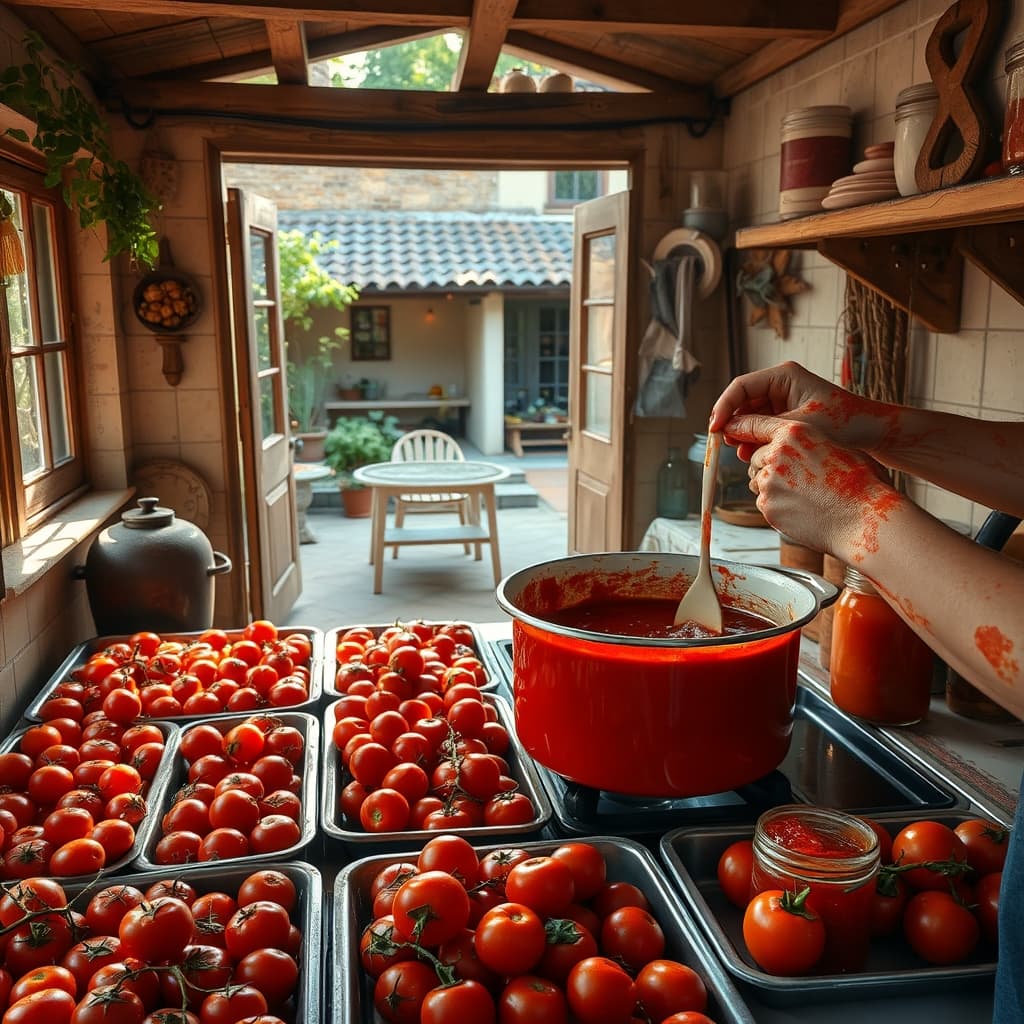
There was a time when making tomato paste was not a single kitchen task, but a seasonal mobilization that changed the rhythm of the whole house. As the end of summer approached, the tomatoes spread across the courtyard, balcony, or wide kitchen counter altered the atmosphere before the work even began. Crates were opened, knives were sharpened, cloths were prepared, and large pots were brought down from their shelves. The dense smell of tomato skin, seed, crushed flesh, and salt sank not only into the palate, but into walls, aprons, hands, and memory. For that reason, the days marked by tomato paste are remembered not merely as food preparation, but as a stretch of time that revealed the patience, order, and shared labor shaping the character of the home kitchen.
From the perspective of taste memory, what made tomato-paste days so defining was the way they displayed the kitchen’s character in full view. Tomato paste is not something made quickly and forgotten. Washing, sorting, chopping, boiling, straining, cooking again, and filling jars all made the household’s culinary order and division of labor visible. Which pot would be used, when the salt would be added, whether the mixture would rest in the sun, whether the stirring spoon would be wood or metal, each detail spoke of a household’s own method. Some kitchens preferred a denser paste, some left it brighter red, some removed every seed, while others accepted a rougher texture as natural. The character of the home kitchen lived precisely in the sum of such small choices.
Tomato-paste days were also among the clearest scenes of cooperation within the family. One person washed tomatoes, another removed skins, an elder stood over the pot judging thickness, and a child carried jar lids from one side of the room to the other. On such days the kitchen ceased to be a solitary space. Conversations moved alongside the work: how quickly the summer had passed, what should be prepared for winter, how well last year’s paste had lasted. While the red color stained hands, the kitchen became not only a place producing food, but a place storing family memory. That is why, when people look at a jar of homemade tomato paste today, they remember not only the taste, but also the hurry of those days, the red stains, and the talk surrounding the pot.
Its power to describe the character of the home kitchen also lies in the idea of preservation. Tomato paste is a preparation that carries the labor of today into tomorrow’s meal. Tomatoes boiled under the summer sun cross into winter through soups, stews, rice dishes, and sauces, building an invisible bridge between seasons. In this way, the kitchen becomes not merely a place that feeds the present, but one that thinks ahead. Orderly shelves, labeled jars, and surfaces protected with a layer of olive oil reveal the prudent and patient side of the household. Making tomato paste is partly an education in preparing for what lies ahead. That discipline adds foresight to the kitchen’s generosity.
Today, when people remember the days marked by tomato paste, they think not only of flavor, but also of a household’s working style, patience, and distinctive spirit. What thickened in the pot was not only tomato, but also family order, seasonal knowledge, and kitchen memory. That is exactly why those days tell the character of the home kitchen so clearly. The red stains may wash away, yet the scent and method of those days remain. Some foods begin telling the story of a house long before they reach the table, and tomato paste stands among the clearest of them.
The Days Marked by Tomato Paste: How Do They Tell the Character of the Home Kitchen?