 Eski Pano
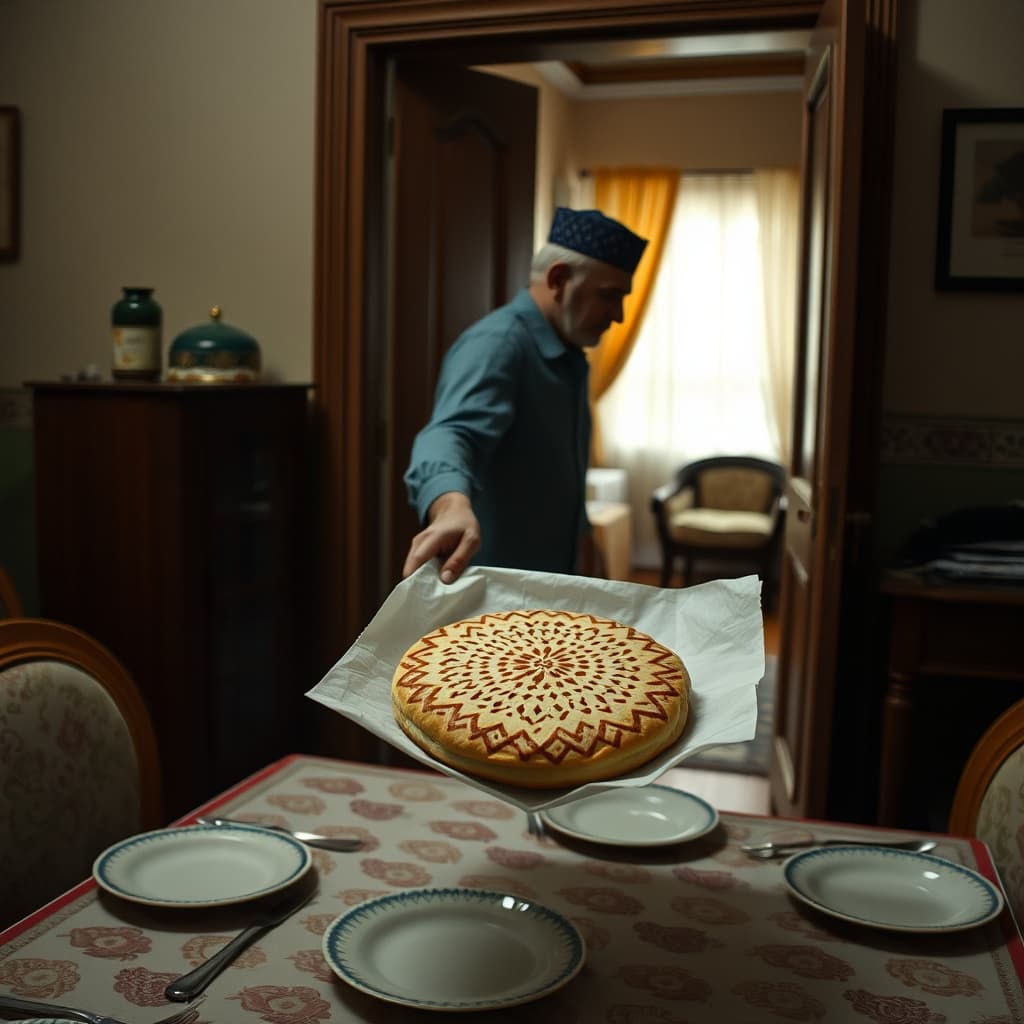
Fresh Ramadan pide could be recognised before the person carrying it reached the table. The front door opened, someone entered with the bread, and another person noticed its aroma from elsewhere in the home. The loaf’s arrival became a small household event without needing to be announced in words.
That moment belongs to the bread’s journey within the home, rather than to the bakery queue or a complete account of making dough. It connects an outside errand to a meal already being arranged. A family might remember the smell as filling every room, although the actual first encounter depended on where each person stood.
One Arrival, Several Positions in the Home
The person carrying the pide experienced its aroma before crossing the threshold. Someone in the kitchen might notice it while finishing another dish; someone at the table might notice only when it was set down. The same loaf reached people at different points in their work and waiting.
This difference explains how a shared memory can contain several beginnings. For one person the scene starts at the door, for another beside a plate. There is no need to select a single viewpoint as the whole household’s experience. Following the bread between them gives the familiar smell a route rather than treating it as an instant atmosphere.
The Bread Had a Recognisable Surface
Ramadan pide’s patterned top and broad shape could confirm what the aroma had suggested. Sesame or nigella might be present, depending on the bakery’s preparation. Variations should remain visible in the account rather than be folded into one supposedly universal loaf.
Its appearance also made the arrival different from an ordinary bag brought home. Once visible, the pide could draw attention away from another task towards the table. A person might make space for it or move a plate. These are small actions, but they show how one food entered a meal that already contained other demands.
Aroma Did Not Mean Everyone Was Ready
Recognising the bread could sharpen anticipation while preparations continued. Somebody might still be setting places, serving a dish or helping another family member. The fresh loaf did not complete those tasks simply by arriving. Its welcome and the remaining work could coexist.
Ramadan is the cultural setting of this bread, not a consequence of the article’s publication date. Households observe and organise the month differently, and not every person at a meal necessarily follows the same routine. A particular account should describe its own table without speaking for all families or all ways of observing Ramadan.
A Shared Loaf Became Separate Portions
At the table, the whole bread eventually became pieces. The patterned surface that had first identified the loaf now appeared in separate portions, with different amounts of edge and centre. A diner’s memory of texture might concern one of those pieces rather than the bread as it looked on arrival.
The aroma was therefore only one part of recognition. The view of the top, the place made on the table and the first portion formed a sequence. A later encounter with fresh pide could bring back one part of that sequence without restoring the whole room or the people who once occupied it.
What survives in the memory of a home filled with pide’s smell is the connection between its spaces. The doorstep, kitchen and table briefly shared the same arriving bread, even as each person met it differently. The loaf gave an errand a visible conclusion and the waiting meal a new centre. Its familiar aroma announced that transition before the bread itself was in everyone’s view.