 Eski Pano
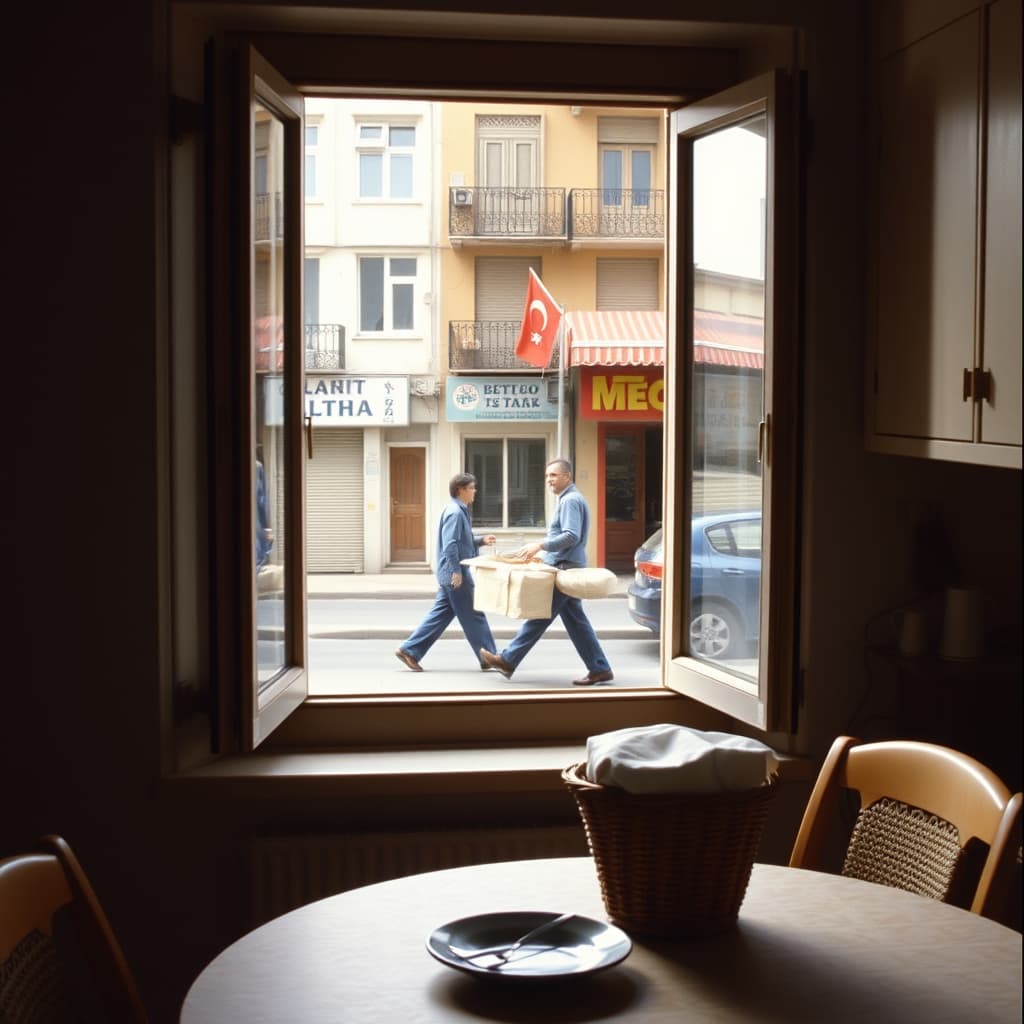
Inside a home, the simit seller could arrive as a voice before appearing as a person. The call travelled along the street while the listener remained at the breakfast table or in another room. Opening the window came afterwards. Recognition began through a sound associated with somebody moving outside.
This order gave the morning scene its particular warmth. The household did not have to be waiting at a shop counter to encounter the seller. A familiar call could enter a domestic routine already underway and offer a small decision: continue with breakfast as it was, or see whether there was time to buy simit.
A Voice Located Someone beyond the Wall
The call announced a product, but its rhythm could also identify a seller to regular listeners. Recognition depended on repeated encounters, not on every vendor having the same phrase or melody. A household might know the sound without knowing much about the person’s life beyond the route.
That limited familiarity is important. Hearing the seller often could create a sense of presence without establishing friendship. The warmth of the memory need not be enlarged into an intimate relationship that was never there. An ordinary voice, expected and recognised, could be enough to make the street feel inhabited.
The Window Changed Listening into Looking
A listener who opened the window could discover that the vendor was farther along than expected or obscured from view. Sound and sight did not necessarily arrive together. The building’s position, the street and the listener’s own room shaped what could be seen.
Someone then had to decide whether to go out, ask another household member or let the seller pass. A call did not produce a purchase every time. The home might already have bread, somebody might still be getting ready, or the morning might be moving at another pace. The exchange began with the possibility of buying, not its certainty.
A Quieter Morning Could Make the Call More Noticeable
On a morning without the usual rush, the same voice could draw more attention. A person who normally left early might finally hear the part of the route experienced by someone who stayed at home. This difference belongs to individual schedules; it should not be turned into a claim that every holiday morning had the same seller or sound.
Other residents could experience the call differently. Someone sleeping after work might prefer quiet, and a familiar sound could still be an interruption. The remembered scene was warm from one window, not necessarily from every window in the building. Neighbourhood culture includes these uneven experiences of a shared street.
The Seller Continued beyond the Listener’s Morning
Once the voice moved away, the household returned to its own tasks. The seller continued a working route. Remembering that separation keeps the scene from becoming a decorative sound with no person behind it. What a resident heard briefly could be part of someone else’s repeated effort over a much longer morning.
A useful recollection can therefore specify where the listener was, whether they saw the seller and whether a purchase followed. Those details give the call a position in actual domestic life. The scene remains recognisable without a fabricated conversation: a voice outside, someone pausing inside, and a window opened to connect the two for a moment.