 Eski Pano
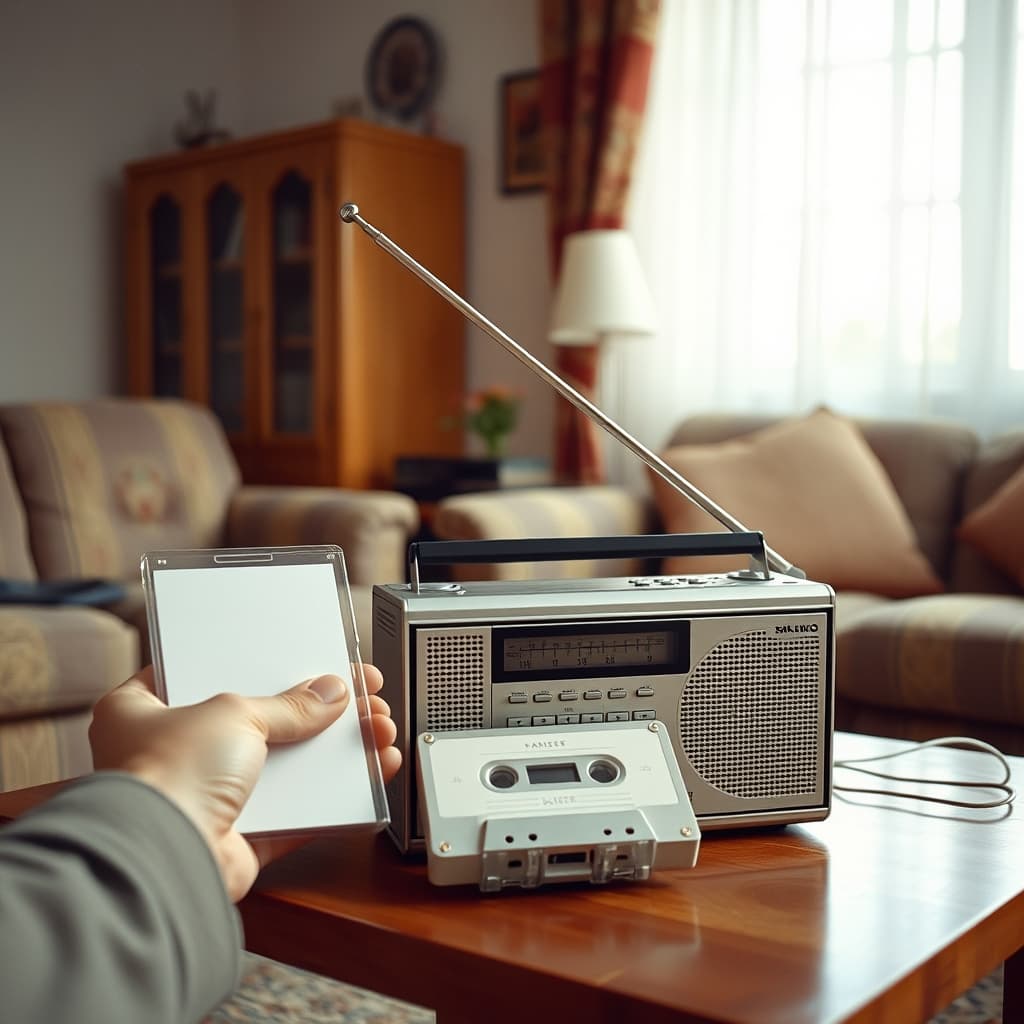
On a radio-cassette player, the listener could move between two different relationships with music. A song arriving on the radio belonged to a programme already underway. A cassette offered a sequence that could be chosen again. The same household machine joined the surprise of hearing something now to the possibility of returning to something known.
The antenna belonged to the radio part of this experience, not to cassette playback. That distinction keeps the remembered ritual clear. Adjusting reception and choosing a tape were different tasks, even when they took place at the same table. Their connection was the listener, who moved from following an outside schedule to making a decision within the room.
The Broadcast Arrived on Its Own Terms
A listener could turn on the radio midway through a song. Its beginning had already passed, and the next item would be decided elsewhere. An announcement might provide a name or lead directly into another programme. The person in the room had entered a flow rather than opened a complete object.
This gave attention a particular urgency. Someone could ask others to listen because the passage was happening at that moment. It might be missed by a person in another room. Improving reception could make a voice clearer, but it did not give the household control over when the station moved on.
A Cassette Promised a Return, Not Instant Access
A familiar tape changed that relationship. It could be selected from the household collection, placed in the player and heard again. The chosen passage still needed finding: the tape might be at a different point, and the desired song might not be the first one on the side.
Searching took patience and could overshoot. The listener remembered a sequence rather than simply tapping a named track. A song before the desired one became a useful landmark; the end of a side imposed another pause. Returning was possible, but the route back remained audible and physical.
The Programme and the Tape Had Different Company
A broadcast could gather whoever happened to be nearby when a song arrived. A cassette could be chosen with particular companions in mind. Someone might take it out because a visitor knew the music, or because the household wanted to hear a favourite sequence again. These are different ways for listening to become shared.
Neither guaranteed agreement. One person’s welcome replay could be another’s repeated interruption, and a spontaneous broadcast could arrive while somebody needed quiet. The player’s place in household life included these competing uses of the room. A ritual of listening was also a negotiation over attention.
Remembering the Choice between the Two
In a later account, it is worth asking whether the remembered music came from a station or from a tape. A melody alone may not settle the question. Remembering an announcement, the opening of the cassette compartment or someone turning the tape can locate the experience more accurately.
The radio-cassette player mattered because the contrast was available without leaving the room. One setting invited the household into a programme it did not direct; another brought out an object whose sequence it could revisit. The listening ritual lay partly in deciding between them: whether to wait for what came next, or take a familiar cassette from its case and make time for a return.