 Eski Pano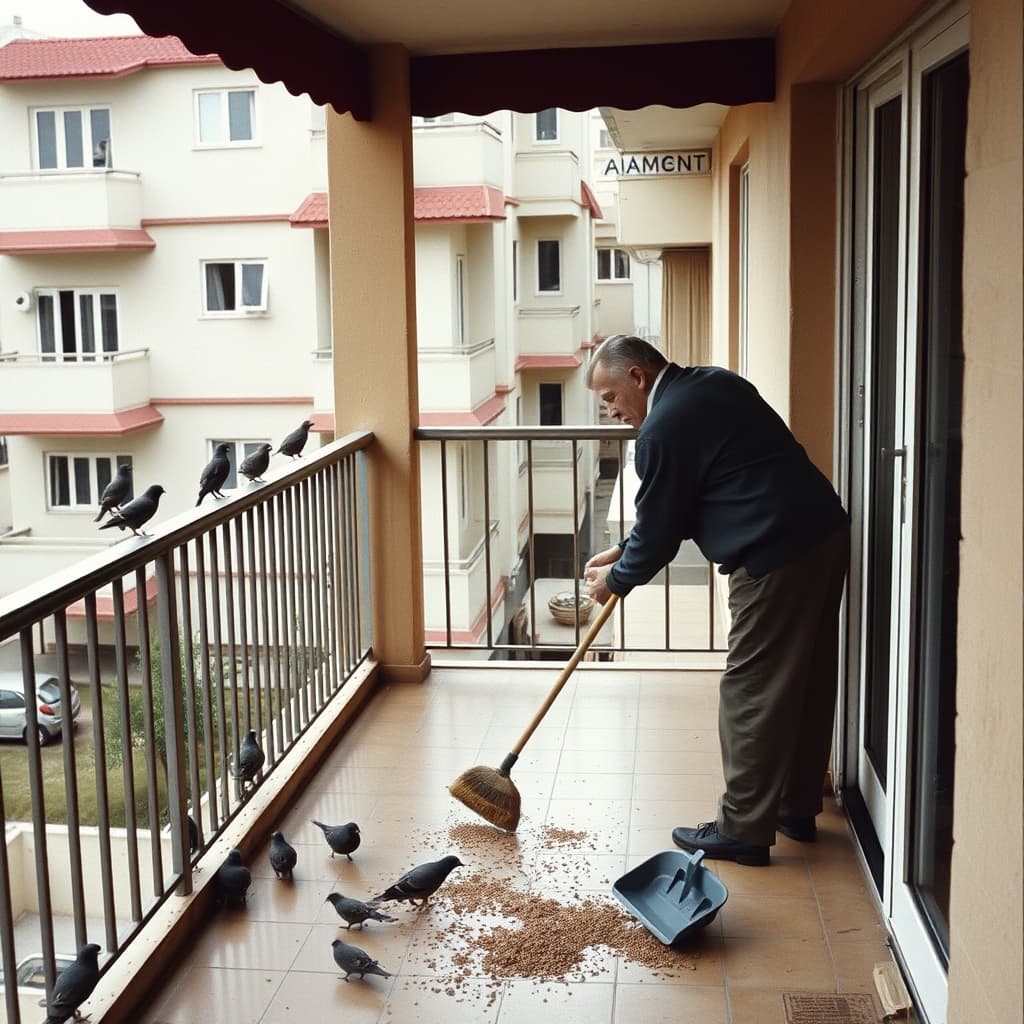
The neighbour who set aside stale bread for birds was easy to remember through a single gesture: a hand carrying crumbs towards the balcony. Less visible was the person who later dealt with what remained. A household habit could reach beyond the person performing it, into the balcony below, the courtyard or the shared pavement.
Looking at that wider setting does not require dismissing the affection behind the memory. It makes the neighbourhood part of the account. The bread belonged to one kitchen, but the space outside did not necessarily belong to that kitchen alone. Care, thrift, inconvenience and negotiation could occupy the same small patch of city.
The Bread Crossed a Household Boundary
Separating a leftover piece from the rest of the kitchen’s food gave it an intended destination. Someone remembered to keep it, and someone carried it outside. In a family recollection, that sequence might stand for a refusal to throw things away. The meaning came from the household’s own treatment of food.
Once outside, the act became visible to other people. A neighbour could recognise the routine from a window or notice it while passing through the courtyard. The gesture was no longer wholly private. It formed part of the recurring view of the building, alongside washing hung out, shutters opened and people returning home.
The View from Below Was Different
A balcony seen from inside was a convenient edge of the home. Seen from below, it was a place above another person’s belongings or route. That difference in position could change how the same habit was understood. What looked like a small amount to one person might arrive where someone else had just cleaned.
A remembered complaint need not be reduced to coldness towards animals. The neighbour below could be defending an ordinary use of shared space. Equally, the person setting bread aside might not have realised that the act reached anyone else. Older neighbourhood life included misunderstandings as well as easy cooperation.
Cleanup Was Part of the Routine
After the birds left, someone might sweep the surface, gather remnants or move a vessel. Who did this work is a useful question in its own right. The person associated with the generous gesture was not necessarily the person responsible for the balcony throughout the day.
This distinction changes the account from a portrait of one kind neighbour into a household story. A child could remember watching birds while an adult remembered repeatedly cleaning. Neither recollection cancels the other. They describe different parts of an activity that had become familiar enough for its work to disappear from view.
A Habit Could Be Discussed without Being Repeated
This is a record of a remembered practice, not a recommendation to feed birds bread. Decisions about present-day feeding belong with current local guidance rather than with the authority of a fond recollection. It is possible to preserve the intention behind a custom without presenting the original action as a rule for today.
The most revealing neighbourhood account might be the conversation that followed a disagreement. Did someone explain where the remnants landed? Was the routine changed? Did the household stop, move or simply continue? An actual recollection can answer those questions; nostalgia alone cannot.
Saving bread for birds remains part of old city memory because it linked domestic leftovers with life outside the window. Including the neighbour below and the person who cleaned gives that link its full social shape. The balcony was not merely a stage for kindness. It was a boundary where one household’s intentions met another household’s day.