 Eski Pano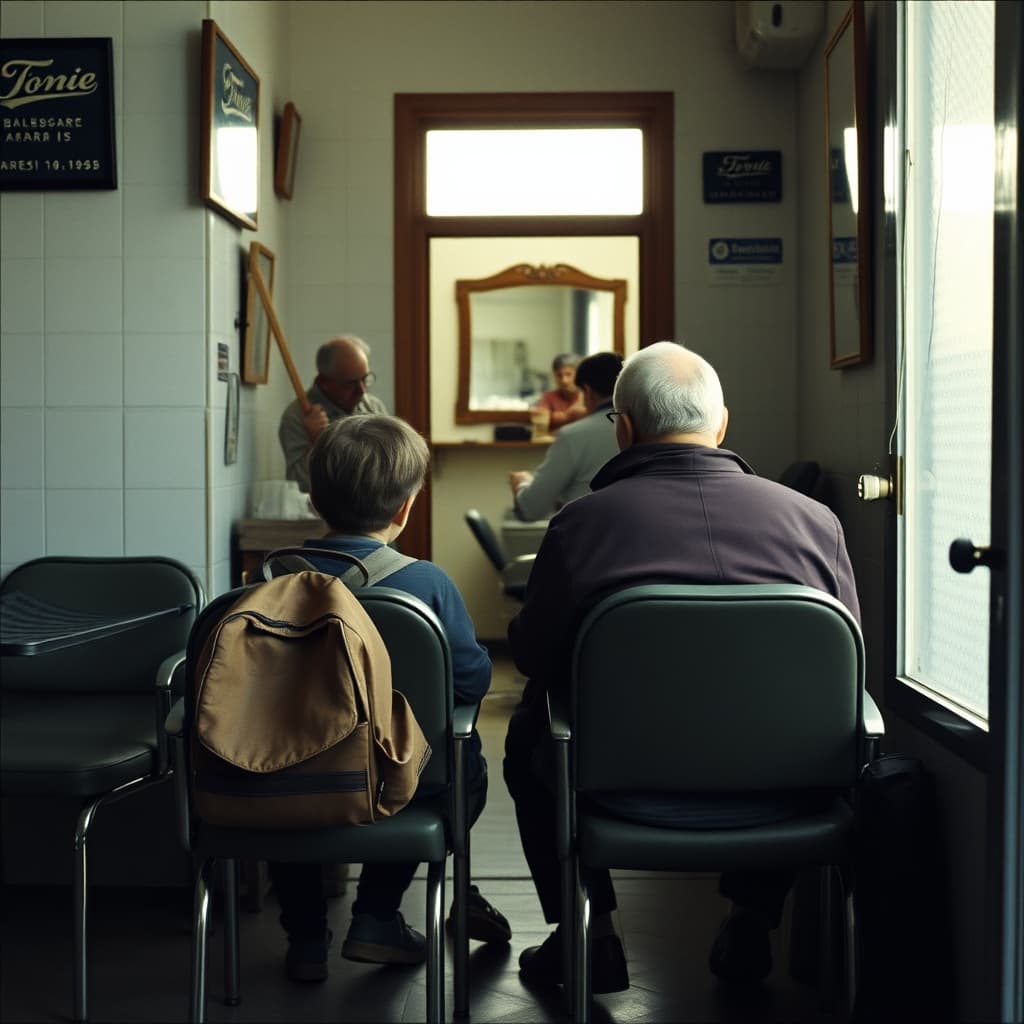
A neighbourhood barbershop did not need a clock on every wall to register the end of the school day. Children passing the doorway, a parent arriving with a schoolbag, or a pupil waiting for a haircut could change the room before anyone mentioned the hour. The school bell belonged to another building, yet its consequences reached the chairs beside the mirror.
This is a particular way to remember the shop that held the neighbourhood agenda: not as a storehouse of every local story, but as a room whose audience changed during the day. Conversation heard by adults waiting alone was not necessarily the conversation continued when a child took the next seat. The rhythm of the street entered with the new customer.
A Schoolbag beside the Waiting Chair
A bag placed on the floor made another schedule visible. Its owner had already spent hours elsewhere and might be expected home, at a lesson or on an errand. The haircut was fitted between those obligations. Waiting was therefore not empty time, even when an adult considered it a short stop.
A child could watch the mirror, follow the barber’s movements or listen without joining in. The view from a waiting chair differed from the view under the cape. From one position the whole room was available; from the other, conversation arrived while the customer remained still. These small changes in position shaped what was remembered.
The Barber Had More than One Audience
The arrival of pupils could redirect talk towards a school event, an examination or a teacher whose name someone recognised. It could also leave the existing subject unchanged. There is no reason to imagine that every barber became a cheerful interpreter of school life. The significance lies in the possibility of different generations sharing a room without sharing the same priorities.
Adults might explain an unfamiliar reference, lower their voices or decide that a subject could wait. Children might be included, overlooked or asked to keep quiet. A recollection of lively talk should leave room for these unequal positions. Hearing the neighbourhood agenda was not the same as having a say in it.
A Haircut Did Not End the School Day
For a parent accompanying a child, the visit could continue the practical work of the afternoon: carrying belongings, remembering another errand and judging how long the queue would take. The barber’s work and the household’s timetable met at the same chair. Neither could be reduced to the conversation alone.
The walk home might return the child to classmates outside, or take them away from a game already starting. That consequence could matter more than the haircut itself. A shop remembered warmly by an adult might be remembered by a pupil through the impatience of watching daylight from indoors. Both accounts belong to the same street.
Remembering Which Hour the Story Belongs To
When recalling a barbershop, specifying the hour can change the account. Was the observer passing after school, waiting with a parent, or visiting on a day without lessons? The answer helps distinguish a recurring routine from an exceptional visit. It also makes the memory more precise without requiring an invented date or a reconstructed conversation.
The school bell offers a useful boundary within the shop’s day. Before and after it, the chairs might be the same, but the people carrying news were different. A child’s bag beside a waiting seat shows how neighbourhood life reached the barber through ordinary timetables. The room kept local conversation going while repeatedly adjusting to people who had just come from somewhere else.