 Eski Pano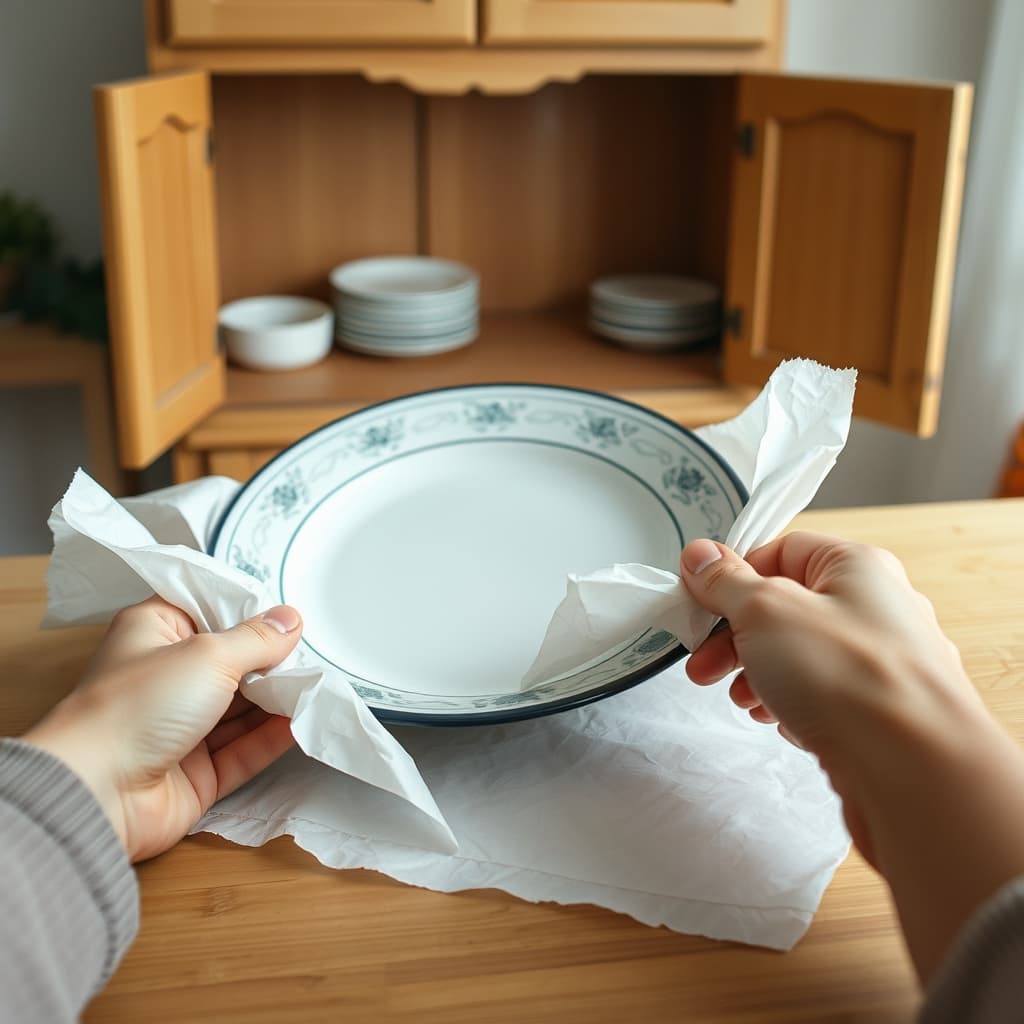
After a move, an enamel plate could emerge from its wrapping before the kitchen felt familiar. Its rim and pattern were recognisable, while the cupboard waiting to receive it was not. The object had crossed the threshold with the household. Finding a place for it joined something already known to a room still being organised.
That meeting explains part of the renewed interest in ordinary enamelware. A plate is not meaningful only because it belongs to an older style. It may connect remembered arrangements in several homes, even when the kitchens themselves were very different. The continuity is specific to the object and the decisions that allowed it to keep travelling.
The Wrapping Concealed and Then Revealed a Familiar Shape
Unwrapping made the plate visible in stages. An edge appeared first, followed by more of the surface as the covering was drawn away. A person who knew it might recognise the piece before seeing it fully. The moving parcel became a household object again.
A mark noticed at that moment was not necessarily caused by the move. Without a prior photograph or clear account, it could have been present earlier. The act of unpacking can make an old feature newly noticeable. Discovery and damage are different events, even when memory places them close together.
The Old Cupboard Was No Longer a Guide
In the previous home, the plate may have had a position learned through repeated reaching. The new kitchen required another choice. Shelf height, depth and the items already unpacked affected where it could sit. The object remained the same while the route of the hand changed.
Someone could place it temporarily and move it again later. That provisional stage belonged to settling in, not necessarily to uncertainty about whether the plate was wanted. The kitchen’s final order might take longer to establish than the day on which the boxes arrived.
Other Plates Changed the View
Stacking the enamel plate with other pieces could hide its face while leaving its rim visible. Standing it separately could expose more of the design. Each arrangement gave the household a different encounter with the object, without altering the plate itself.
Its remembered prominence might therefore change between homes. A piece once seen daily could become less visible; something formerly kept at the back could appear at the front. These differences are part of the moving story. They do not automatically indicate greater affection or a loss of interest.
Keeping the Plate Was a Decision Repeated over Time
Every move offered another occasion to sort belongings. Retaining the plate might reflect usefulness, association with a person or simply a continuing place among familiar things. The reason should come from the household account where known, rather than from an assumption that every old object was consciously preserved as heritage.
Nor does unpacking establish what it was used for afterwards. An older plate might return to an existing role or acquire another one. A photograph on a kitchen shelf records a placement, not proof of food suitability or a complete description of the object’s daily work.
What travelled was more than a pattern remembered from an earlier room. It was a sequence of choices: wrapping, carrying, recognising and placing again. The enamel plate gave the new kitchen a known detail while becoming part of an unfamiliar arrangement. Its appeal today can rest in that ordinary continuity, not in flawless condition or rarity. One familiar rim, seen in another cupboard, could make the household’s move legible at the scale of a single object.