 Eski Pano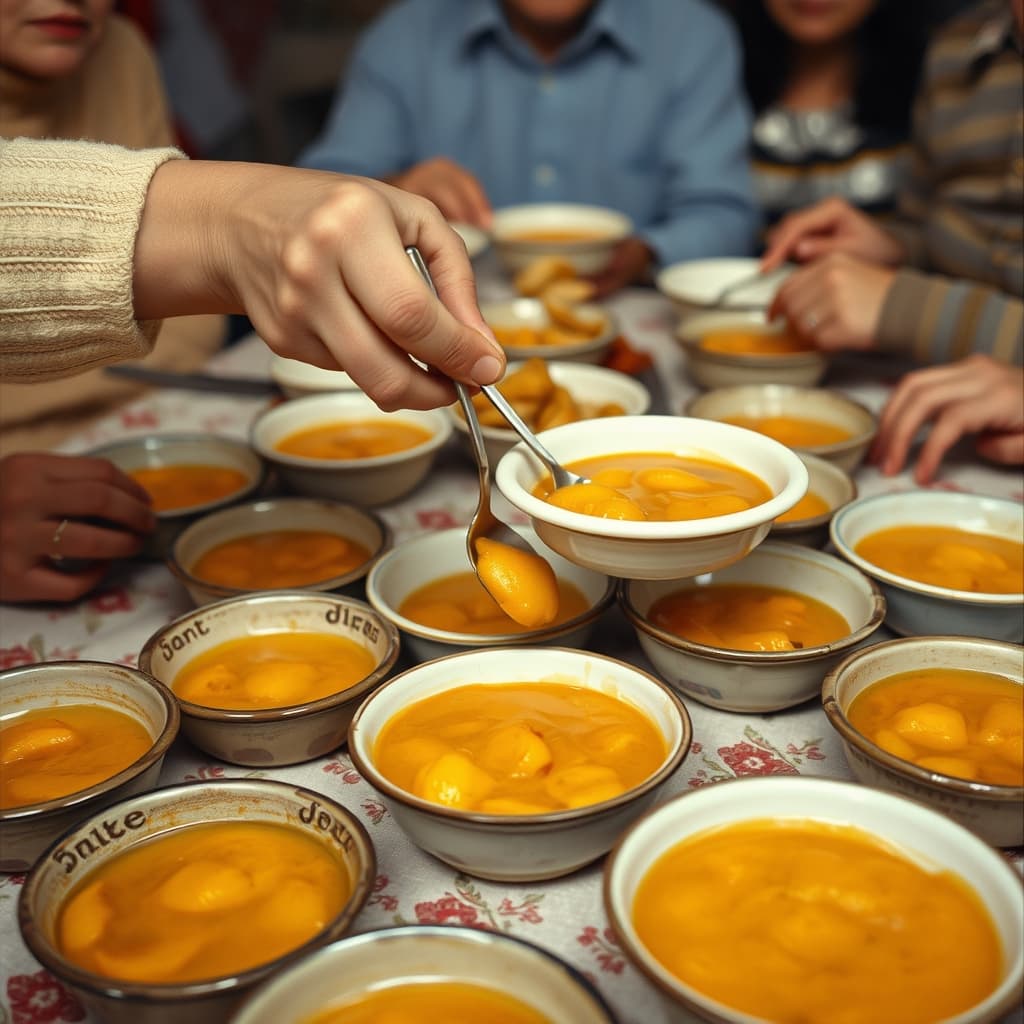
At a crowded table, pelte had to become portions before everyone could taste it. A serving spoon entered the dish, bowls were brought within reach, and someone judged how much to give each person. The dessert’s simplicity did not make this distribution automatic. Sharing happened through decisions about the people present and the amount still waiting in the dish.
Pelte names more than one preparation, and the serving form varies. Here the memory concerns a soft dessert taken from a shared dish, not a version already divided or firm enough to cut. The flavour and ingredients belong to the particular household recipe. What can be followed closely is the way that one preparation reached several diners.
The First Portion Changed the Dish
Before serving, the surface offered one continuous view. The first spoonful left a hollow or disturbed area, making the dessert visibly part of a meal in progress. Later portions came from a dish already altered by those taken before them. The serving order left a temporary pattern.
A person close to the dish could see this change, while someone further away might first meet pelte in their own bowl. The shared dessert was therefore encountered from different positions. The family table joined those experiences without giving everybody the same view of the serving.
Equal Bowls Did Not Require Equal Appetites
One diner might want only a taste, another a fuller portion. The person serving could ask or rely on an established preference, but familiarity did not guarantee that the same amount was wanted on every occasion. A meal already eaten, mood or simple inclination could change the request.
A smaller portion did not necessarily mean dislike, just as a larger one did not prove a favourite dessert. Keeping these distinctions prevents the crowded table from becoming a scene in which everybody responds identically. The culture of sharing included noticing differences, not only dividing the dish into matching quantities.
The Serving Spoon and the Eating Spoon Did Different Work
The spoon moving between dish and bowls carried the practical responsibility of distributing the dessert. Once a portion arrived, the diner’s spoon met its texture at another scale. A smooth-looking surface could yield differently depending on the actual preparation, and the first mouthful gave information that appearance alone could not.
The person serving might remain occupied while others began. This difference in timing belonged to the meal, even if the serving itself took little time. The dessert reached the family through someone’s attention to placement, quantity and the next bowl, not through an abstract promise that a simple dish shared itself.
What Remained Invited Another Decision
After the first round, the dish might still hold enough for more. Someone could ask for another portion, or those present could leave the rest. The remaining amount gave sharing a second stage, different from the first distribution. Now everyone had some experience of the taste before deciding.
If the dish was nearly empty, serving required another judgement about what was left. That is a practical detail, not evidence that the family had little food or that the recipe always produced exactly enough. A remembered dessert should not acquire an invented household economy from the final scrape of a spoon.
Old-style pelte carried sharing culture through these repeated movements between one dish and several bowls. Its place at a crowded table was made by the cook’s preparation, the server’s decisions and the diners’ different responses. The dish ceased to be a single smooth surface and became portions, each part of the same meal without being an identical experience. That modest transformation is where its family memory takes shape.