 Eski Pano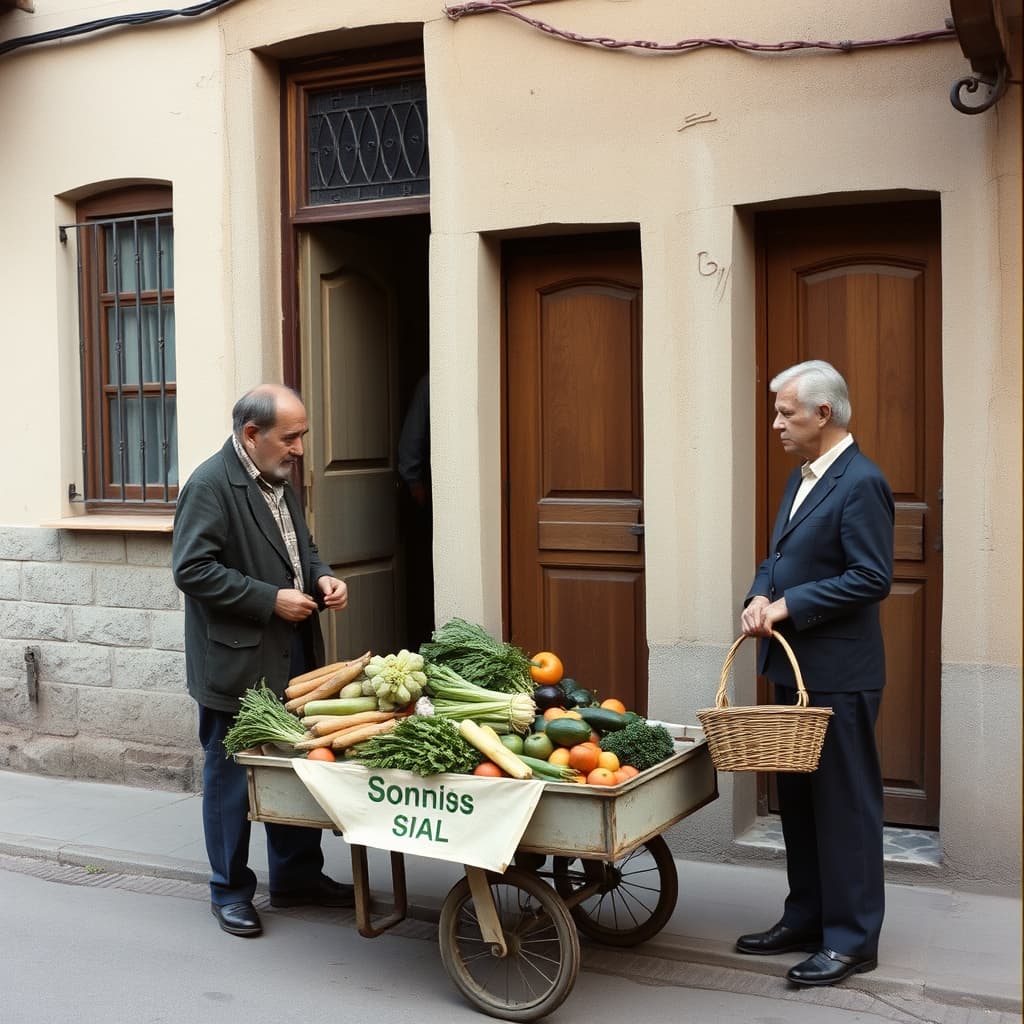
A street vendor’s voice could reach a home before the person carrying it came into view. Someone paused to listen, then decided whether to go outside. Another household heard the same call and stayed indoors. The street became a shared place through these separate responses, not because every window opened or every neighbour wanted to buy.
At the beginning of spring, such an encounter could belong to a remembered change in the street’s atmosphere. The season is part of that account, not a reason to assign a particular product to the vendor. What connected the homes was first a working voice moving along a route, then the choices people made after hearing it.
Recognising the Call Was Not the Same as Seeing the Goods
A familiar sound could suggest who was approaching, but the listener still needed to see what was offered. The quantity, condition and price of the goods belonged to that day’s exchange. Recognition brought someone to the doorway; it did not complete the purchase in advance.
The vendor might have reached another part of the street by the time a resident stepped out. This gave the response a pace. A call heard indoors became a brief search outside, guided by the voice’s direction and the actual position of the seller. The household and the moving trade met at a particular point rather than at a fixed counter.
Preparing to Go Out Was Part of the Encounter
Someone could look for money or collect a container where the trade required one. Another person might ask what was needed before leaving the room. The vendor’s announcement thus prompted a small chain of actions inside the home before any conversation took place in the street.
Those actions could be missed by a memory centred on the cheerful call. Yet they show how the sound entered practical life. It interrupted a task, suggested a possible purchase and required a decision about whether to act. The call was neither background music nor an invitation that everybody had time to accept.
Two Customers Could Arrive for Different Reasons
Neighbours meeting beside the vendor might exchange a greeting while waiting. One had come for an intended purchase; another was first checking whether the goods were wanted. The encounter could begin before either had become a customer in the same sense.
A short conversation between them did not remove the seller’s work. The vendor still attended to quantities, payment and the next person. The street’s temporary sociability was built around a transaction, and the person whose voice had made it possible remained at work while the others could return home.
The Call Continued beyond the Gathering
After serving those who responded, the vendor could move on. The meeting separated as people carried their purchases inside or continued along the street. A shared scene left different traces: a household gained something it needed, neighbours exchanged words, and the seller continued a route.
People who had not joined might hear the call recede without seeing any of this. They too belonged to the street, though not to the gathering. The idea of a common outdoor home is useful only if it leaves room for those who preferred quiet, were occupied or did not want what was being sold.
The vendor’s voice linked households through a choice rather than a command. Listening, finding the seller, waiting and returning indoors briefly brought separate routines together. That is the scale at which a passing call could make a street feel shared. Its warmth depended on the people who answered and the worker who kept moving, while the doors that remained closed continued to be part of the same neighbourhood.