 Eski Pano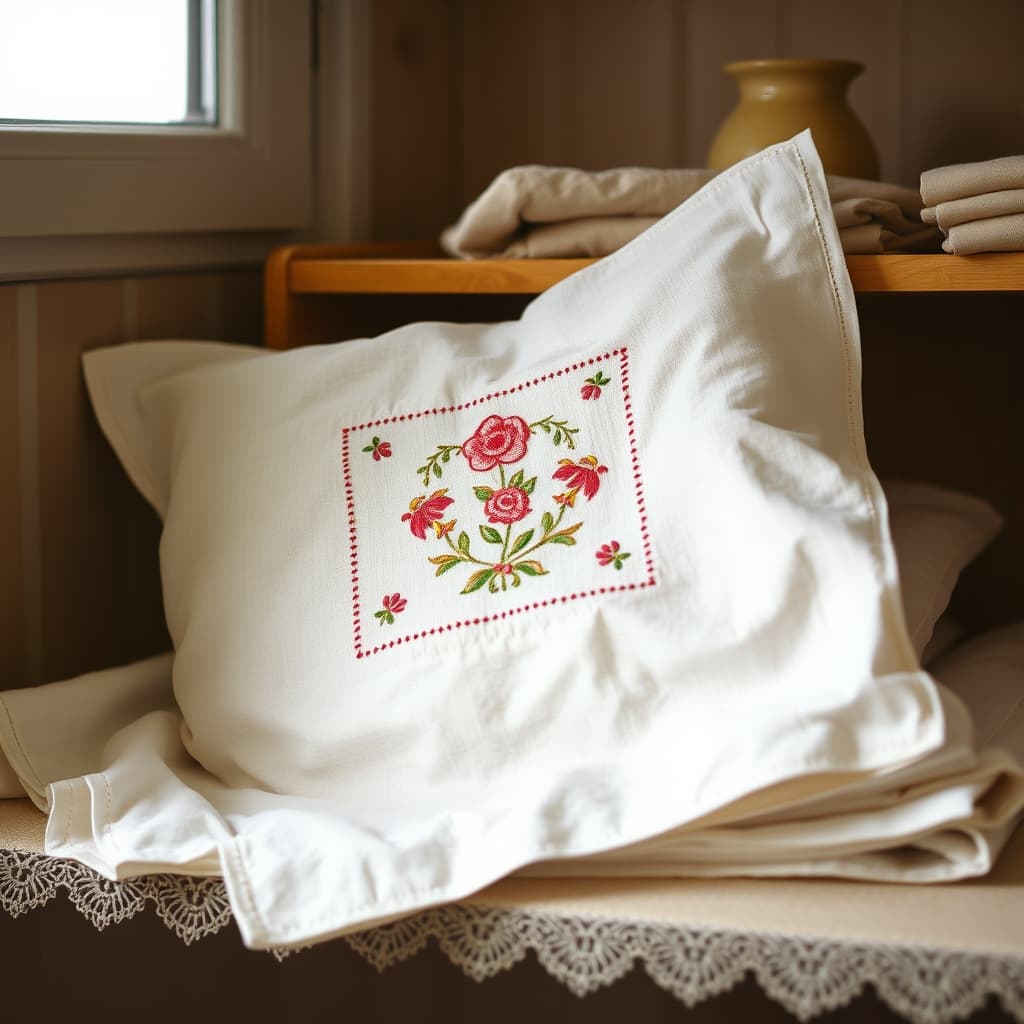
An embroidered pillowcase on a kitchen shelf could be recognised by a small visible face rather than by its full shape. The cloth was folded, and part of the stitching remained turned towards the room. Someone had decided how the piece would sit among other household things. Even when the choice was habitual rather than deliberate display, it shaped what everyone else saw.
The pillowcase did not become a kitchen object simply because it was kept there. Its intended use and its storage place were separate parts of its life. The shelf brought a textile associated with another domestic task into the daily view of the kitchen, where it could remain familiar without being unfolded.
A Fold Could Show the Motif without Showing the Whole Case
The visible section might contain a complete motif or only part of one. A viewer could recognise that fragment without knowing the pillowcase’s size or closure. The folded view therefore offered an identity at a different scale from the open piece. It was the version repeatedly encountered in the room.
The rest of the embroidery might lie inside, or the ornament could be confined to the exposed section. That difference needs the actual textile to establish it. A remembered face should not be expanded into an invented all-over pattern merely to make the object seem more elaborate.
The Shelf Made the Embroidery an Everyday Sight
Nearby objects affected how the stitching appeared. A plain vessel or another folded cloth could draw attention to colour and shape by contrast. An object placed in front might hide the lower edge. The pillowcase’s presence was therefore partly a matter of its neighbours on the shelf.
Someone reaching for another item could see the embroidery without touching it. Repetition created familiarity through brief glances, not necessarily through close study of the work. This helps explain how a piece could become strongly associated with a home even for a person who never used it as bedding.
Putting It Back Recreated a View
If the case was taken down, returning it required another fold and another placement. The visible side might be restored or changed. A person who knew the shelf could notice that the motif now faced inward, or that the cloth sat lower beneath another item.
This small act was part of household arrangement, not proof of a special ceremony. The person putting it back may have preferred a particular face, followed an existing order or simply used the space available. The appearance can be described carefully without claiming to know an intention that nobody recorded.
The Maker and the Person Arranging It Had Different Roles
The embroidered face directed attention towards someone’s work, but the maker need not have been the person who stored the case. One household member could have received it, another folded it and others remembered it on the shelf. Keeping those roles distinct avoids assigning the whole history to the best-remembered relative.
Nor does storage establish that the textile was never used. A pillowcase could move between use and keeping, or remain put away for reasons specific to the family. The shelf view is evidence of a location at a particular time, not a complete account of what happened before or afterwards.
Its quiet prominence came from this partial visibility. A small field of stitches faced an ordinary room, turning needlework into something seen while other tasks continued. The pillowcase shaped domestic habit through its placement as well as its intended function. Remembering the face on the shelf keeps that relationship intact: the embroidered object, the hands that arranged it and the people who came to recognise the corner it occupied.