 Eski Pano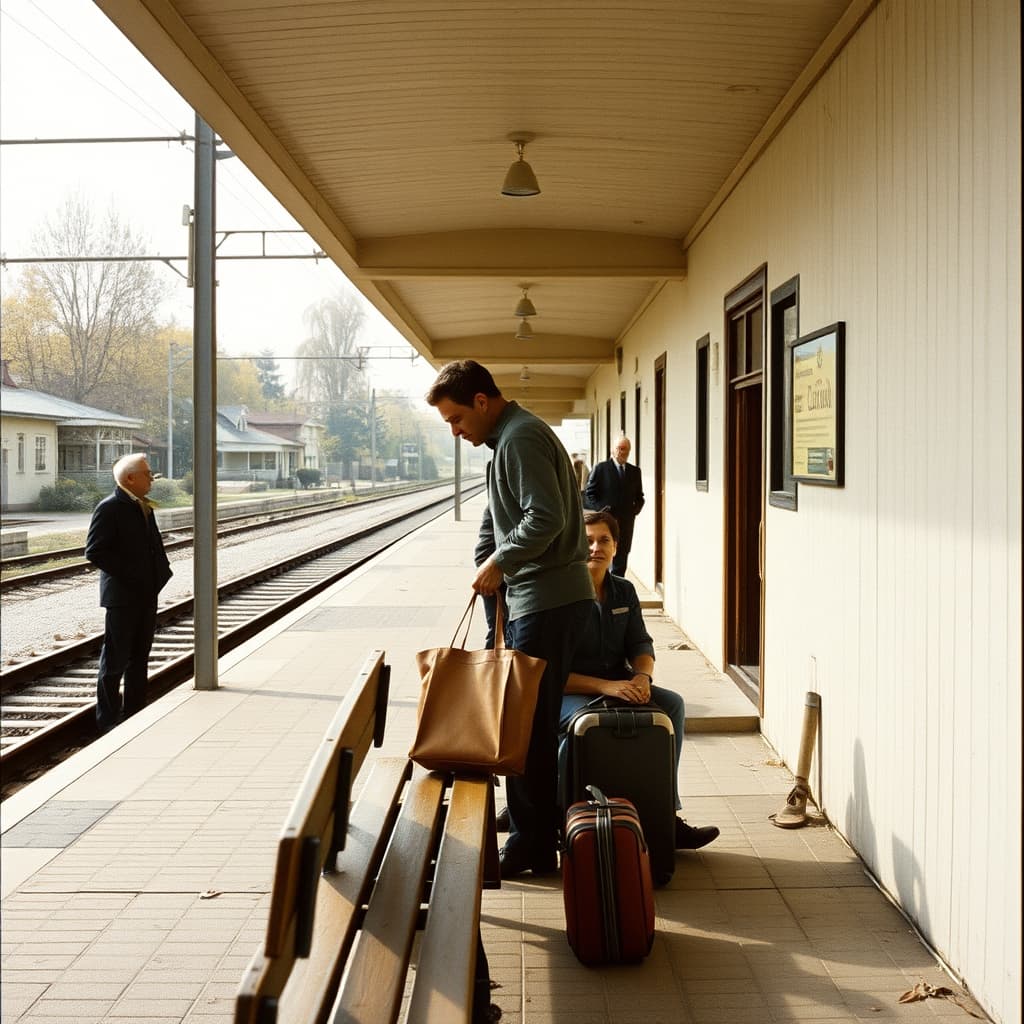
A station bench could remain in place while everything around it changed. A bag stood beside one leg, someone kept a space for a companion, and a person arriving from the platform looked for a familiar face. Later, the bag and its owner were gone. The same seat was available for another wait, with no visible record of the farewell that had just happened.
Small-town stations brought departures and reunions close together because many people used the same limited spaces. The bench supplied a fixed point within that movement. Following the acts of sitting down, getting up and returning to it shows how railway time became a sequence of personal decisions, not simply a train entering and leaving a platform.
A Bag Claimed Space Differently from a Person
Luggage placed on or beside the bench could make the group look larger than the number seated. Someone might move a bag when another passenger approached. That adjustment made room and also changed what had to be watched. The object was both something carried and something temporarily left in a shared place.
A companion could remain with the luggage while another person went elsewhere in the station. On returning, they found a small arrangement held for them. The bench became a meeting point within the larger meeting point of the station, useful before any reunion with an arriving traveller took place.
Standing Up Did Not Yet Mean Going Away
A person could rise to look towards the platform, stretch after waiting or greet someone approaching. Others at the bench had to interpret the movement. Was the seat now free, or would the person return? Such uncertainty belonged to an ordinary waiting place where not every change was announced.
Near departure, standing took on another weight. A coat was gathered, the bag returned to a hand, and conversation could continue while the seated group broke apart. The farewell did not necessarily happen in one dramatic gesture. It could extend through these practical actions, each making the departure slightly more definite.
The Person Staying Saw the Bench Again
After accompanying a traveller as far as permitted, someone remaining in town might pass the bench on the way out. The place where they had waited together was now separate from the person departing. They could sit again, or keep walking. The same object belonged to a different part of the visit.
This return is easily overlooked when the memory concentrates on the train. Yet it gives the station a second perspective: not the passenger moving onward, but the person whose route led back into town. Departure shaped both journeys, although only one required boarding.
A Reunion Might Begin before Anyone Sat Down
Someone waiting for an arrival could stand as soon as they recognised the traveller. The bench had supported anticipation, then ceased to be needed at the moment of recognition. A bag might be placed there briefly afterwards while the group decided how to continue home.
Another reunion could involve sitting together before leaving. The reasons varied: a further wait, conversation or simply the need to rest. The bench did not give reunion a single form. Its value was its availability within a place where people arrived with different amounts of time and energy.
A station memory becomes more precise when these movements remain visible. Who stayed by the luggage, who rose first, and who passed the empty seat afterwards can matter as much as the timetable. The bench joined farewell and return without making them identical. It offered a place to pause, then let people leave it, carrying different parts of the encounter into the train or back along the road to town.