 Eski Pano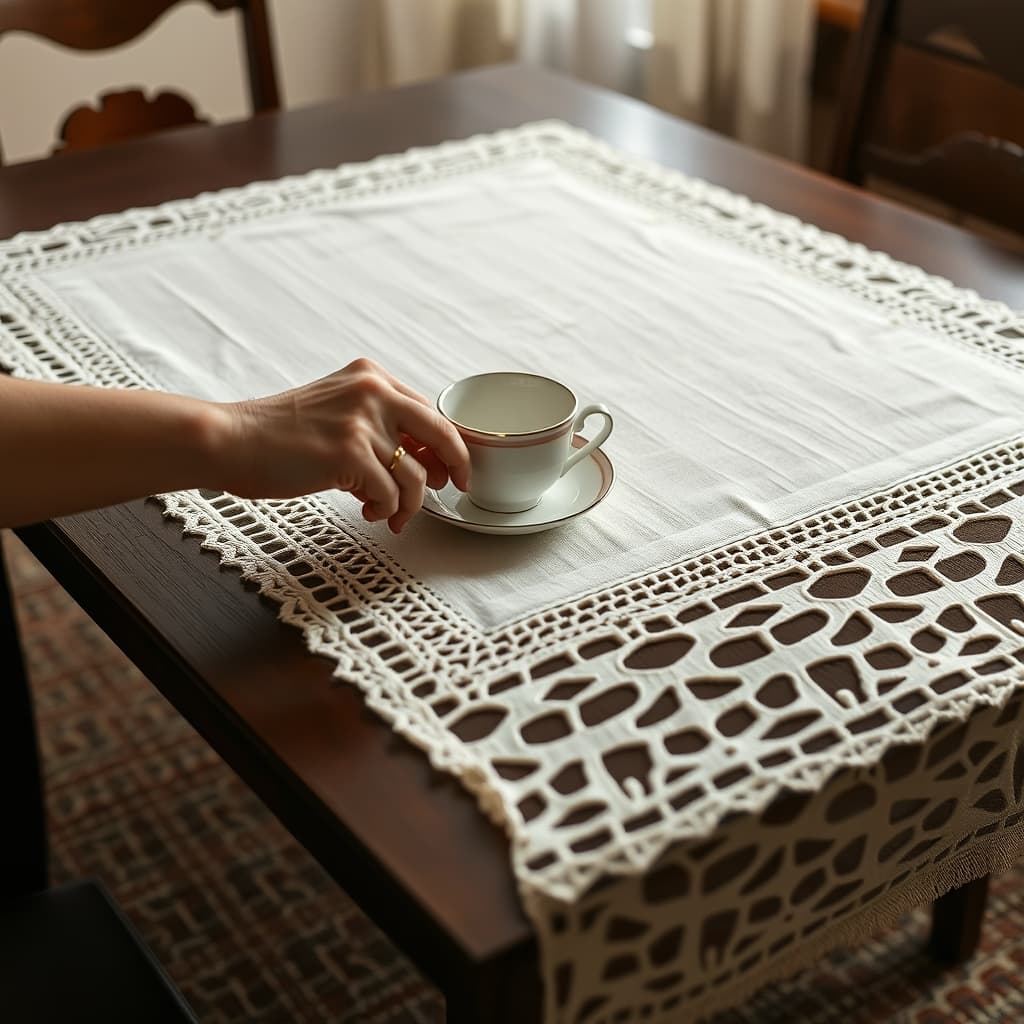
A cup set on an openwork tablecloth changed the pattern without changing a stitch. Part of the decoration disappeared beneath the cup or saucer, while another section remained visible beside it. The cloth was not encountered as a complete design laid out for inspection. It was seen through the things the table had to hold.
This everyday view helps explain how decorative taste entered a working household surface. The ajurlu masa örtüsü could be admired and used at the same time. Its open spaces allowed the tabletop to participate in its appearance, while plates, cups and other objects selected which parts of the pattern were noticed during the day.
The Tabletop Supplied a Second Colour
An opening in the cloth showed what lay beneath it. A dark surface could give a light textile a different contrast from a pale one. The cloth’s appearance therefore depended not only on its own colour, but on the table over which it was spread. A photograph taken elsewhere might present the same piece differently.
Openwork describes a visual characteristic rather than one guaranteed technique. Without examining the textile, it is better to describe the openings and their arrangement than to invent how they were made. A household could recognise the cloth by its visible pattern without using a specialist name for the construction.
A Saucer Hid One Detail and Framed Another
When a saucer covered part of the design, its edge could draw attention to the remaining section. A straight border beside a round object made a different composition from a patterned corner with nothing on it. This was not necessarily deliberate styling. Ordinary placement created a changing view of the cloth.
Moving the cup revealed what had been underneath. The pattern became complete in that small area and incomplete somewhere else if another object moved into its place. The table offered a succession of partial views, shaped by use. Remembering those views can be more faithful to daily life than imagining the cloth constantly displayed without interruption.
Straightening the Cloth Changed the Setting
A small pull at one edge could align a border with the tabletop or make the hanging portions more even. Someone who used the table regularly might notice this alignment without pausing to admire the whole design. Taste was expressed through the way things were made ready as well as through the choice of textile.
Other members of the household might not share the same preference. One person could want the border clearly visible, while another chiefly wanted room to place a plate. These priorities need not become an argument to matter. The arrangement could accommodate both, or simply reflect the last person who adjusted it.
The Uncovered Pattern Returned at Clearing Time
Removing the cups and plates brought more of the textile back into view. The clearing of the table was also a change in its appearance. A design that had served as background to the meal could briefly become the main thing visible on the surface.
This was an opportunity to see the whole arrangement, but not proof that the cloth was reserved for display. Its relationship to ordinary objects is what distinguishes the everyday setting from a staged textile photograph. Both images may be useful; they describe different encounters with the same piece.
An openwork tablecloth reflected domestic taste through these modest combinations: cloth and tabletop, border and saucer, the pull that straightened an edge. Its decorative work did not need to remain unobstructed to matter. The household used the pattern by placing things across it, revealing and hiding portions in turn. That changing surface kept ornament close to daily life rather than leaving it outside the work of the table.