 Eski Pano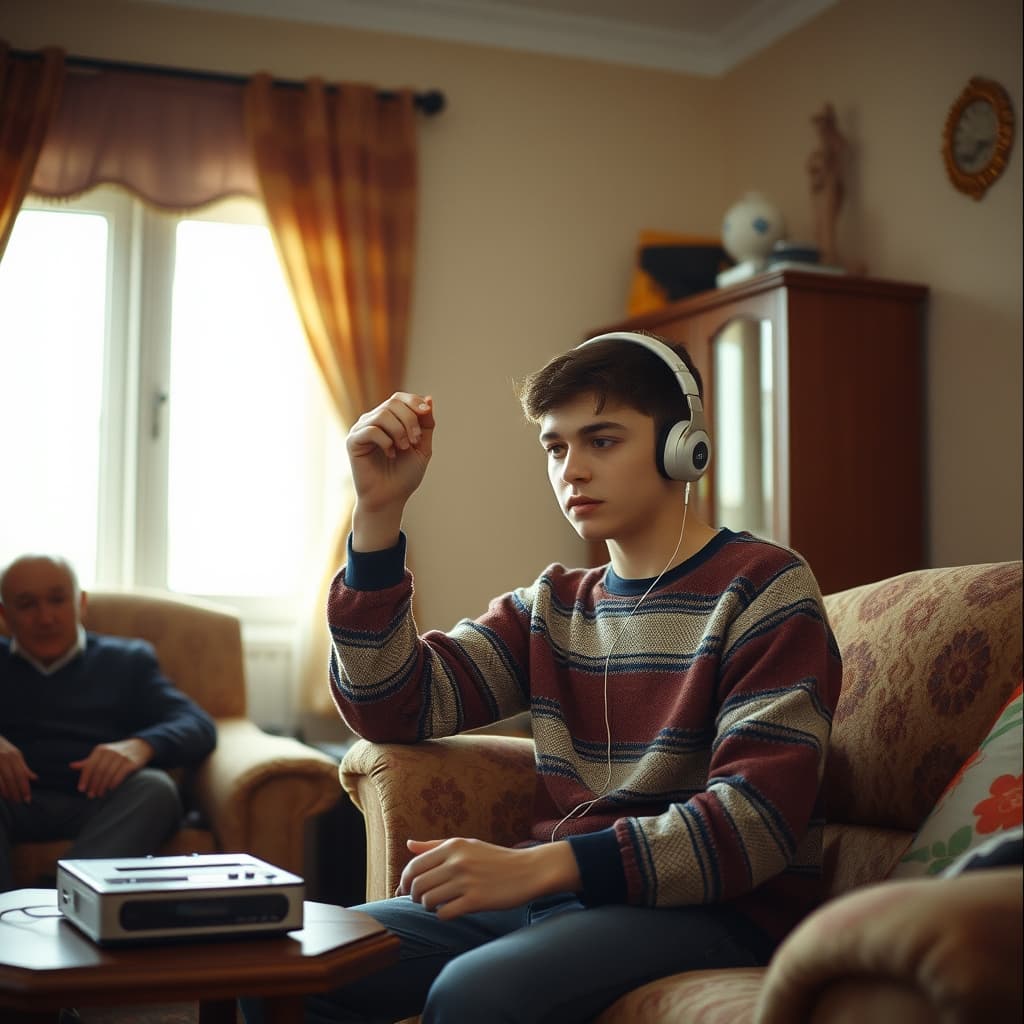
A Walkman song did not always end because the recording reached its last note. Someone entered the room, a question needed an answer, or a listener decided to join the conversation nearby. A hand went to the headphones, and private music gave way to another kind of listening. The change was small enough to become habitual, but it showed how personal sound fitted into a shared place.
The portable player offered a choice about what to hear without removing the people around its user. A family room could contain a listener and several other activities at once. Taking off the headphones made the boundary between those activities visible. The Walkman’s remembered freedom included negotiating when not to use it.
A Hand to the Headphones Was a Reply
Before speaking, the listener could signal attention by lifting the headphones away. The gesture told another person that their words now had a place. It might be followed by stopping the player, though the order depended on the device and the user. There was no single routine shared by every portable cassette model.
The music might continue inside the headphones for a moment after they had been removed. That interval differed from pressing pause immediately. What had seemed close and private was now a small sound coming from an object beside the listener. The same recording occupied a different position in the room.
The Interrupted Song Left a Place to Return To
An interruption could divide a song into the part heard and the part still waiting. The listener might remember the passage where they had stopped, or return without locating it precisely. The importance of finding the same place depended on the recording and the person, not simply on owning a portable player.
A short question might allow an easy return. A longer exchange could change the rest of the listening session altogether. The cassette remained available while the listener’s attention had moved elsewhere. Personal music was chosen, but its duration still belonged to a day that other people could enter.
Headphones Put Down Became a Visible Object
Once placed on a table or beside the player, the headphones showed the listening activity differently. Their cable connected two things that could otherwise appear separate. Picking them up again meant finding that arrangement, not merely deciding to resume a song.
The surface chosen mattered to the household. Equipment left on a chair might need to be moved before someone sat down; a player on a busy table could be shifted during another task. Such adjustments did not necessarily express disapproval. They were part of fitting a personal device among the uses of a room that was not private to its owner.
Returning to Music Did Not Erase the Exchange
After answering, the listener could put the headphones back on and resume. They might also leave them aside. Either decision gave the encounter an ending. A remembered listening habit becomes more informative when it includes these departures from the music, rather than treating the soundtrack as continuous throughout every scene.
A reference to turning an antenna should be kept separate unless the actual player had radio reception. Cassette listening and tuning a broadcast are not interchangeable descriptions. This interruption concerns headphones and attention, and remains meaningful without assigning an unverified feature to the machine.
The Walkman was intimate partly because its sound could be entered and left through a familiar gesture. Removing the headphones changed who was being heard, then returning them could restore a chosen song. That small passage between music and conversation placed the device within family life. It was not only a means of withdrawing from the room; it was something people learned to set aside while still carrying their own listening plans.