 Eski Pano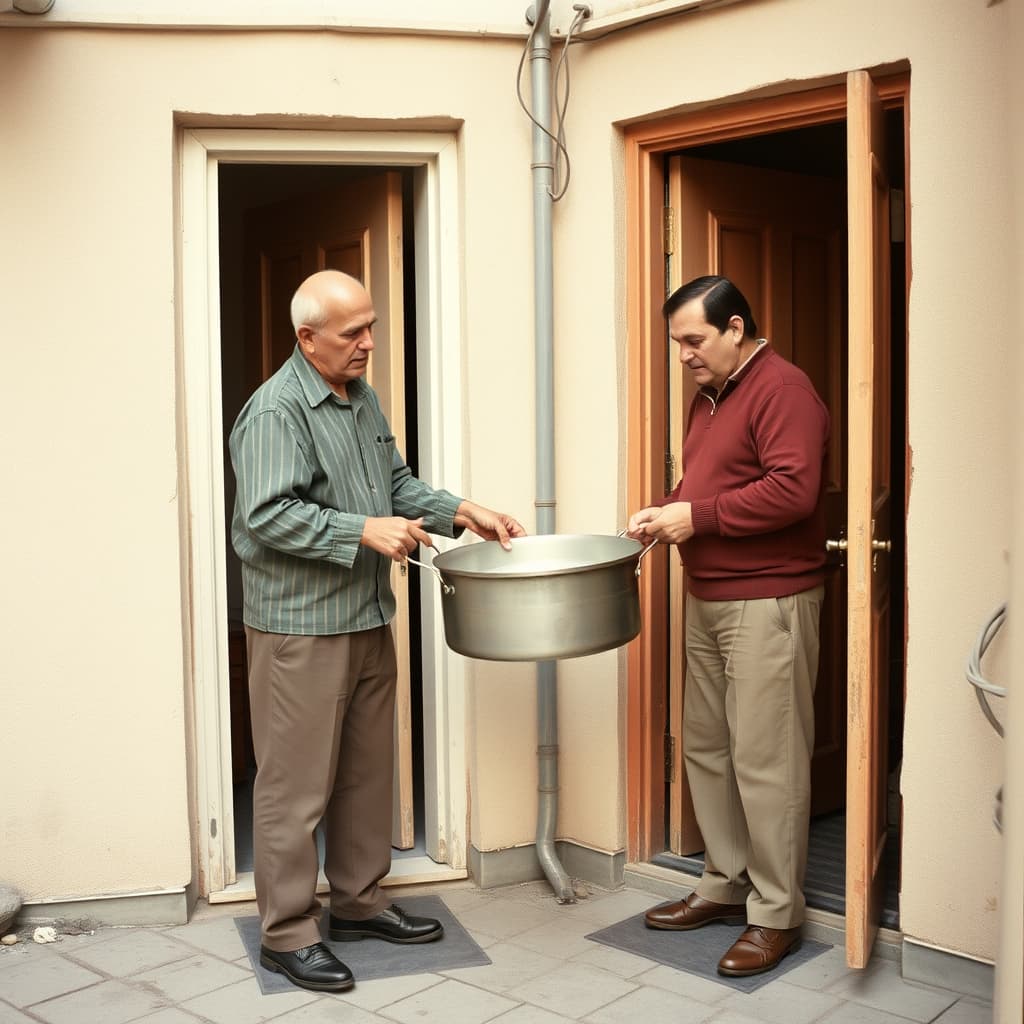
A large pot leaving one flat could make winter preparations the business of more than one household. Its owner was not necessarily joining the cooking. Lending the vessel was enough to connect two kitchens for a while: one had something to spare, another had a task that exceeded the equipment usually within reach. The apartment building became part of the work through a journey across the landing.
Remembering that journey offers a precise way into the weeks when neighbours prepared food for colder months. It does not require all residents to have followed the same method or worked together. Sometimes the connection was one object, one request and the understanding that the object would come back.
The Request Made a Kitchen Visible
Asking to borrow a pot revealed something about work normally hidden behind a door. There was a larger quantity to handle, or a vessel in regular use was unavailable. The reason depended on the household. A borrowed pot should not automatically be assigned to a particular sauce, preserve or recipe simply because the season suggests one.
The neighbour answering had their own plans. A pot could be free that day but needed the next, making the length of the loan important. The exchange therefore involved timing as well as generosity. A familiar relationship made asking possible; it did not remove the need to agree on when the kitchen could do without its equipment.
The Landing Was a Passage, Not Another Kitchen
Carrying the empty vessel between doors changed the building’s ordinary movements. A hand occupied by a handle was less available for keys or a door. Someone might hold an entrance open while the borrower passed. These small contributions connected people to the preparations without giving them a place at the stove.
The journey could be short, yet the shared space still served other residents. Someone returning from school or work had a different destination. A recollection of cooperation is sharper when it includes this traffic rather than turning the whole landing into an extension of one household’s task. Neighbourly work happened within a building that continued to have other uses.
A Loan Was Not Always an Exchange of Equal Objects
The borrower might have nothing comparable to lend back. That did not necessarily make the relationship one-sided: another occasion could bring a different kind of help. But such a return should not be invented to make the scene appear fair. A particular loan may have remained a straightforward favour.
Nor did everybody feel equally able to ask. A newcomer could hesitate where an established neighbour felt at ease. Repeated requests might be welcomed, negotiated or refused. The object crossing the landing shows a connection between two doors, not proof that the building had become a single harmonious household.
Returning It Completed More than the Cooking
After use, the pot had to be made ready to go back. Someone checked that it was the borrowed vessel, attended to it and arranged the return. The cooking could be finished while this small obligation remained. Household preparation extended beyond the moment when food was put away.
At the door, the returned pot could prompt a brief account of how the work had gone. Alternatively, it might change hands with little conversation. What matters is that the owner regained an object they could use again, while the borrower closed a practical link that had temporarily joined their routines.
Winter preparations left their mark on apartment memory partly through these crossings. Food stayed inside cupboards, but requests, vessels and thanks moved between flats. The borrowed pot gives that cooperation a tangible beginning and end. It belonged to one kitchen, served another for a time and came back carrying the evidence of a task that neither household had to describe as a grand collective event.