 Eski Pano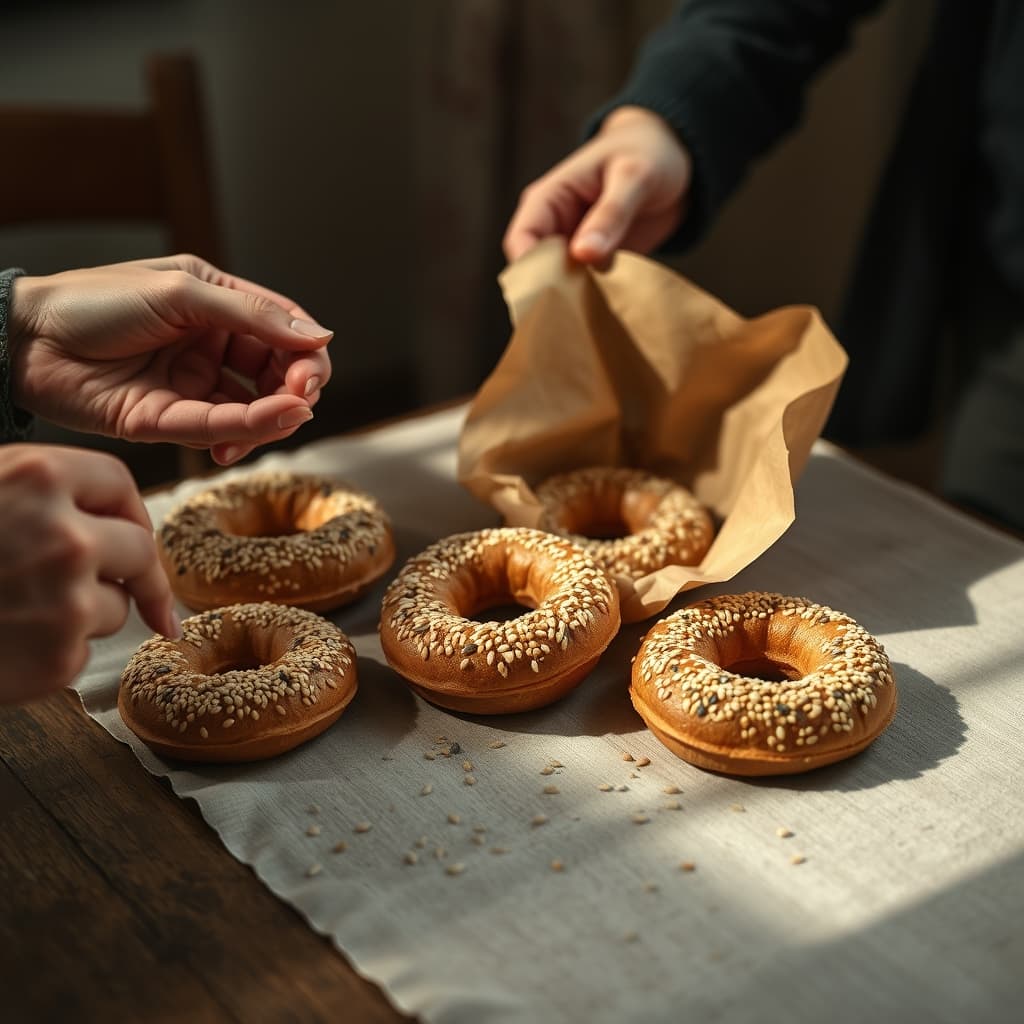
The simit could announce itself before it was seen. A bundle arrived from the bakery, and a familiar toasted smell accompanied it towards the table. Opening the paper changed the encounter: the rings became visible, loose sesame seeds appeared in the folds, and the household could begin choosing pieces. A purchase made outside was becoming something shared inside.
Stone-oven simit names the bakery context in this memory, not a single formula that every baker followed. The wrapping cannot reveal the exact oven, ingredients or process. What it can show is the passage from carrying to serving, and the modest actions through which the bakery’s product entered a home.
Paper Changed from Cover to Surface
While being carried, the paper gathered the rings into a manageable bundle. On the table, its folds could open out beneath them. A corner that had been held closed was now drawn back, and a ring previously hidden under another came into view. The arrangement changed with the hands opening it.
The packet need not have been elaborate to be remembered precisely. A person might recall how the paper unfolded or where the bundle was placed. Those details belong to a particular purchase; they should not be turned into a claim that all bakeries used the same packaging or that every household served simit directly from its wrapper.
The Sesame Was Both Aroma and Evidence of Movement
A few seeds could detach as the rings shifted against one another. On the unfolded paper, they recorded handling on a very small scale. Some remained on the crust, others gathered in a crease. The surface around the bread acquired its own texture before anyone had taken a bite.
The toasted aroma drew attention towards the bundle, but it could be experienced differently across the home. Someone near the table met it more directly than a person in another room. A memory that the whole house filled with the same smell describes the household’s impression; it need not be treated as a precise measurement of how evenly scent travelled.
The First Ring Was Not the Whole Batch
Choosing one ring revealed details partly hidden while they were stacked. A darker section, a thicker join or a patch with fewer seeds could distinguish it from its neighbours. These differences did not necessarily establish separate recipes. They were features of the pieces now on the table.
Breaking or cutting the simit offered another view. The exposed inside contrasted with the seeded exterior, and a whole ring became portions that could be passed around. The diner encountered crust and interior together, rather than the surface alone. The aroma accompanied those movements without providing an exact account of how the baker had achieved the result.
Passing a Piece Finished the Journey from the Bakery
The person who brought the bundle and the person who opened it might not be the same. Someone else could arrange plates or call people to the table. A bakery purchase therefore entered domestic time through more than one hand. These roles deserve to be noticed without inventing a fixed family scene around them.
What accompanied the simit also depended on that table. Tea, cheese or other foods belong in the description only when the memory identifies them. Simit did not require one standard spread to become familiar. A piece passed to someone could be the central gesture even at a sparsely set table.
After the rings had been divided, the paper might hold little beyond scattered seeds and crumbs. The bundle had disappeared into portions, but the opening remained part of the memory: smell before sight, folds giving way, a first choice, then a piece moving towards another person. That sequence explains how stone-oven simit could feel as though it filled a home. Its arrival invited attention before its taste was shared.