 Eski Pano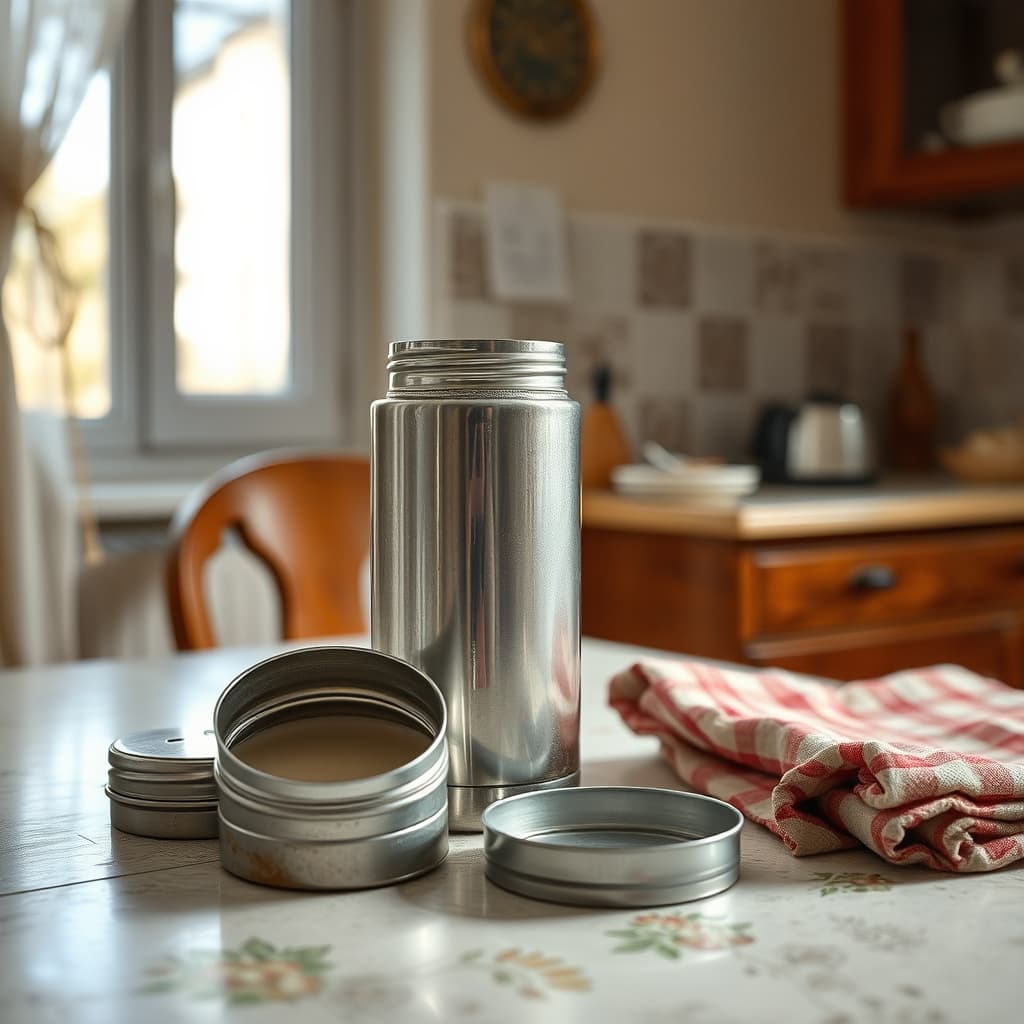
A food thermos could look renewed after bayram cleaning without looking new. Light returned to the outside, while a small dent remained near the base or a worn patch stayed beneath the handle. The contrast gave the object two appearances at once: the care it had just received and the use it could not shed. Its shine made some traces easier to notice rather than removing them.
The exact marks depend on the thermos being considered. A dent does not tell us which journey caused it, and a worn handle does not name the person who carried it. Still, their position can direct attention towards the parts that were gripped, set down or brought close to other objects. Observation begins there, before a family story supplies further meaning.
Brightness Did Not Flatten the Surface
The exterior caught light differently where its shape had changed. A shallow hollow might interrupt a reflection, while an undamaged section appeared more even. Such differences could be visible in the same object before and after cleaning. They show why a photograph taken from only one angle can overlook a mark that someone handling the thermos knows well.
Holiday preparations brought objects out of their usual positions. The thermos might be easier to inspect on a table than at the back of a cupboard. This change of setting helped make the surface legible. The renewed attention came not only from cleaning, but from seeing the container separately from everything normally stored around it.
The Lid Returned to Its Own Body
A lid placed beside a container could briefly make one object look like several. Other removable parts might be present, depending on the design. The point is not to assume that every food thermos had the same construction, but to notice the work of keeping the correct components together during a household task.
Putting them back in place restored a familiar outline. A person who knew the thermos could recognise which way it usually stood or where its handle rested. This knowledge was practical and close to the object. It did not necessarily appear in the family’s account of a meal carried elsewhere, although the container’s continued use depended on such attention.
A Mark Needed More than an Attractive Explanation
It can be tempting to make every dent evidence of a memorable outing. Perhaps someone does remember its cause. If so, record the account as a recollection and identify whose it is. If not, the mark can remain a feature of the thermos without being turned into proof of a picnic, a hospital visit or a particular worker’s lunch.
The same restraint applies to age. A surface that looks old cannot establish a manufacturing date or an uninterrupted history of ownership. A purchase record, photograph or known family account may help. The polished object offers a place to begin those questions, not a shortcut to answering them.
Back into the Cupboard, Not Back to the Beginning
Once the thermos was reassembled and put away, its brighter surface might become less visible again. The cleaning had taken time, but the result could disappear behind other household things. That is part of the work: maintaining an object does not always produce a display that the rest of the family continues to admire.
Nor does a shining exterior establish that an old food container is suitable for use today. The recollection concerns appearance and care, not a performance test. Keeping that distinction prevents a material memory from becoming a recommendation to fill an unknown vessel.
The dent stayed after the shine returned. Together they made the thermos neither untouched heirloom nor anonymous piece of equipment. It had a surface someone cared for and marks that care did not undo. Bayram cleaning revealed that combination for a while, before the object returned to its place with both its changed appearance and its remaining history intact.