 Eski Pano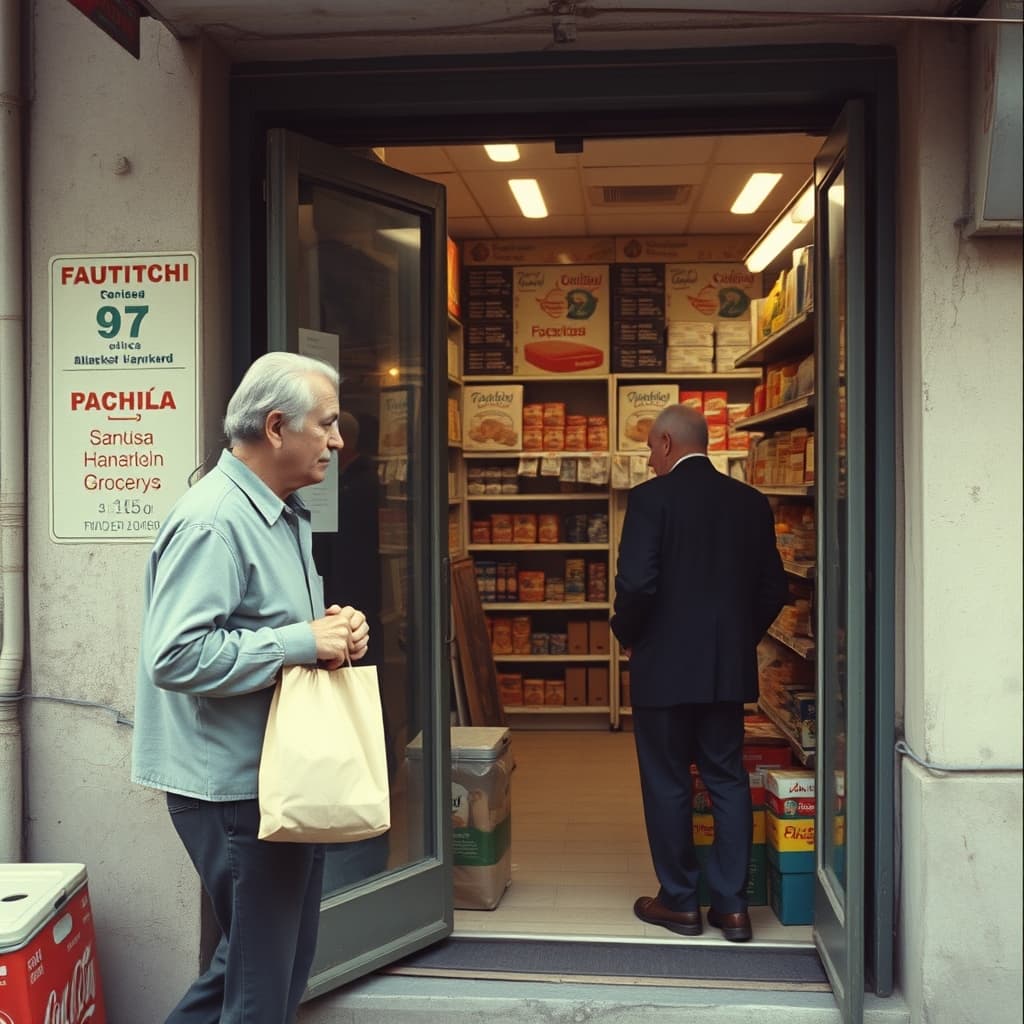
The purchase might fit in one hand, yet the visit to the bakkal could occupy more than the time needed to buy it. On a day without the usual rush, someone who had finished at the counter might stop near the doorway before heading home. The errand was complete, but the route remained open to a greeting, a question or the arrival of another familiar customer.
This is a different measure of the neighbourhood shop from the stock on its shelves. The warm part of an afternoon visit could happen after the transaction, in the short space between paying and leaving. It was not guaranteed by small scale or by an old-fashioned interior. It depended on who was there and whether the people involved had time to spare.
The Bag Signalled That the Errand Was Finished
Holding a purchase gave the customer a reason for being at the shop without requiring a reason to stay. A bag or wrapped item could rest against the body while the conversation continued. The person had completed one task and was still visibly on their way to another place.
For someone sent to buy a missing item, the same pause could feel less leisurely. People at home might be waiting for it. A day off did not free every household member from responsibilities, and one person’s relaxed visit could lengthen somebody else’s preparation. The errand’s pace should be understood from both ends of the route.
The Doorway Held Two Conversations
Inside, the shopkeeper might already be attending to the next customer. Near the entrance, the departing shopper could speak to a neighbour without bringing that exchange fully into the transaction. The two conversations overlapped in sound but served different purposes. A small shop could accommodate both without either being the whole life of the place.
Sometimes the next arrival altered the subject, or the person leaving recognised them and stayed another moment. At other times, making room at the entrance provided a natural end. The warmth of the scene lay in these adjustments, not in assuming that every customer wanted conversation or that the doorway belonged to those who lingered.
A Day Off Changed the Route, Not the Shopkeeper’s Work
The customer could experience the afternoon as a holiday while the person behind the counter was still working. Their attention might shift between the greeting, a question about stock and the next sale. Calling the stop unhurried from the visitor’s perspective should not turn the shopkeeper’s day into leisure.
This difference gives the familiar exchange its texture. The customer could leave whenever their purchase was ready; the worker often remained. A short answer was not necessarily a lack of friendliness. It might simply belong to the rhythm of several tasks being handled at once.
The Walk Home Carried the Encounter
After leaving, the customer could meet someone else or take a familiar turning that offered another chance to stop. The item in hand remained the practical thread connecting the outing to home. A long conversation might be remembered, but so might a visit so brief that only a greeting accompanied the purchase.
When recalling these afternoons, the useful question is where the extra time actually went. Was it spent at the counter, in the doorway or along the return route? Naming the point of delay keeps the bakkal visit from becoming a vague scene of universal neighbourhood warmth.
The small purchase arrived home with no visible record of the words exchanged around it. Yet those words could change how the errand was remembered. The bakkal became a warm scene when buying, working, passing and greeting briefly met, each on a different timetable. The long way home was not always a different street; sometimes it was the familiar route with one more person to acknowledge.