 Eski Pano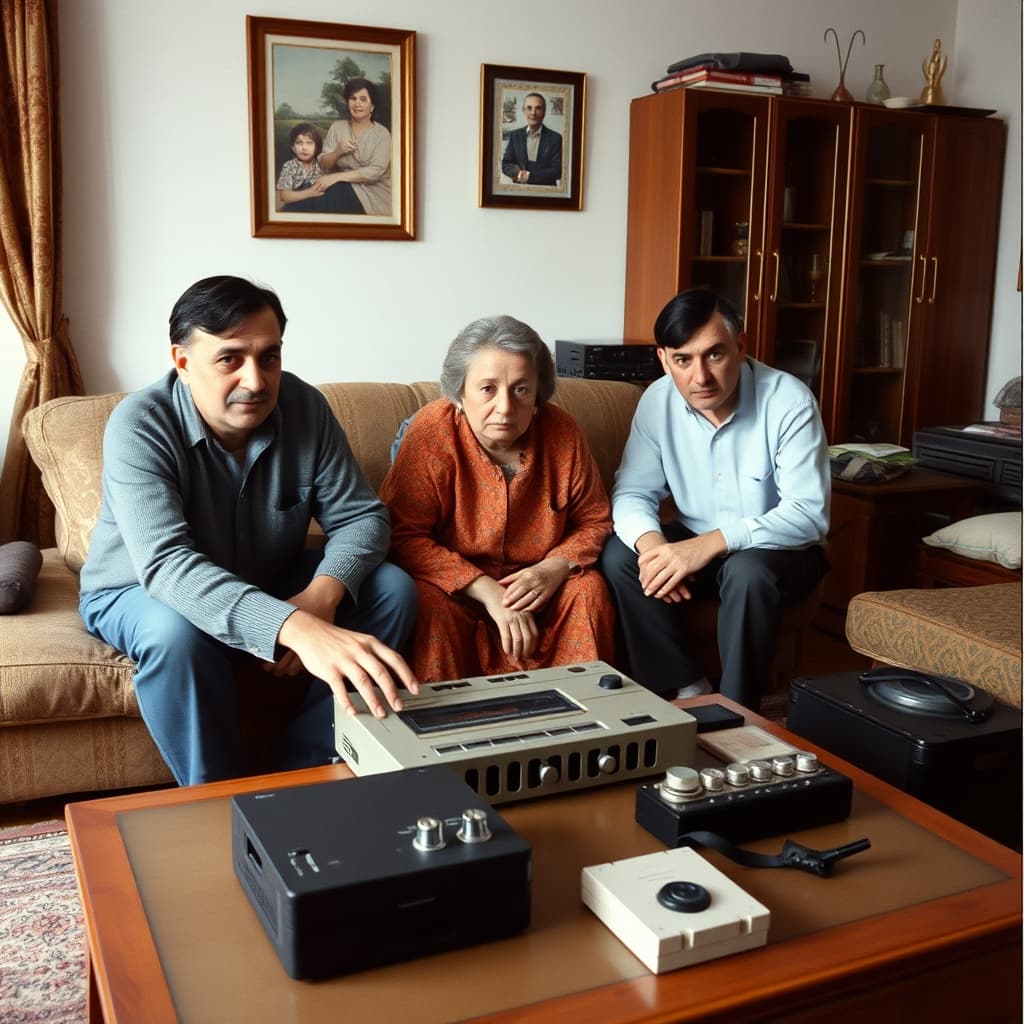
The room could fall quiet twice during a family tape-recorder session. First came the effort to let a voice be recorded. Then, after the controls had been operated again, people listened for that voice to return through the speaker. The second silence was different. Someone who had just spoken now waited to hear how the machine had kept the moment.
This transition helps explain why using a teyp could feel like a ceremony without needing to describe every technical step. The household was not only producing sound; it was becoming an audience for something it had just done. A familiar room briefly offered two versions of the same exchange: the one lived together and the one played back.
The Speaker Was Now a Listener
During playback, the person whose voice had been recorded no longer controlled its pace. A hesitation or repeated word returned in its original position. Others could react to a detail that had passed unnoticed during the conversation. The machine gave the group another encounter with the voice, not a perfect replacement for being there.
A person might recognise their words while finding the recorded sound unfamiliar. That reaction should be described through an actual account when one exists, rather than assigned to every family member. Some listeners could be amused, others attentive or uncomfortable. The shared session did not require everybody to experience the return in the same way.
The Room Returned around the Voice
A chair moving or someone speaking from further away could become part of the recording if it had been captured. On playback, that sound might suddenly attract attention. It was no longer accompanied by all the visual information that had made it ordinary in the room. Listeners could find themselves identifying something they had barely noticed earlier.
Not every sound survives clearly, and a recording does not reveal its source automatically. A muffled interruption might remain uncertain. Naming it as a particular relative or action requires evidence beyond the wish for a vivid story. Keeping an unidentified sound unidentified is better than supplying a convincing but invented explanation.
Waiting for the Passage to Return
Revisiting a moment depended on the equipment and recording format available. Without identifying the actual machine, it is unwise to describe a particular button sequence as universal. What matters here is the interval of anticipation: people waited while the operator located a passage, then listened for the point they remembered.
That wait could interrupt a reaction already forming. Someone might begin explaining the passage before it played, shaping how the others heard it. Another person could ask to hear it again. The ceremony lay partly in this negotiation of attention, not simply in admiration for the machine or obedience to the person at the controls.
Playback Did Not Belong to Everyone Equally
The person nearest the speaker might hear a quiet phrase more easily than someone across the room. Those asked to remain silent while recording might have more to say during playback. Who could request another listen, and whose request was accepted, helped determine which moments became the session’s remembered centre.
A grandmother’s home can be the setting of such a memory without making the grandmother the operator, speaker or owner by assumption. Those roles need to be kept distinct. The value of the session comes from its particular arrangement of people and sound, not from placing an anonymous family around a generic old device.
At the end, the room resumed talking in voices no longer coming from the speaker. The recorded version remained available, but the reactions to it might never have been recorded. Remembering those reactions alongside the tape preserves the difference between a captured passage and the gathering that listened. The first playback made ordinary speech an event because the family encountered its own recent presence from another position.