 Eski Pano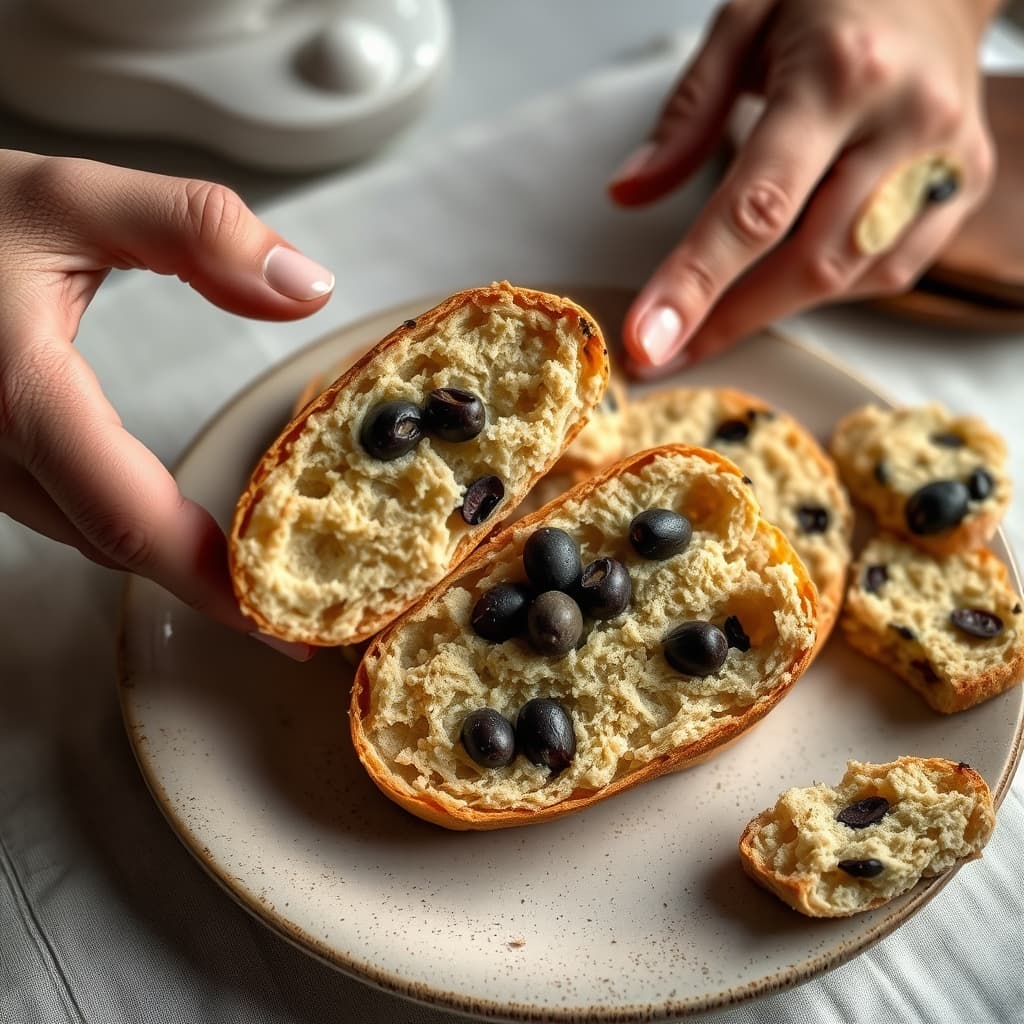
A piece of zeytinli çörek could reveal its olives gradually. One dark fragment appeared at the cut edge, while another remained inside until the bread was broken again. At a spring table, the distribution of those pieces gave each portion a slightly different character. The dish was shared, but no two hands necessarily lifted exactly the same combination of crumb, crust and olive.
Çörek describes a range of baked preparations rather than one fixed recipe. Here the focus is the olive-filled piece as it reached the table, not a claim about ingredients that have not been documented. A remembered spring meal can be discussed in October without presenting the publication date as the season in which that particular meal took place.
The Cut Showed Only Part of the Portion
An olive at the surface could make a slice look generously filled even when the rest of it contained fewer pieces. Another portion might appear plain until it was opened. Looking at the cut offered a clue, not a complete inventory. The diner discovered more while eating than the first glance could establish.
This gave selection a small element of uncertainty. Someone might choose an edge because they liked the crust, while another reached towards a visible olive. Neither choice was necessarily a judgement on the whole bake. Preferences operated at the scale of a piece, alongside hunger, the food nearby and the portions already taken.
Breaking the Bread Made a New View
A torn surface differed from a neat slice. The crumb separated around the filling and exposed fragments from another direction. A piece divided between two people created smaller portions whose balance no longer matched the original. The table kept rearranging the bake after it had left the kitchen.
These actions can be remembered without supplying an invented recipe. The photograph or recollection may show a pale crumb, a browned edge or dark olive pieces. It cannot establish exact flour, fat or seasoning quantities. If the cook’s account survives, it can explain the preparation; otherwise the description should remain close to what was actually seen and tasted.
Olives and Their Neighbours on the Plate
The olive-filled bread was encountered alongside whatever that household served. A fresh accompaniment could contrast with the baked piece, while a drink or another dish gave the next mouthful a different setting. Those companions should be named from the particular memory, not borrowed from an imagined standard Turkish breakfast.
The spring association may belong to the meal’s setting, the produce present or the family’s recollection of the occasion. It does not require olives themselves to have been newly harvested. Distinguishing the season of the table from the history of an ingredient keeps the story accurate while allowing the remembered atmosphere to remain part of it.
Sharing Continued After the First Choice
Once several pieces had been taken, those left on the serving plate told a different story from the intact bake. A smaller piece might suit someone who wanted a taste; a crusty end might wait for a person who preferred it. Whether these were deliberate offerings or incidental leftovers depends on what the people at the table remember.
The cook also belongs in this view. Distributing the olives through the dough and dividing the finished bake were decisions made before the diners began their own choices. Remembering those actions gives credit without turning the dish into a timeless symbol or claiming that every household prepared it alike.
The appeal of this spring-table memory rests in the portion rather than in a perfect recipe. A visible olive, a second fragment found inside and an edge passed to someone else made the dish specific. Zeytinli çörek carried a familiar flavour through an uneven arrangement, and sharing it allowed each diner to encounter that familiarity in a slightly different piece.