 Eski Pano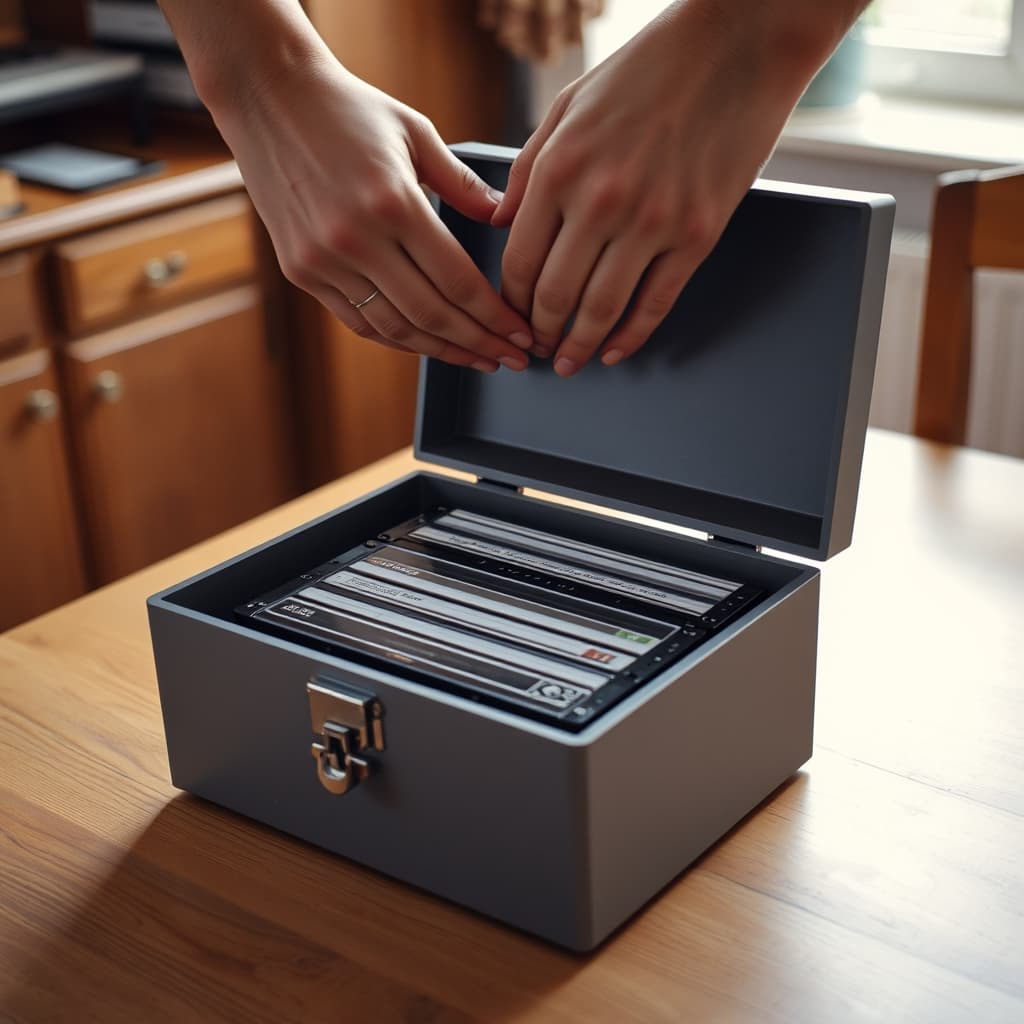
A cassette storage box did not need to lose its entire shape to become awkward. A lid that would not stay shut could change how the box was carried, where it was placed and how readily someone opened it. The tapes remained inside, but using the container now required a second hand or an improvised arrangement. A small repair could restore something less dramatic than appearance: the ability to close it and put it down.
This is the second life of the box, rather than a claim that the recordings or the cassette player have been restored. Container, tape and playback equipment are different objects with different histories. Keeping that distinction clear allows an ordinary latch to receive attention without turning a storage repair into an invented story of technical recovery.
Before the Lid Opened
Reaching for the box involved expectations learned through repetition. The hand went towards the place where the catch usually released. The lid was held at a familiar angle. When the fastening failed, that short sequence became uncertain: the user might support the bottom carefully or avoid moving the box at all.
A repaired closure changed this encounter before any cassette was selected. The box could again be handled as one object instead of a loose lid and a separate base. Whether it was carried often or mostly left on a shelf belongs to the owner’s account. A photograph of the repair alone cannot establish the routines that followed it.
The Repair Did Not Have to Disappear
A replacement fastening or a visible adjustment could sit beside the original surface. Its difference might be noticeable each time the box opened. That does not automatically make the repair crude or the object less meaningful. It can show a decision to keep using the container despite the loss of an original part.
The useful questions are specific. What had stopped working? Which part was retained? Who decided that the box was worth keeping? Record the answers when known, and leave uncertainty visible when they are not. A mark near a catch is evidence of a mark; the identity of the person who made it requires another source.
Familiar Slots Still Guided the Choice
Inside, the arrangement could remain much as it had been before. A listener might reach towards a remembered position before inspecting the cassette itself. Another person could use the same box differently, searching one item at a time. The storage order was therefore not necessarily a universal system, even within a single household.
Repairing the closure allowed that arrangement to continue without requiring a complete reorganisation. This modest continuity matters. A newly purchased container might hold the same recordings while changing the route of the hand, the number of visible rows or the way the lid stayed open. Keeping the old box preserved an established way of finding something.
Returning a Cassette Was Part of Listening
The final act was not always pressing stop. After use, a cassette had to return somewhere. An empty slot might show which recording was still beside the player; a tape placed in another position might confuse the next search. These small departures from order gave the box an active role rather than making it merely a display for old technology.
The latch then completed the sequence. Closing the lid gathered the choices back into a container that could wait for another listening session. The repair earned its value through that repeated action, not simply through a pleasing before-and-after photograph. A cassette box with a changed fastening can preserve both the evidence of an intervention and the quieter habit it made possible again.