 Eski Pano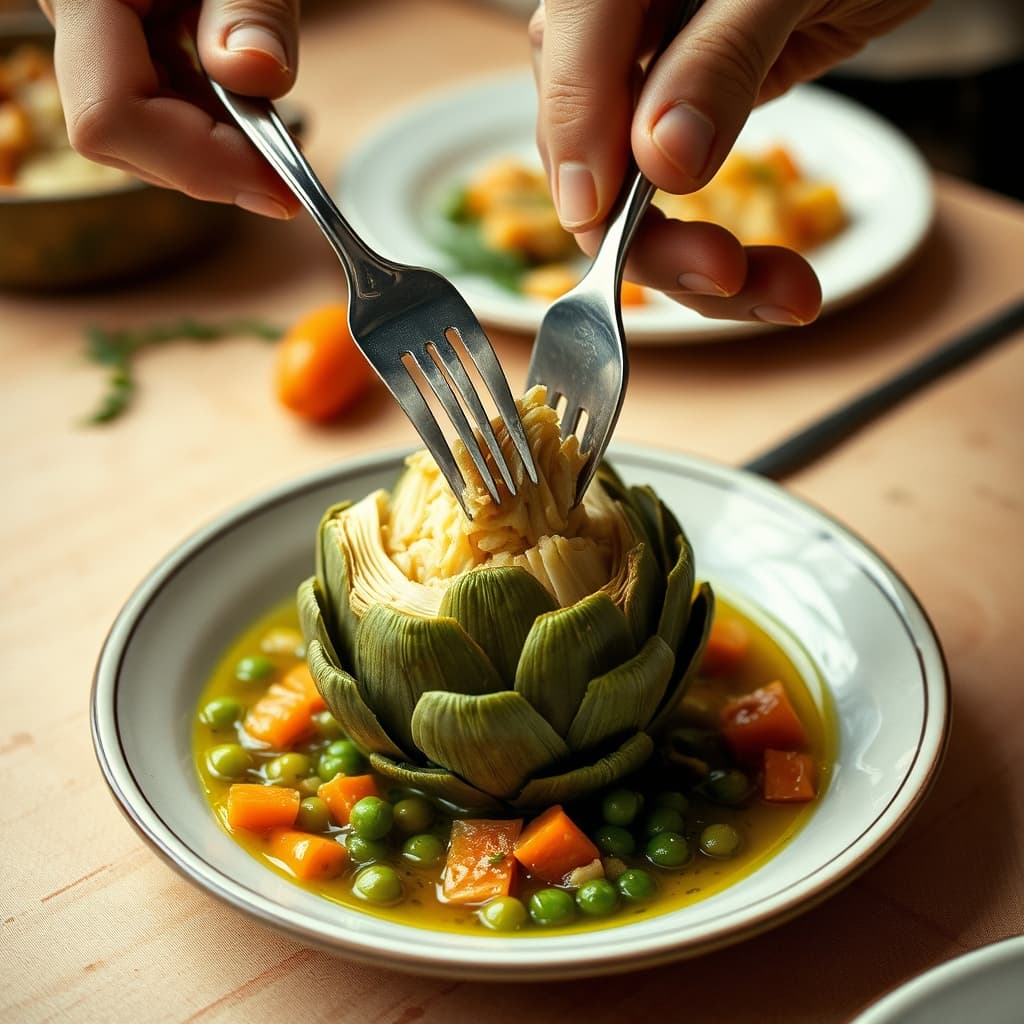
An artichoke heart on the plate could look like a small centre around which the rest of the dish had been arranged. A fork might first take a vegetable from the top or cut into the heart beneath it. In that choice, zeytinyağlı enginar became more than a familiar name. The diner met the household’s version through the order in which its parts were tasted.
There is no single serving arrangement for olive-oil artichokes. Prepared bases, hearts with leaves or pieces cut differently can appear according to the cook and ingredients. The image of vegetables placed within a trimmed base describes one possible plate, not a rule. A childhood association is strongest when it retains the actual preparation instead of turning every family’s enginar into the same dish.
The Vegetables on Top Were Part of the First Choice
Peas, carrot or another accompaniment could occupy the centre before the fork reached the artichoke itself. Their colour made the arrangement recognisable, while their size affected what could be lifted together. The first taste might therefore be of an accompaniment rather than of the vegetable named in the dish.
That detail can explain why two people remember a similar plate differently. One began with a mixture; another separated the parts. Neither memory identifies a complete recipe. Ask what was on the fork as well as what was on the plate, especially when a witness describes a taste returning suddenly after many years.
Cutting the Heart Revealed Its Texture
The fork’s pressure and the way a piece separated contributed to recognition. A diner could remember the heart holding its shape or yielding readily, and contrast that with the vegetables around it. These are observations of a served portion, not sufficient evidence for an exact cooking time or technique.
The cut also changed the arrangement. A neat centre became several pieces that could be combined with the surrounding food. This small transformation belonged to eating the dish, rather than to the cook’s presentation alone. A photograph of the untouched plate misses that moment, although it can show the starting arrangement clearly.
The Liquid Joined Parts That Looked Separate
Oil and cooking liquid could collect around the heart or coat the other vegetables. A bite taken through that liquid differed from a piece lifted from a drier edge. Bread, if present at that particular table, offered another way to encounter what remained on the plate.
The flavour of the liquid depended on the actual preparation. Citrus, herbs or seasonings should be identified through the recipe or the cook’s account, not guessed from a photograph. A sheen can describe appearance; it cannot by itself tell the amount or type of oil. Keeping sensory detail separate from ingredient certainty makes the account more precise.
The Same Dish Could Arrive at Different Moments
A household could serve enginar as one part of a larger meal or bring it to attention on its own. Other dishes, conversation and the order of service changed how it was encountered. Bayram preparations may belong to a family’s particular memory, but the publication date does not establish an occasion or season for the plate.
Who prepared and served it matters alongside when it appeared. The person who arranged the vegetables may have learned from someone else or chosen a different presentation. Record that account where known. A dish carrying childhood memory does not automatically prove an unchanged recipe or an uninterrupted line of instruction.
The first forkful could return a home kitchen through a very particular combination: the yielding heart, a vegetable taken with it and the liquid left around the cut. Remembering the choice keeps zeytinyağlı enginar close to a real table. Older cooking culture survives here not as one ideal plate, but as identifiable decisions made by a cook and rediscovered by a diner.