 Eski Pano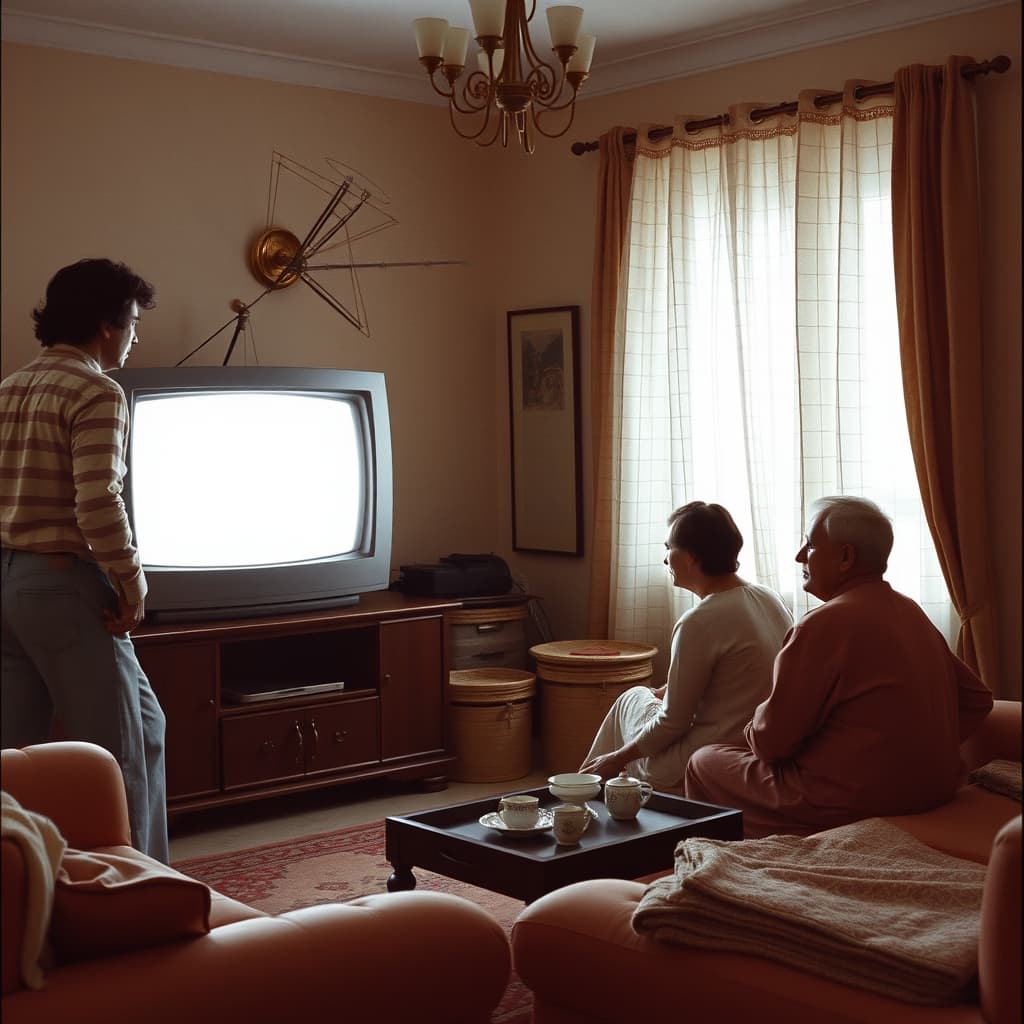
After the indoor aerial had been moved, the room could wait before anyone called the picture clear. One face on the screen looked steadier; a pale disturbance returned at the edge; someone asked whether it was better than before. The excitement of analogue television lived partly in this uncertain interval. Adjustment was a gesture, but improvement had to be watched.
Reception and television equipment varied, so this is not an account of one universal technical cure. It concerns what the household did once an adjustment appeared to help. The screen, the person near the aerial and the viewers farther away formed a short conversation, testing whether they could stop attending to the picture and begin attending to the programme.
A Better Image Needed More Than One Glance
The scene on television could change just as someone tried to judge it. A face, a darker background or a different camera shot made comparison less straightforward. The viewer was not looking at a fixed test object. Their impression belonged to both the reception and the moving broadcast in front of them.
A brief improvement could therefore be followed by doubt. Someone remembered the earlier view as worse; another thought the change had made little difference. Such disagreement does not need an invented fault to explain it. The people were judging from different seats, with different expectations and perhaps different parts of the screen in mind.
The Person Beside the Aerial Missed Part of the Show
While one person adjusted an accessible indoor aerial, others could continue following the programme. The person doing the adjusting heard instructions or comments rather than the whole scene. When they returned to a seat, they might ask what had happened. Technical participation and entertainment were not always the same experience.
The remembered teamwork should leave room for impatience. Repeated requests to move it again could be tiring, especially while household preparations continued nearby. The topic’s bayram setting adds that competing work, not a reason to invent a particular holiday broadcast. If the programme is known, its identity needs a guide, recording or reliable participant account.
Sitting Down Was a Small Vote of Confidence
Once the picture seemed acceptable, the person adjusting could step away and the room’s attention could shift. A tray was put down, conversation shortened or a chair turned toward the set. These actions showed that the family was ready to treat the picture as something to watch rather than a problem to monitor.
Acceptable did not necessarily mean perfect. A viewer could tolerate a flaw in order not to miss more of a film or performance. Another might prefer further adjustment. The decision to settle was a household judgement about the viewing experience, not a measurement of reception quality that can be recovered from a photograph.
Remember the Improvement Without Inventing Its Cause
An account can preserve who stood where, what they said changed and when they returned to watching. It need not assign a technical diagnosis to a vague recollection. The phrase that the picture became clearer describes an experience; explaining exactly why requires evidence about the equipment and signal.
This distinction also matters when an old television appears in an archive image. A still photograph cannot demonstrate that reception remained stable through a programme. Nor should nostalgia turn an account of an indoor adjustment into instructions for risky access or work inside a television. The memory and a present-day repair task are different things.
The first settled minutes gave the adjustment its reward. People stopped comparing the image and followed what it showed, although the uncertainty could return. Keeping that transition in the story restores the particular excitement of a shared screen: not simply having television, but recognising the moment when the room could finally let the programme take over.