 Eski Pano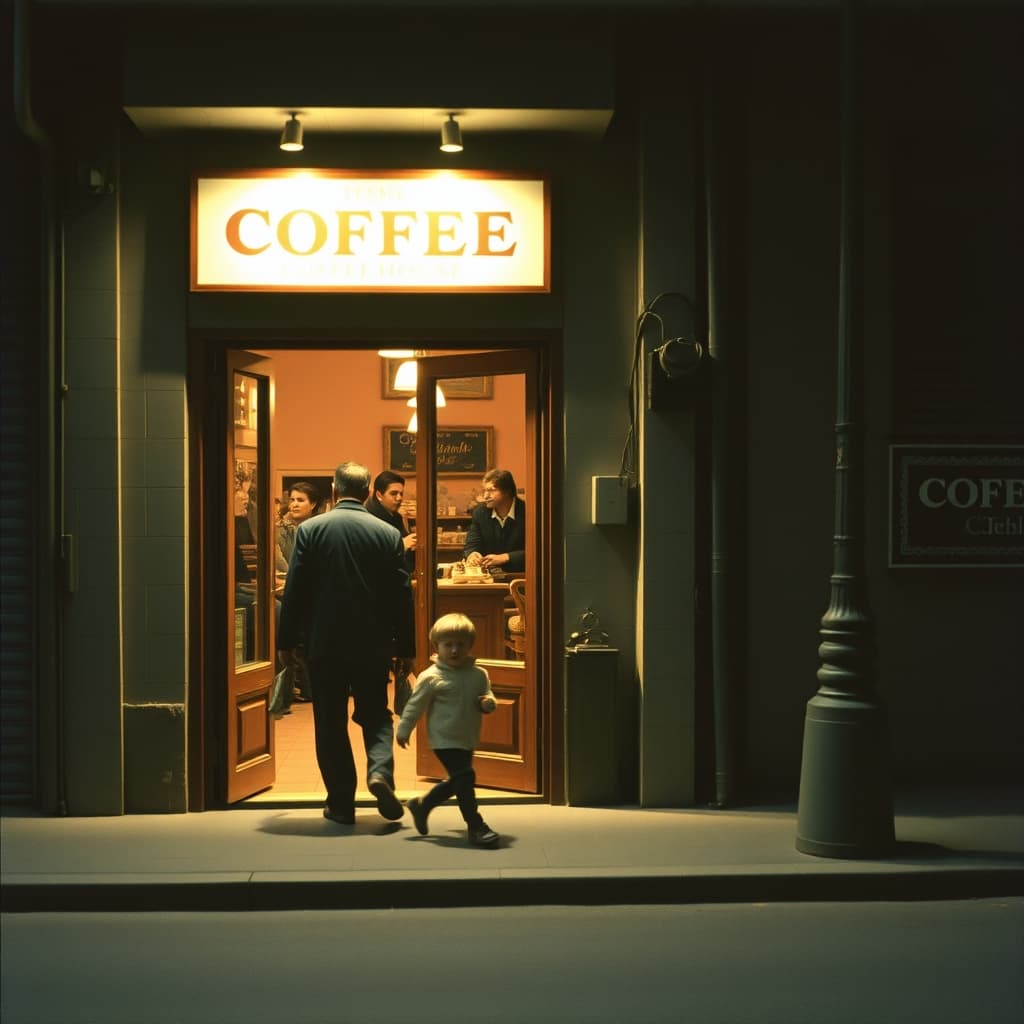
On a winter evening, a child passing a neighbourhood coffeehouse might hear a name before understanding the news attached to it. A door opened, a voice briefly reached the pavement and the conversation became indistinct again. What remained could be a change in tone or the sight of adults paying attention, rather than a complete report.
Children encountered these places from different positions. Some waited for a relative, some passed on the way home and others heard an account later indoors. The coffeehouse was not equally open or welcoming to every household. This article concerns the partial encounter: how news could enter childhood memory without the child having the access or context to understand it.
An Opening Door Changed What Could Be Heard
The doorway gave the street a brief connection to the room. A few words could become clear and then disappear beneath other sounds. The child outside might associate that interruption with a person entering or leaving, even when the conversation had begun long before the door moved.
Winter clothing, weather and the hurry to get home could shorten the encounter further. None of these details establishes a particular event or year. They describe why an account remembered as important might also be incomplete. A vivid memory of the threshold is not the same as accurate recall of everything said inside.
The Adults’ Reaction Could Outlast the Words
A group becoming quiet, someone turning toward another table or a familiar voice speaking differently could make the moment noticeable. A child might remember the response more strongly than the information. This is not evidence of what the news actually was; it is evidence of how the scene appeared to that child.
Adults could react to disagreement, practical concern or something unrelated to the fragment overheard. Assigning an emotion from posture alone risks filling the gaps too confidently. When gathering testimony, ask what the witness saw and heard before asking what they now think it meant. The two answers may belong to different moments in their life.
A Report Reached Home in Another Voice
A relative could bring the news indoors and explain it over an ordinary household task. The child then heard a fuller version, but also one selected and interpreted by that speaker. What seemed like the same news had changed setting, audience and wording.
A question might receive an answer, a postponement or no answer at all. The resulting uncertainty could make the original fragment memorable. An archive should not supply the missing explanation just to smooth the narrative. A family account can record that a child did not know, even when the adult witness can identify the event today.
Later Knowledge Can Reshape the Earlier Scene
Hearing the story again years later may give a name to something once only half understood. It can also cause a later explanation to merge with the original memory. A witness may feel certain of the combined story while being unable to say which part was heard that winter.
Separate the remembered encounter from the later identification. A newspaper or dated record can help establish an event, but cannot prove that every detail in a childhood recollection was heard at the doorway. If the connection remains uncertain, retain it as a possible association rather than an established chronology.
The coffeehouse entered some children’s memory as an edge of adult knowledge. Its winter light, opening door and changing voices announced that something was happening beyond the child’s view. Preserving this partial perspective gives the neighbourhood a more exact history than treating every resident as equally informed. The fragment matters because it records both contact and distance: the child was close enough to notice, but not necessarily close enough to know.