 Eski Pano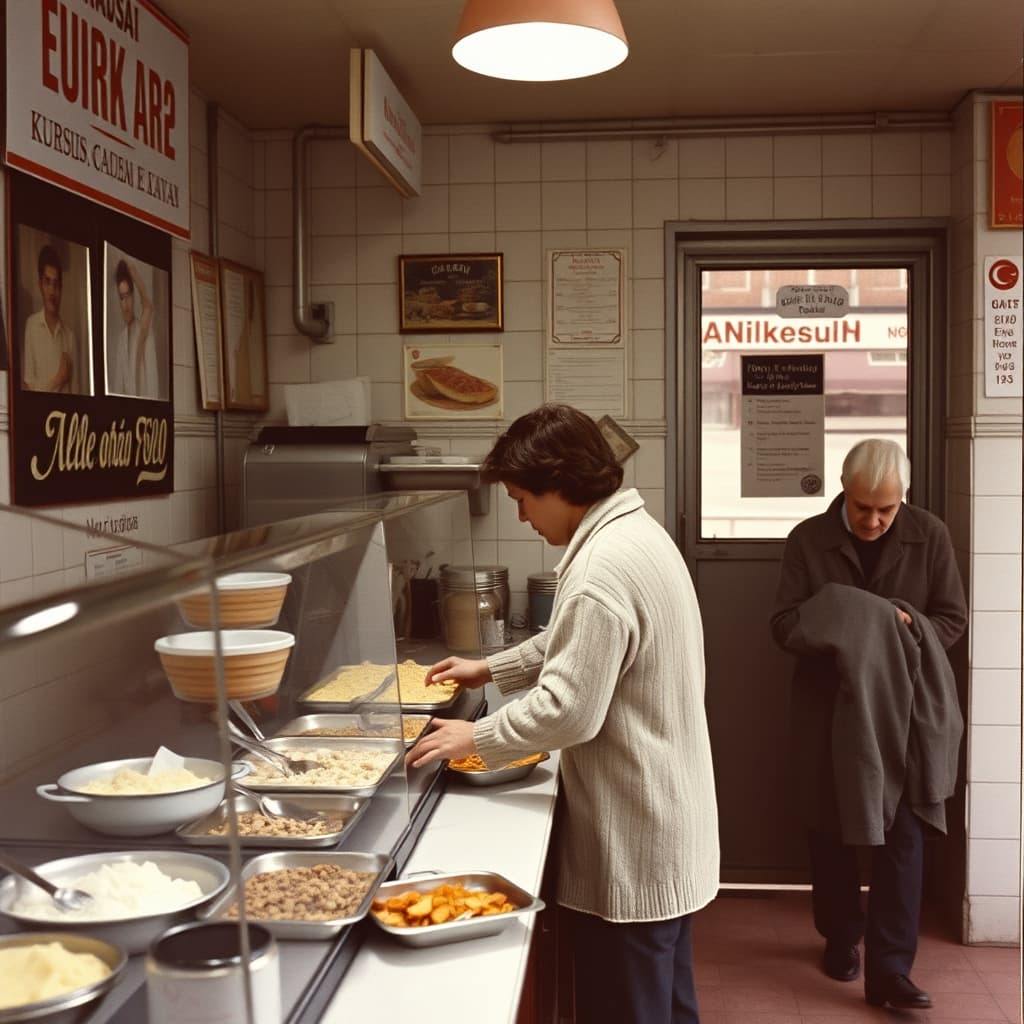
Before choosing a dish, an office worker might already have been calculating the walk back. A city lokanta offered a meal outside the workplace, but lunch still belonged to the working day. The route, the queue and the time taken to settle the bill could matter as much as what was on the plate. This practical calculation gave a familiar restaurant a place in the office’s daily rhythm.
Here, lokanta means a neighbourhood restaurant, not necessarily a municipal establishment or a modern subsidised service. The supplied memory concerns ordinary city eateries used by civil servants. Working hours, restaurant arrangements and individual budgets varied. There is no single national lunch routine to reconstruct; the interesting pattern is the repeated negotiation between a public workplace and a nearby meal.
The Dish Was Chosen With the Return Journey in Mind
Where prepared dishes were visible, a customer could decide by looking rather than waiting for a long explanation. Familiarity with the place shortened the choice further. Someone who knew the portions and accompaniments could order within a budget and judge whether another course would fit the remaining time.
This did not make every customer equally confident. A newcomer might need to ask what a dish contained or how it was priced. A regular’s brief order could sound effortless because the learning had happened on earlier visits. The habit worth preserving is that accumulated knowledge, not the assumption that restaurant service was always quick or uncomplicated.
A Free Seat Changed the Shape of the Break
Finding room could determine whether colleagues stayed together or sat apart. In a busy lokanta, a meal shared at one table was not guaranteed simply because people had left the office together. Their conversation could begin on the walk, pause while they ordered and resume outside after eating.
A table already familiar to a regular offered another kind of continuity. The person knew where to place a coat or bag and how to move without obstructing service. Such details describe the actual room when supported by a witness. They should not be converted into an invented favourite seat belonging to an unnamed clerk.
The Bill Was Part of the Timetable
Finishing the food did not finish the visit. Payment, waiting for change and gathering belongings used time too. A diner watching the door might be thinking about a return deadline rather than being dissatisfied with the meal. The last minutes reveal how eating out fitted work instead of standing entirely apart from it.
Payment arrangements could differ between establishments and customers. Cash, an account or a workplace arrangement should be identified only where records or testimony support it. A remembered inexpensive meal needs its period and circumstances: the amount alone cannot tell a present-day reader whether it was affordable for the person who paid.
Familiar Service Could Survive a Changed Street
An office move, altered working hours or a restaurant closure could break the repeated route. Even without such a clear event, changed traffic and walking conditions could make a once-convenient meal less practical. The disappearance of a lunch habit was not necessarily a judgement on the food.
Some habits could continue elsewhere: looking over the available dishes before speaking, choosing a manageable portion or leaving a margin for the journey. To say a specific habit survived, ask someone who followed the old routine what they still do. A general resemblance is suggestive, but not proof of an unbroken tradition.
The city lokanta organised an office noon through a series of modest decisions. It offered a place to eat, while the worker carried the office clock into the doorway and back out again. Remembering the choice, the seat and the final payment gives this lunchtime its particular shape. The meal was a pause, but it was also a route practised often enough to become almost wordless.