 Eski Pano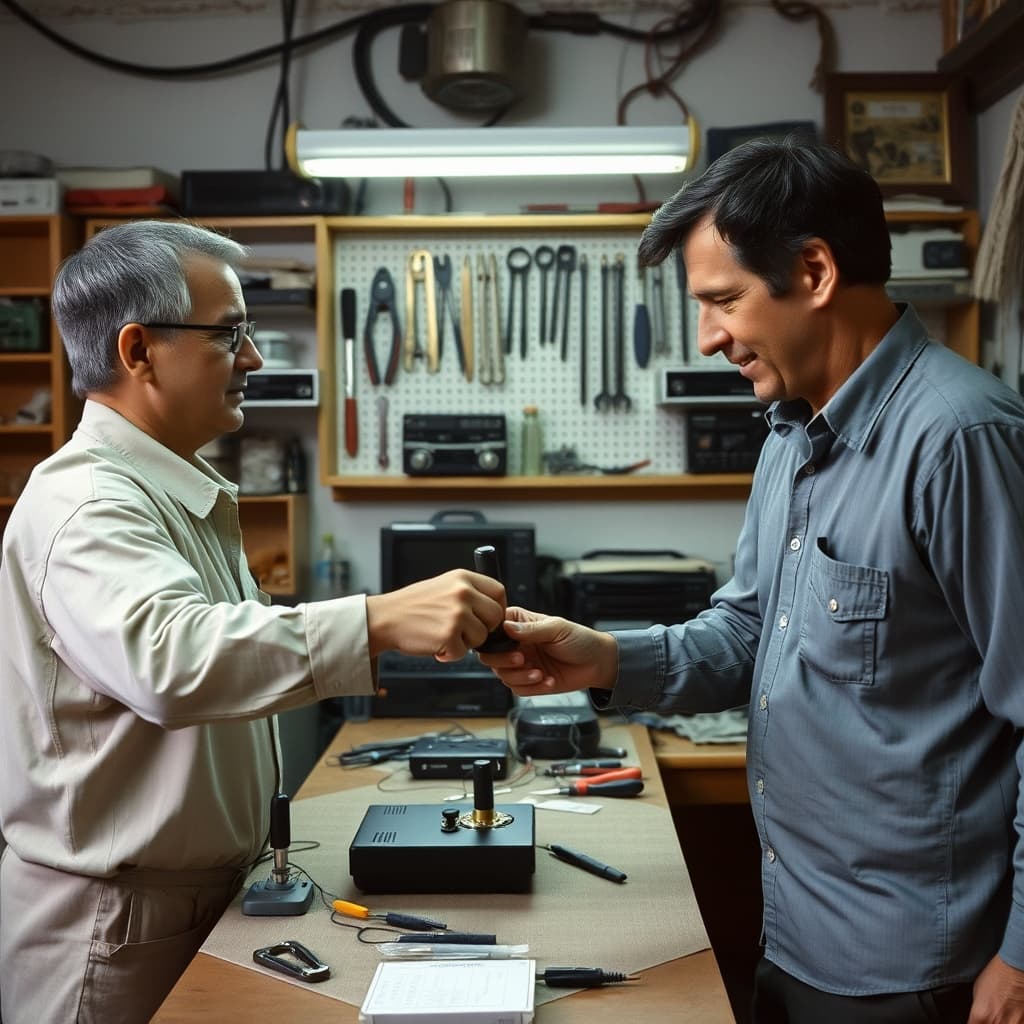
A repaired joystick had to do more than look ready on the counter. Its owner wanted a familiar movement to work again: a direction that no longer responded, a button that needed another press or an interruption that appeared during play. The return of the controller was therefore a small negotiation between the repairer’s test and the player’s experience.
Joystick designs and the systems they serve differ, so no universal repair sequence belongs to this story. The topic’s image of turning an antenna should remain separate from the controller: improving a television picture is not the same task as restoring a joystick’s input. The useful subject is the exchange at the repair counter, where a problem had to be described, reproduced and understood before the object went home.
A Player Described an Action, Not Necessarily a Component
The owner might explain the fault through a game movement rather than the name of a part. It stopped going left, failed during a certain action or seemed to work only when held differently. This language gave the repairer something to investigate without establishing the cause. A confident account of a symptom was not yet a diagnosis.
Questions about when the fault occurred and which system was used could make the description more useful. If another device or connection was involved, the joystick alone might not tell the whole story. A careful repair account keeps the reported problem separate from what the technician actually found, rather than treating the owner’s first guess as a confirmed fault.
The Hand Remembered a Particular Resistance
Players could recognise a controller through the distance a movement travelled, the way the grip sat in the palm or the effort of pressing a button. A replacement part might restore response while making one of those sensations different. The change could be acceptable, welcome or disappointing according to the person using it.
This is why a second life cannot be measured only by whether a signal appears. The repairer and player may need to discuss what has changed in use. A description of the original feel is valuable when it comes from a person who handled the object, but should not be invented from its appearance or applied to every controller of similar shape.
The Counter Test Had Its Own Limits
A brief demonstration could show a successful response without reproducing every condition of a long play session. The owner’s usual position, equipment and sequence of actions might differ from the workshop test. Recording how the controller was tested helps distinguish a verified improvement from a promise that it will never fail again.
The handover also offered a moment to explain replacements or remaining limitations. A clear note was more useful than hiding a change behind a polished case. Where a part had been retained, replaced or adapted, that information could travel with the controller and help a later repairer understand what they were seeing.
Returning Home Was Another Part of the Test
Back in its familiar place, the joystick met the player’s usual habits again. Someone might begin cautiously, repeat the movement that had failed and only then settle into play. That first successful action could carry more relief than the repair itself, because it joined the workshop’s work to the activity the owner had missed.
If the problem returned, the account needed another entry rather than a triumphant ending. A repair history can include repeated visits, unresolved symptoms and decisions not to continue. Those details do not diminish the repairer’s contribution; they make the object’s second life an honest sequence rather than a single miraculous restoration.
The repaired joystick returned a learned gesture to use. Its worn grip could remain while its response changed, allowing a player to meet an old movement again. Keeping the fault description, the repair note and the handover test together preserves that meeting. The object’s renewed life belongs both to the hands that worked inside it and to the hand that recognised it afterwards.