 Eski Pano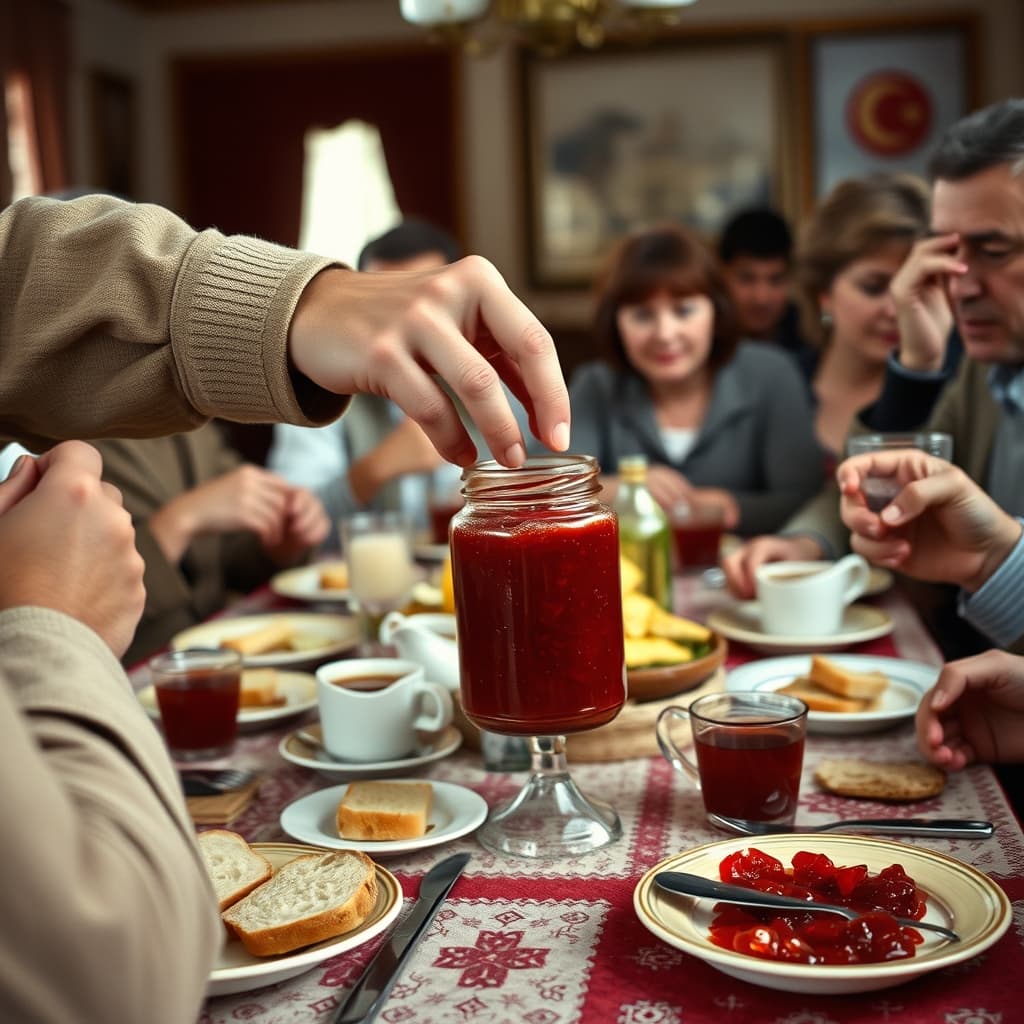
At a crowded family table, rosehip marmalade could be recognised before its jar reached everyone. Its deep colour appeared beside the bread, and the first person to serve themselves tested its thickness with a spoon. Then the jar moved, or someone served the next place. A single batch entered several breakfasts through different portions and different moments.
The remembered table need not have followed one fixed arrangement. Families used different vessels, utensils and ways of serving, while the marmalade’s sweetness and texture varied with preparation. The interest is not a universal rule of hospitality. It is the small distribution through which something made or bought for the household became each person’s food.
The Jar’s Position Decided Who Reached First
Placed near one end of a long table, the marmalade was easier for some diners to reach than others. A request to pass it could briefly interrupt talk; someone attentive might move it before being asked. The serving vessel’s journey made the table’s distances visible, even among people who knew one another well.
A smaller dish could remain in the centre while the main jar stayed elsewhere. That changed how the food was shared and what everyone could see. When collecting a memory, ask whether the jar actually travelled or whether portions did. The two arrangements create different gestures, and later recollection can easily combine them.
Bread Gave Each Portion a Different Surface
Marmalade spread thinly over a broad slice looked different from a small mound on a torn piece. The bread’s surface affected how it was handled and how much was taken in a bite. The same jar could therefore produce a sharper or milder impression without any change in the batch itself.
Some diners wanted an even layer; others left the spread thicker in one place. A child might receive a piece already prepared. These preferences belonged to the meal rather than proving that one person understood the food better. A useful description keeps bread, portion and serving together instead of attributing every difference in remembered taste to the recipe.
The Spoon Made Texture Public
Lifting the marmalade showed whether it held together, trailed slowly or left a marked surface in the vessel. Those visible qualities could become a topic of conversation before anyone tasted it. A person familiar with the household’s usual batch might notice a difference, while a guest encountered it for the first time.
Texture was not simply a judgement of success or failure. A family could prefer a looser spread or a denser one. The preparation account is needed before assigning a cause to the difference. An archive can record what people observed without inventing quantities, cooking times or an ingredient change to explain it.
Sharing Included People Who Arrived Later
A crowded table did not necessarily fill at once. Someone making tea or helping another person might sit down after the jar had already travelled. Their portion could be served by a relative or left for them to choose. The sequence matters because the household’s sharing culture included how it treated delayed participation.
It also matters who provided the marmalade. A jar might be a household batch, a gift or a purchase. Gratitude attached to a particular giver or maker should be recorded when known, not assigned automatically to a grandmother. Gathering, preparation and serving could involve several people, each with a different place in the memory.
What the Table Remembered Was More Than a Flavour
Ask a family member where the vessel stood, what bread accompanied it and whether someone usually passed it along. These questions often produce a more concrete account than asking only whether the taste recalled childhood. A photograph can support the arrangement, while a written recipe describes the batch; neither source replaces the other.
Rosehip marmalade carried a sharing habit through its repeated movement between places. The taste was common, but the experience was not identical: one person reached, another asked, a third received bread already spread. Preserving those differences makes the crowded table legible. The jar connected the diners not by making them alike, but by requiring small acts of attention before everyone had something to eat.