 Eski Pano
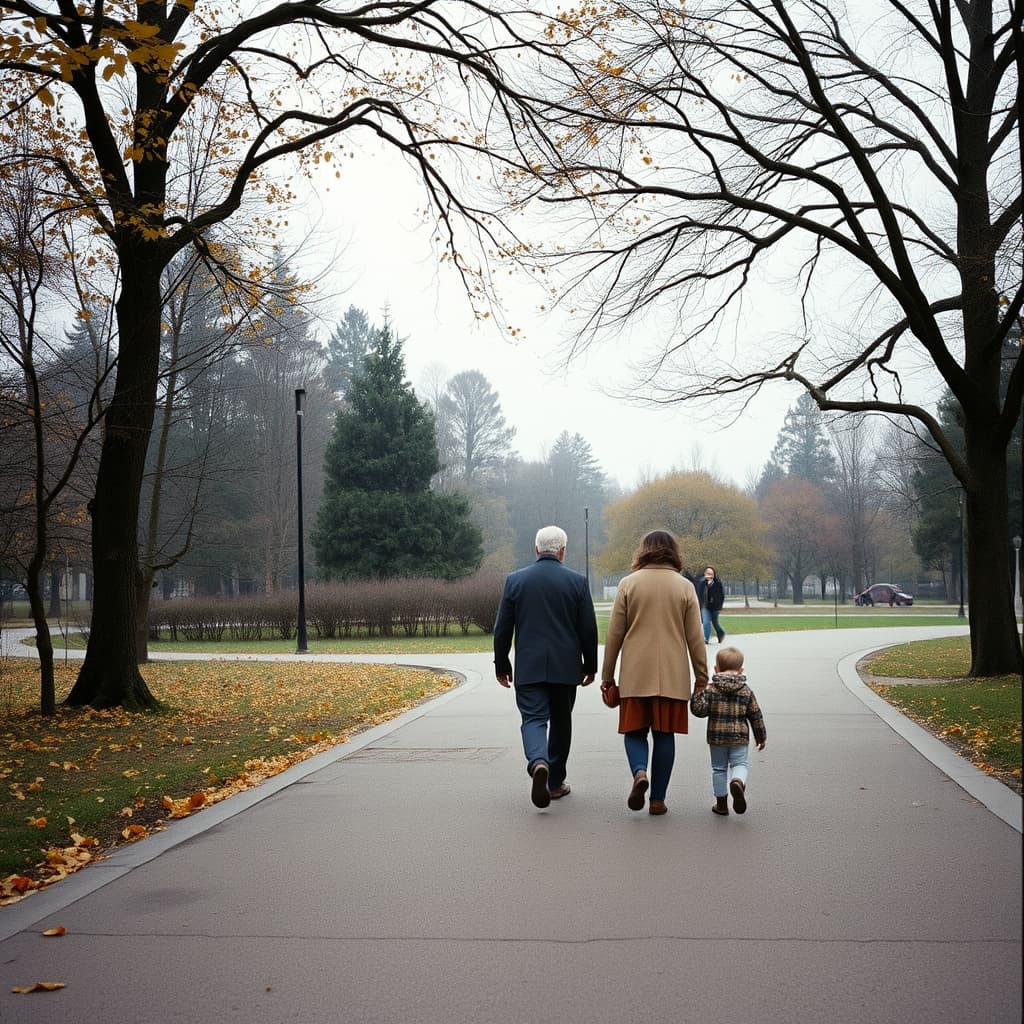
A family entering a city park on Sunday did not necessarily move through it as one compact group. Someone went a little ahead, another paused and the person at the back saw the others turn to check where they were. The outing was shared, but its pace had to be made shared along the way.
This moving arrangement offers a different view of the afternoons that later look so bright in family memory. A photograph could gather everybody together for an instant. The walk around it involved distance repeatedly opening and closing, with small decisions about whether to continue, wait or choose a shorter route.
The Path Looked Different from Each Position
From the front, the next bend or open space might become the point of interest. From farther back, the familiar sight was somebody else’s coat or the gap between two companions. The same path supplied different views according to where each person walked.
A child could pause at something an adult barely noticed. An adult could need a slower pace while another person was ready to keep moving. These possibilities should not be reduced to a single rule about age. The particular group, its needs and the day itself determined the arrangement.
Yellow leaves might belong to one remembered visit, while another family recalled shade or a different season. Such details give an afternoon its setting. They do not establish that every Sunday outing had the same light or that the remembered park was equally easy for everyone to use.
Waiting Was One of the Activities
Stopping for another person could be a simple act of companionship. It could also be experienced as an interruption by someone eager to reach a destination. A family afternoon contained both generosity and impatience, often without either becoming its defining story.
The person waiting and the person being waited for did not necessarily understand the pause in the same way. One might scarcely remember it; the other could feel responsible for slowing everybody down. An affectionate account gains depth when it leaves room for this difference.
Choosing another route could change the balance. A shorter circuit, an easier path or a decision to remain in one area offered ways to continue together without demanding identical stamina. Whether those choices were available depended on the park, not only on the family’s goodwill.
The Return Journey Gathered the Group Again
Towards the end of the visit, attention could shift from what came next in the park to how everybody would get home. People who had spread out on the way in might now look for one another before leaving. The outing had to return the group to a common direction.
Tiredness could make the last stretch feel different from the first. A remembered happy Sunday did not require every step to have been effortless. The pleasure might lie in having spent time together despite the unevenness, rather than in the absence of inconvenience.
A later picture of the park can bring back a particular place where someone used to wait. The location matters because it held an action between people, not simply because it was attractive. The path’s social map can be more precise than a memory of the park’s overall design.
What shines in the Sunday outing is often the repeated return to company: someone looked back, another caught up and the walk resumed. Remembering the slowest view keeps that work visible. The family afternoon was not one pace inherited from a kinder past. It was a pace adjusted, sometimes imperfectly, by people deciding to remain together.