 Eski Pano
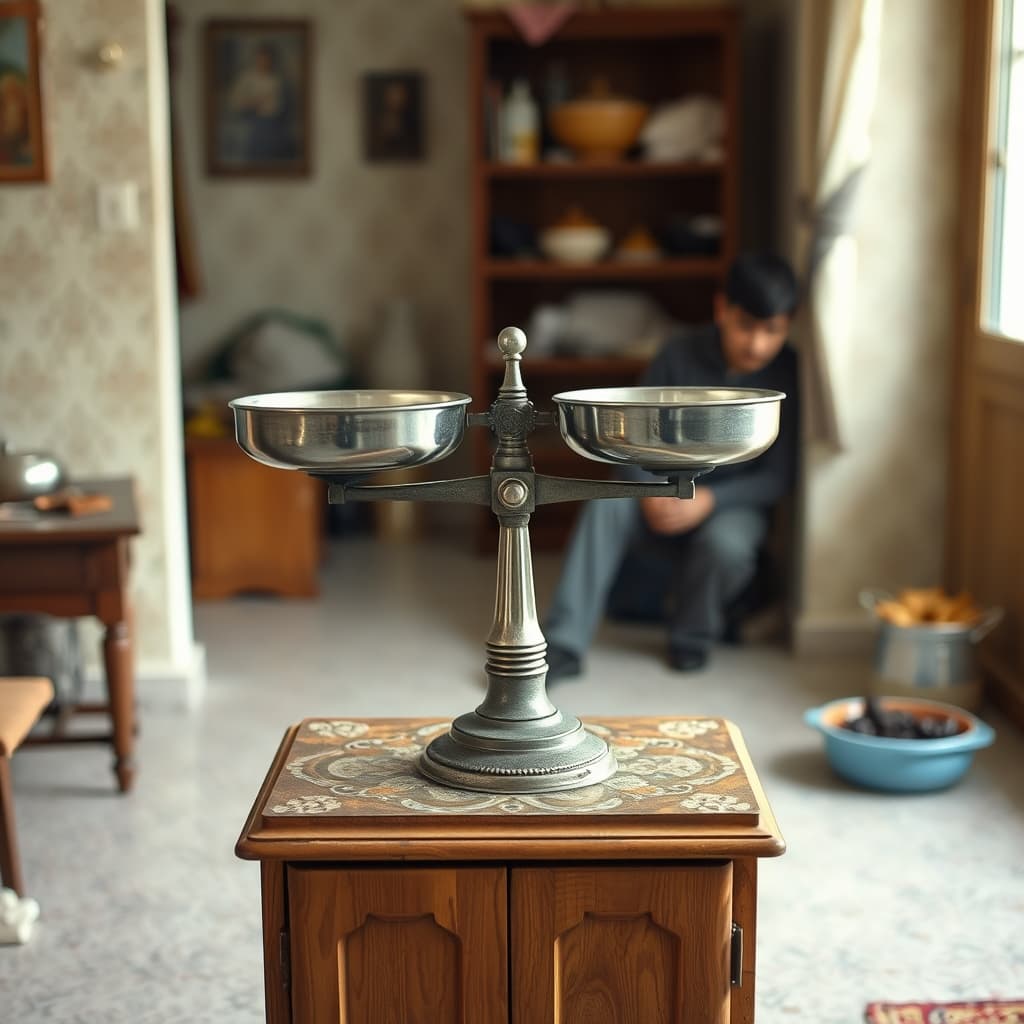
During preparations for Bayram, an old balance scale could become visible again as belongings were moved and a room was put in order. The family object was not necessarily newly discovered. It had been present but out of the everyday line of sight. Giving it a place changed how often people encountered it.
The remembered brightness of the scale belongs within that rearrangement. An object can look newly prominent because the things around it have changed, not only because its surface has been cleaned. The cleared space, the direction of light and the decision to keep it visible all helped shape its return.
Making Room Was Part of the Preparation
A household preparing to receive visitors might reconsider what stood on a shelf or cabinet. An old scale introduced a recognisable shape among other possessions. Its beam and pans could distinguish it from the objects around it, depending on the actual instrument.
The type of scale matters. A family’s general name may refer to different measuring devices, and the visible parts should determine the description. This account concerns a balance with a beam and pans; it does not assign that arrangement to every object called an old scale.
Placing it in view did not establish that it was ready for weighing. An instrument’s appearance and its measuring performance are separate questions. The household could value it as an inherited possession without putting it back into practical service.
A Familiar Shape Invited a Family Question
A visitor might ask where the scale had come from or who had used it. The answer could join an older working life to the room in which the family now gathered. An object associated with measurement became a prompt for recognising a person or a former place.
What the family knew needed to remain distinct from what the shape suggested. A scale resembling one used in a shop did not prove that a named relative had owned a shop. A surviving account, photograph or document could support the connection; a plausible story alone could not.
Some relatives might remember the instrument from use, while others knew it only as something kept. Their attachments were different but compatible. The object could move from working tool to family possession without every generation having witnessed its original purpose.
The Holiday Ended, but the Position Could Remain
After the visitors had gone, the scale might stay where it had been placed. A temporary effort of preparation could become a longer arrangement in the room. The object then entered ordinary days through a decision first made for an occasion.
Alternatively, it could return to storage. That choice did not necessarily show diminished affection. Space, other uses of the room and the object’s condition all belonged to the household’s circumstances. Inheritance did not require permanent display to remain meaningful.
The family legacy was therefore sustained by more than shine. Remembering which person recognised the scale, what was actually known about it and why it was placed there gave the object a context that polishing alone could never supply.
Bayram preparations made the scale newly noticeable by changing the household’s view of what it already held. Its renewed face was partly a renewed relationship: somebody made room, somebody asked and a familiar instrument became present in conversation again. The heirloom took shape through those acts of attention, whether it remained on the cabinet or was carefully put away after the gathering.