 Eski Pano
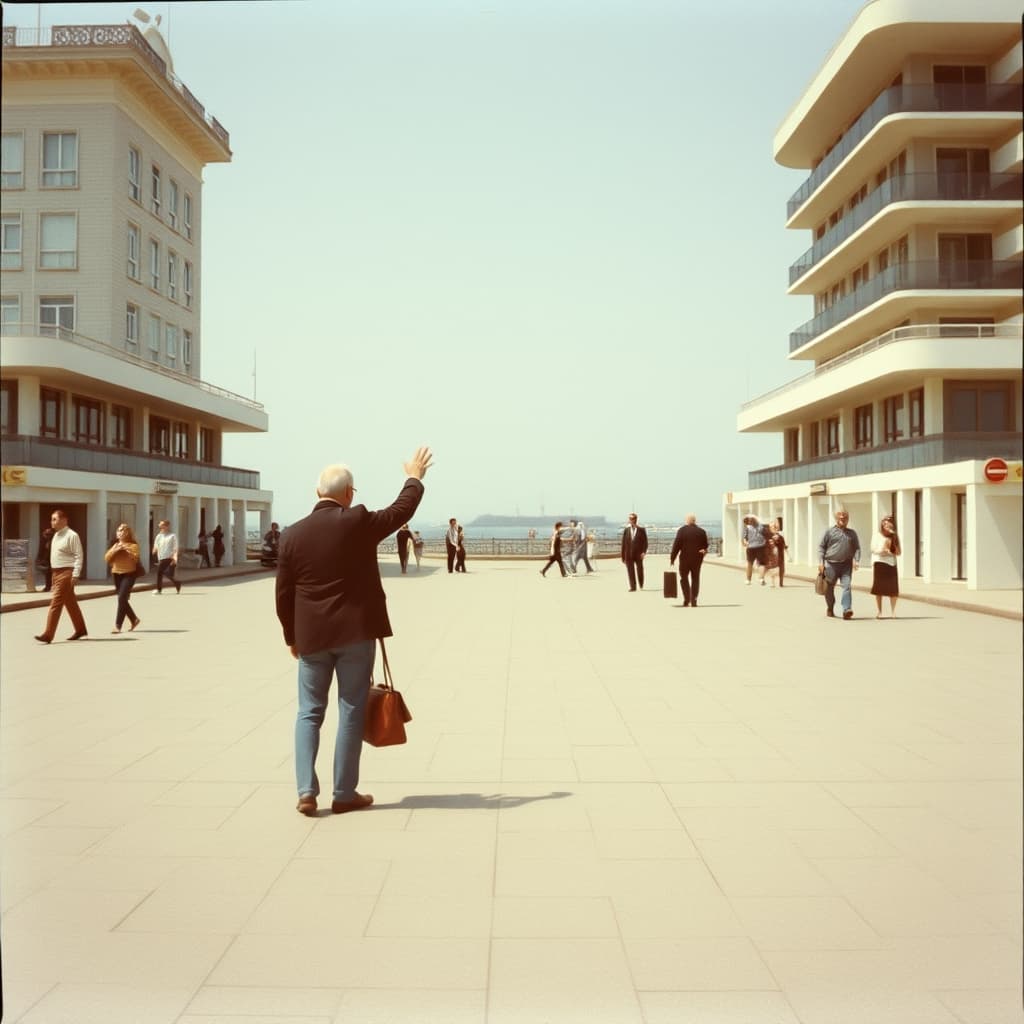
Two people could both reach the agreed pier square and still spend several minutes looking for each other. One waited facing the water; the other watched the route from the street. The landmark was shared, but their positions were not. What later sounded like a wordless agreement had once depended on learning where the other person was likely to stand.
The square’s importance lay partly in this repeated adjustment. A familiar meeting point became more precise through use. After several encounters, a companion might know not only which place was meant but which approach would reveal the waiting person first. The map in their heads contained habits as well as buildings.
Arriving Was Not the Same as Being Seen
A person coming from a ferry and one arriving from the street could encounter the same square from different directions. Each approach supplied a different foreground of moving people. A position obvious from one route might be partly hidden from another.
Waiting therefore involved looking towards an expected approach. The person on the other side might be doing exactly the same thing, with attention directed elsewhere. Neither had necessarily broken the agreement. The problem was a small mismatch between two sensible ways of reading the space.
When companions finally noticed one another, a wave could settle what words had not specified. The gesture identified the person and their position at once. The relief belonged to a practical discovery: both had arrived, and the meeting could now become the next part of the day.
The Next Meeting Could Begin with Less Explanation
A later arrangement might leave the side unstated because the earlier encounter had established it. Someone headed automatically to the place where they had found their companion before. Repetition made a particular location feel self-evident.
That ease was shared knowledge, not a quality of the square itself. Another friend could reasonably choose somewhere different. The same person might have different meeting habits with different companions, each attached to its own history of arrivals.
The rhythm after school could reinforce such a habit where routes and obligations allowed it. A bag or familiar direction of approach might help recognition. This was one possible routine, not evidence that every student used the pier square or had the same freedom to linger there.
A Changed Square Could Expose the Old Agreement
If the familiar view changed, the unspoken detail could become important again. A different entrance, a temporary obstruction or simply a larger crowd might hide the place that had seemed obvious. Companions then had to describe what they had previously left unsaid.
The difficulty could reveal how much memory was tied to a precise position rather than a broad name. Saying the pier square preserved the district-level location; remembering which way a person faced preserved the encounter. Both scales were part of finding someone.
A photograph may show the landmark without showing why one side mattered to a particular pair. Their account can supply that relationship without inventing the exact words of an old arrangement. The place became meaningful through what they repeatedly did there.
The vivid memory of a pier-square meeting often rests in that last movement of recognition: someone turned, a hand rose and the distance became a route towards a familiar face. The wordless understanding was not mind-reading. It was a modest knowledge built together, one arrival at a time, until both people knew where to look.