 Eski Pano
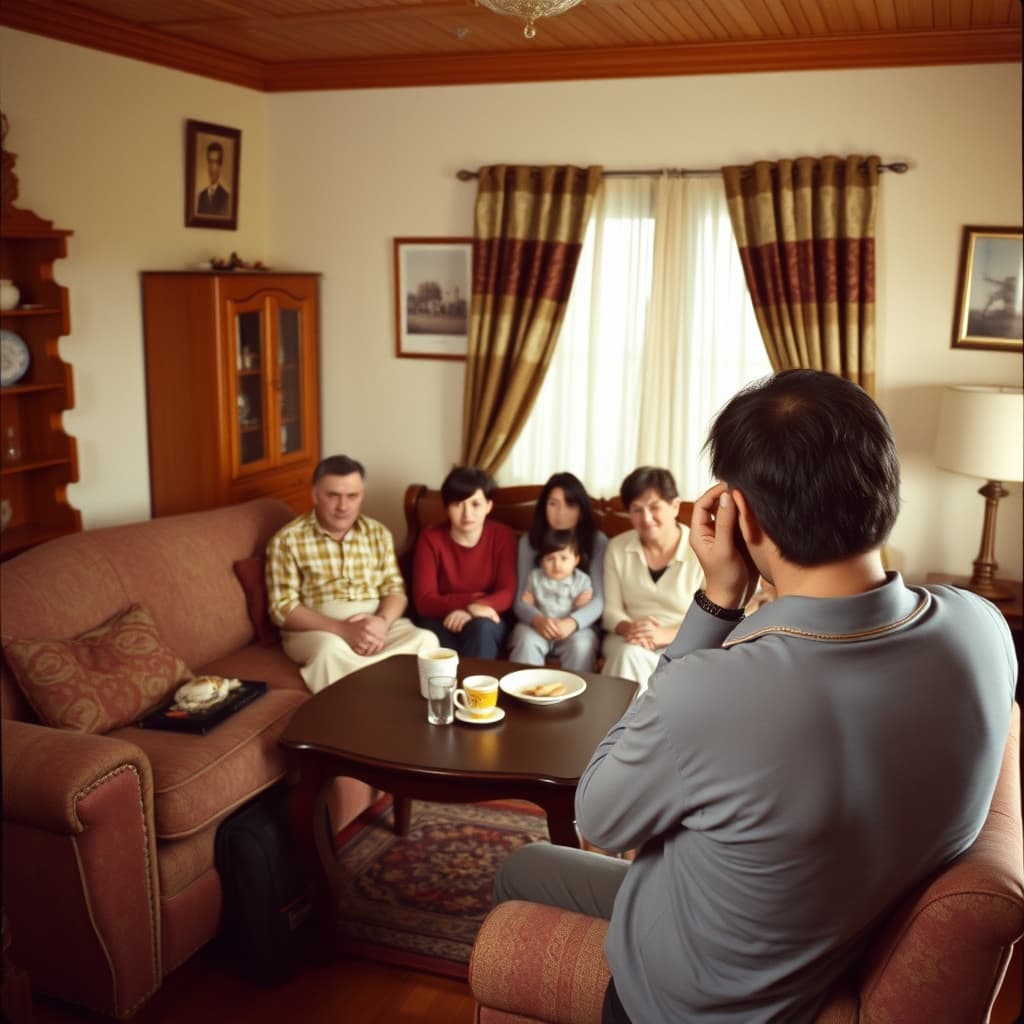
The first flash did not necessarily end the family photograph. One person relaxed, another began to turn towards a conversation, and the photographer might still want the group to remain in place. The sitting room had briefly agreed to be a picture, but it did not return to ordinary life at exactly the same moment for everyone.
This interval gives indoor flash photography some of its remembered ceremony. The gathering involved an agreement about attention as well as a camera. Everyone needed to understand when to look, when to remain still and when the effort was finished. The flash offered a visible signal, but its meaning could be less final than it appeared.
A Picture Was Taken, but Was the Group Finished?
Someone outside the camera’s operation could reasonably treat the burst of light as completion. A smile fell away, shoulders changed position or a person looked towards a relative beside them. The group began becoming individual people again.
The photographer’s task might continue. Another frame could be wanted because someone had moved, because a second arrangement was planned or simply because the person taking pictures had not yet finished. Those reasons belong to the actual session; the surviving print alone cannot explain every decision.
The camera and flash equipment also varied. An account of bounced light, a flashbulb or another system needs identification rather than an assumption that all old devices worked alike. The social pause can be understood without adding unsupported technical details.
The Second Request Met a Different Room
Asking people to stay a little longer meant gathering their attention again. Someone who had begun to speak now paused; another who had moved needed to decide whether to return. The second picture was not merely the first one repeated. The room already knew what waiting for this photographer felt like.
Children and adults could have different patience for the process. A family might remember the scene with amusement while one participant remembered wanting to leave the arrangement. An affectionate account can hold both experiences without turning discomfort into part of an obligatory performance.
The person behind the camera also remained outside the group being recorded. If nobody exchanged roles, the photograph could preserve the family gathering without showing the worker responsible for making its image. The missing person belonged to the session even when absent from the print.
The Print Preserved Only One Part of the Sequence
A successful photograph could later suggest a single effortless instant. It did not show the request to remain, the movement after the first flash or the return of attention before another attempt. The finished image condensed a longer negotiation into one arrangement of faces.
Where several frames survive, differences can reveal that movement. A changed hand, a new direction of gaze or a person missing from the next frame may show that the group did not remain fixed. Those visible changes are more reliable than an invented account of what everybody said.
Nor does a family photograph make later public sharing automatic. Being present for a picture and agreeing to its publication are different matters. The domestic character of the scene belongs with the people who participated, not only with the person who kept the print.
The first flash is memorable because it sat between holding a pose and letting it go. For a brief moment the family had to learn whether to stay together as an image or return to the evening around them. The ceremony lived in that ordinary uncertainty, just beyond the instant the photograph appears to contain.