 Eski Pano
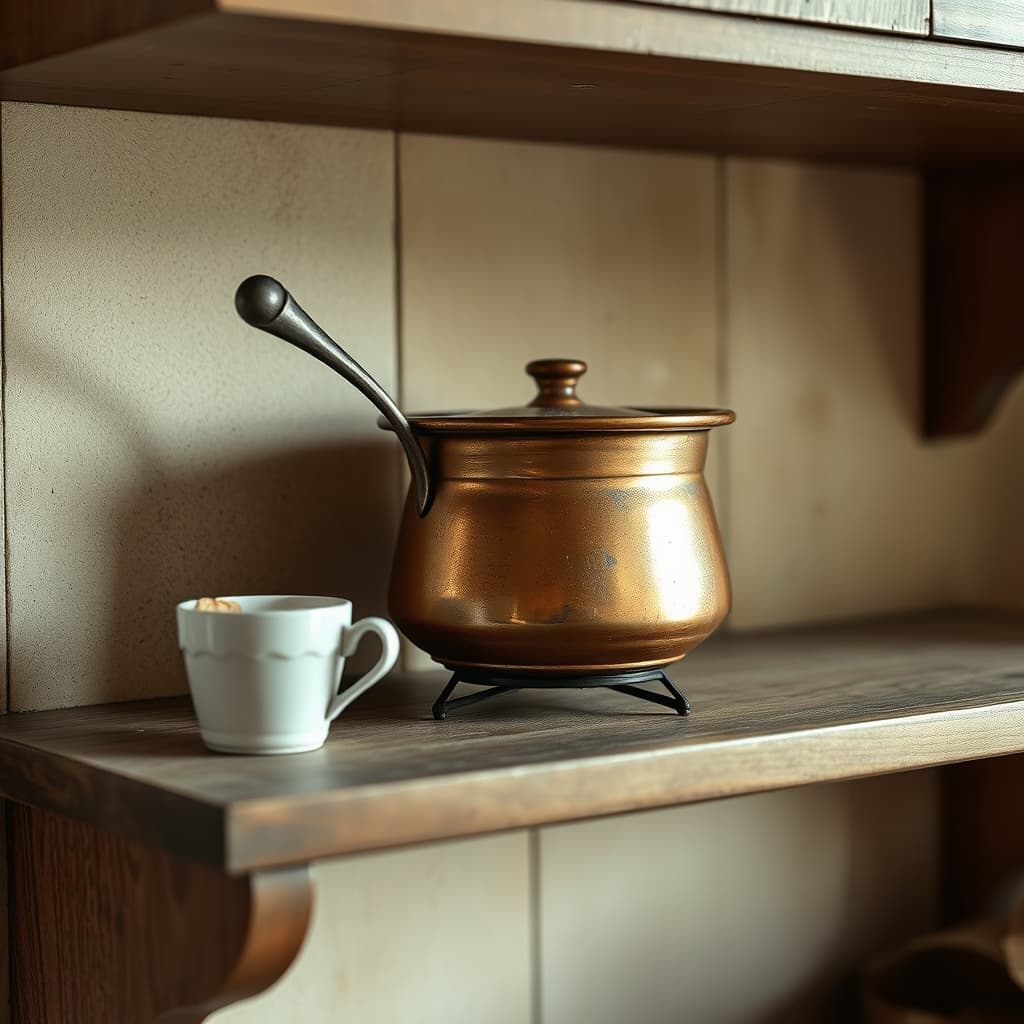
A copper cezve could be recognised in a kitchen without being lifted or examined. Its handle pointed into a familiar space, and its small body stood where someone expected to find it. The object’s everyday trace lay partly in this arrangement: a known shape ready to be noticed among other things.
For a person returning to an old kitchen, that position could matter more than a polished surface. The cezve belonged to the view through repetition. It had appeared between tasks, before coffee and after the cups had been taken away, becoming familiar without requiring close attention every time.
The Handle Extended the Object’s Outline
The handle made the cezve occupy more visual space than its bowl alone. Seen from one direction, it could overlap another object; from another, it stood clear. A kitchen photograph might preserve that outline even when the copper surface was difficult to distinguish.
Handles differ in material, shape and attachment, and the actual object should guide the description. A family’s recollection of reaching for a particular grip cannot identify the construction of every copper coffee pot. The modest specificity of one vessel is enough.
The position also belonged to the surrounding arrangement. Other utensils, a shelf edge or a nearby container gave it a setting. Removing the cezve for display could make its form newly visible while losing the relationship through which it had first become recognisable.
A Resting Place Was Learned through Repetition
A person putting the vessel away made a small decision about where it would be found next. Repeating that action could establish a household habit without anybody naming it as a ritual. The next person knew where to look because the placement had become dependable.
The habit was not necessarily shared equally. One household member might know the usual position in detail, while another remembered only that a cezve was somewhere in the kitchen. Their different familiarity could reflect different involvement in preparing or clearing coffee.
This distinction gives the ordinary object a social history without inventing an owner. The person who used or put it away contributed to its place in the room. The memory of coffee includes that work even when a later viewer first notices the copper’s colour.
A Displayed Cezve Met a Different Gaze
In a collection or on a cabinet, the handle could be turned to show the object more clearly. That presentation might be appealing, but it did not necessarily reproduce its position in use. The collector and the former household were looking for different things.
Nor does a vessel’s attractive appearance establish that it is suitable for brewing again. Display and use remain separate decisions. Recognising the shape of a remembered coffee pot is not an assessment of its present condition.
An inherited account can preserve the earlier setting with a simple description of where the cezve stood and who actually remembers it there. A photograph can add another view. Neither needs to turn every surface mark into a story about a particular cup of coffee.
The copper cezve attracts attention because its shape carries a task, but familiarity can begin before that task is performed. A handle pointing into its usual space brings back the small geography of a kitchen. The quiet trace of use is not only what happened inside the pot; it is also the place to which somebody repeatedly returned it.