 Eski Pano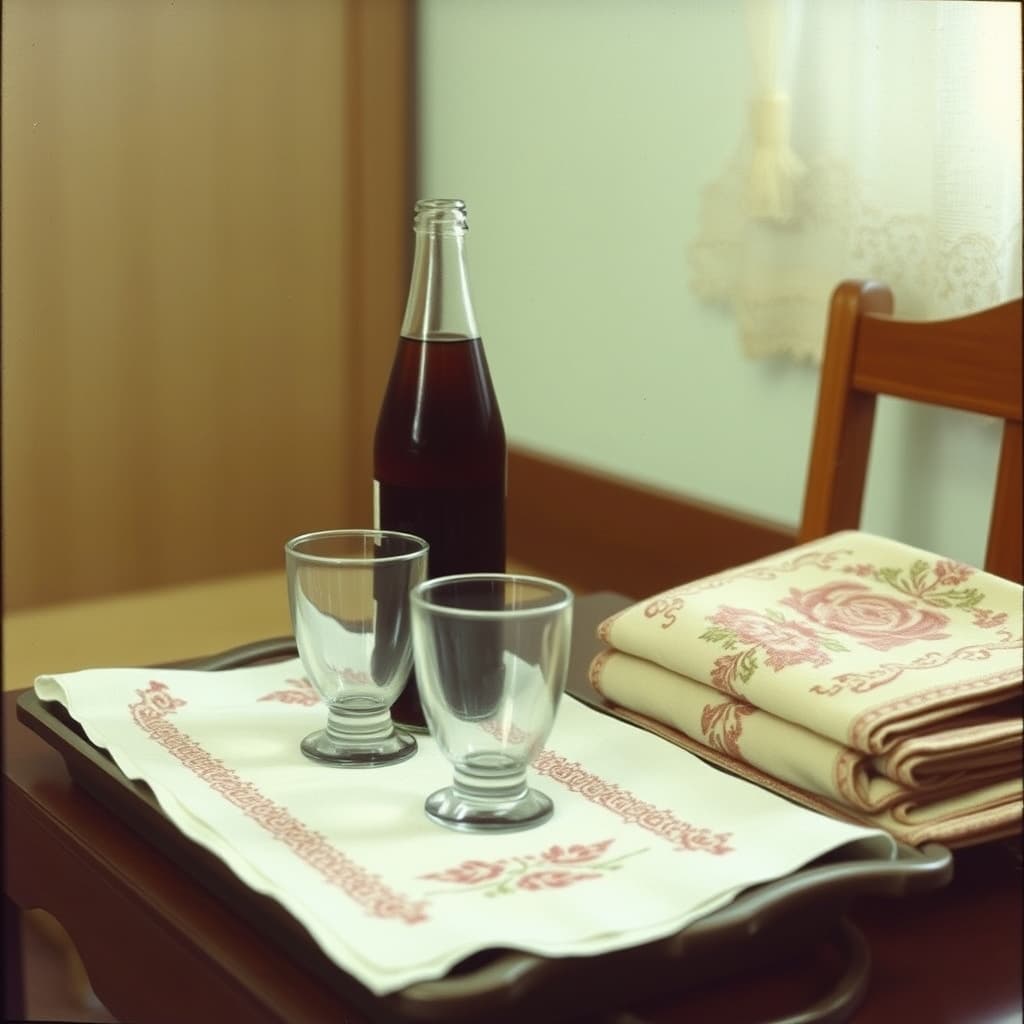
A glass soda bottle beside folded dowry textiles puts two kinds of waiting in the same picture. The textiles may have been prepared for a future household; the drink could have been waiting for a visitor, a tray or the end of a gathering. Their proximity is suggestive, but it does not establish a traditional role for the bottle. The room’s actual use matters more than an attractive story supplied later.
A dowry room could serve as storage, a place to arrange prepared goods or a room used for other household activities between visits. Practices varied, and not every family had a separate room. When a photograph or surviving bottle connects soda with this setting, begin by asking how the objects came to be together. Preparation for marriage and everyday hospitality need not have followed the same timetable.
Glass and Folded Cloth Occupied Space Differently
A bottle stood vertically and concentrated weight on a small base. Folded cloth spread across shelves, a bed or a table, showing edges and layers. Placing a drink nearby could make a prepared surface serve a second purpose. A tray, if present, helped distinguish serving space from the goods being displayed or stored.
The arrangement can reveal a practical household choice without revealing its meaning. A bottle near an embroidered cover may have been put there only briefly. Its position does not prove that it was a gift or part of a dowry list. Look for contemporary notes and ask participants rather than reading a permanent relationship into a single photograph.
The Visitor’s Drink Had a Shorter Horizon
Prepared textiles might wait for weeks, months or longer, depending on the family’s circumstances. A drink brought into the room generally belonged to a shorter sequence: fetching, offering, drinking and clearing away. That contrast gives the bottle a useful role in reading the scene. It marks activity around stored objects, not merely objects awaiting use.
Who handled the drink also matters. The person arranging textiles might also have served visitors, or the tasks might have been divided. Neither arrangement should be assumed. Asking who brought the tray and who put things away can uncover work that a posed view of the finished room leaves out.
An Opened Bottle and an Unopened One Tell Different Things
A cap, the level of liquid and accompanying glasses can offer clues to the stage of a visit. They are clues rather than a complete chronology. A bottle may have been moved before the photograph, and an empty one may have remained after guests left. The image records an arrangement at one moment, not the full order of actions.
If the bottle survives, its label, surface and base can help identify it for comparison with other examples. Such identification should remain separate from the family account. A manufacturer’s mark can describe the container, but cannot tell why a particular person placed it beside a cloth or decided to keep it.
Staying in the Room Changed the Question
When a bottle remained after its ordinary use, the question changed from why it was there to why it was not removed. It might have acquired a family association, served another purpose or simply been overlooked. A later keepsake story is valuable when its source and date are recorded, but it should not be projected backwards as the original intention.
The textiles have their own histories of making, buying, maintaining and expectation. The bottle should not eclipse those histories because glass photographs well. A full description gives both objects space and avoids presenting the dowry room as effortless decoration. Preparation could involve pleasure, obligation and financial pressure in different proportions.
The scene becomes richer when its uncertainties remain visible. One object waited for future domestic use; another may have interrupted that waiting with an ordinary act of hospitality. A Digital Nostalgia Archive can preserve the connection by keeping the photograph, the bottle’s identification and the family’s account together without merging them into invented custom. The room then holds activity as well as anticipation, with each object allowed its own duration.