 Eski Pano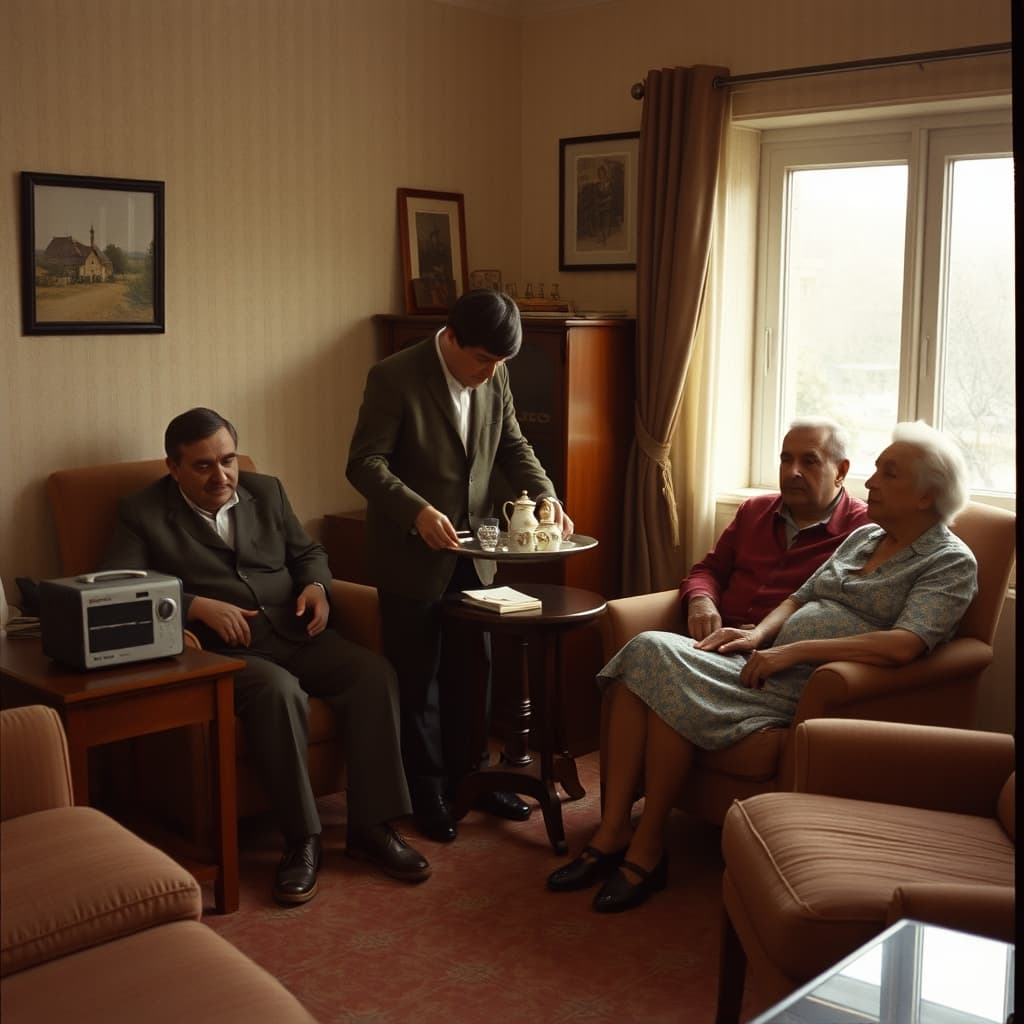
A transistor radio did not make the sitting room disappear. Its voice arrived among the sounds already there: a cup placed on a saucer, footsteps from another room, a chair shifted closer. When a family became quiet for a broadcast, the quiet was made by people briefly changing what they were doing. That small adjustment is often more revealing than the familiar image of everyone sitting motionless around the set.
Households listened in different ways. A radio could accompany work, gather attention for one programme or remain at the edge of conversation. The device’s speaker and the room’s arrangement affected what was audible, but a particular model or station must be identified from evidence. The subject here is the listening room itself, where a broadcast and domestic activity had to share the same air.
A Teacup Could Arrive Between Two Sentences
Serving tea did not necessarily stop because listening had begun. Someone might carry a tray through a passage, set down glasses and then join the others. A short gap in speech offered a convenient moment for a louder movement. The person doing that work heard the programme from a changing position, unlike the listener who stayed nearest the radio.
The household sound could become attached to the remembered programme even when it had nothing to do with the transmission. In recollection, a spoon and a presenter’s pause might seem to belong together. This does not make the memory false, but it means the listening experience cannot be reconstructed from a broadcast recording alone.
The Same Voice Reached Different Seats
A listener close to the speaker could hear words that were less distinct across the room. Furniture, open doors and other activity contributed to that difference. Turning up the volume was one possible response, not a guarantee that everyone would hear comfortably. Moving a chair or asking for a sentence to be repeated could change the social arrangement as well as the sound.
Control was not shared equally in every household. The person nearest the knob might choose the level while someone farther away hesitated to interrupt. Remembering where people sat helps explain who could follow easily and who relied on others. A floor plan drawn from a participant’s account can be useful without requiring a perfectly measured reconstruction.
A Pause Was a Chance to Rejoin the Room
Between items, listeners could resume a conversation, ask about a visitor or call toward the kitchen. When the next voice began, attention might return quickly or remain divided. These changes made communal listening less uniform than a staged photograph suggests. The family did not become one audience with one uninterrupted response.
A child might recognise an adult’s gesture asking for quiet before understanding the broadcast itself. Another person could keep knitting or sorting something while listening closely. Visible stillness was not the only sign of attention. Accounts from several family members can reveal different ways of participating in the same programme.
What Was Missed Could Become Part of the Habit
A door opening or a question at the wrong moment could cover a few words. Someone asked what had been said; another offered a remembered version. This short retelling moved the broadcast into family speech, sometimes accurately and sometimes with uncertainty. It should not be treated as an exact transcript simply because everyone recalls discussing it.
For an archive, keep the distinction between the recorded transmission and the account of hearing it at home. Note the station and approximate occasion where known, alongside the room, activities and listeners. If a witness remembers a domestic interruption but not the programme’s title, that detail still describes a real aspect of radio use without establishing a date.
The transistor radio’s place in memory was made partly by sounds it did not produce. Cups, steps and returning conversation surrounded the voice and gave shared listening its household shape. Preserving those sounds keeps the family from becoming a row of silent figures. It restores the room in which listening happened, including the people whose work continued while others leaned toward the speaker.