 Eski Pano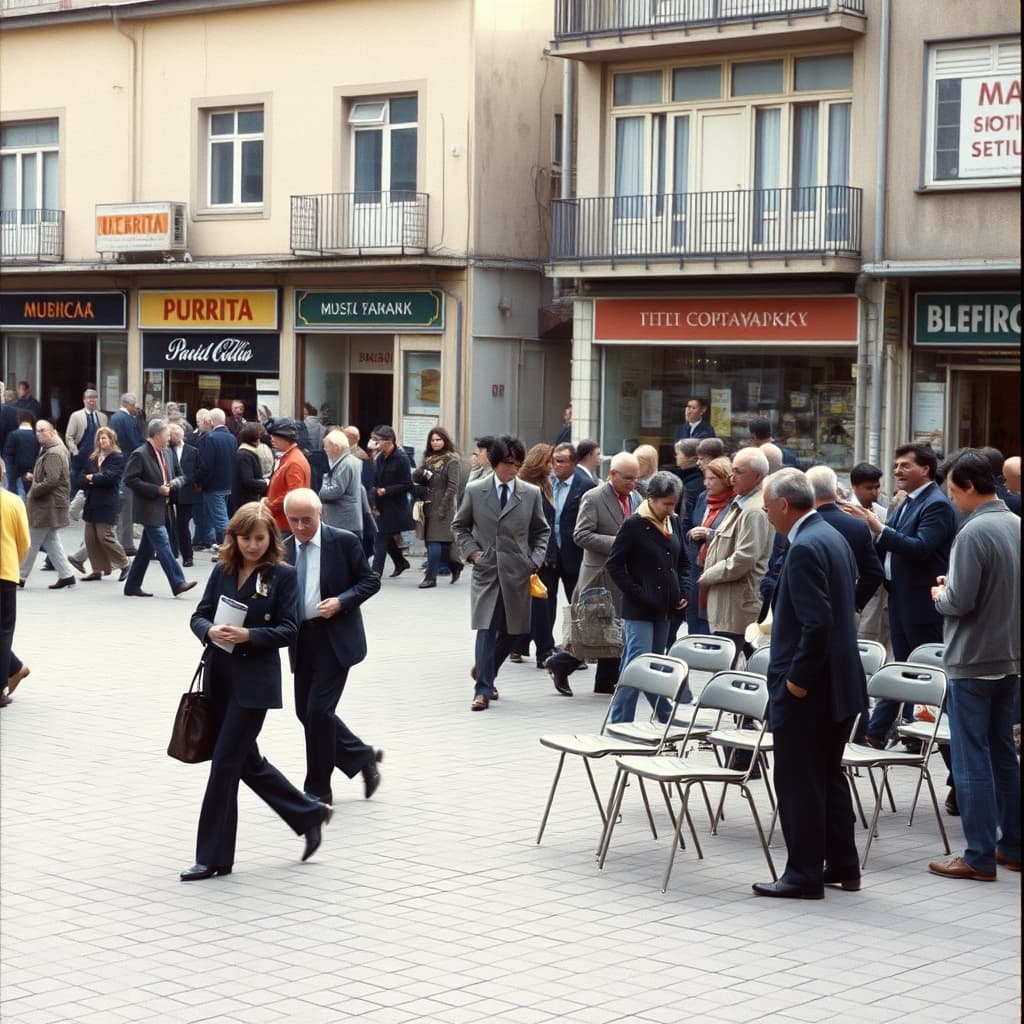
The ceremony had finished, but the city square was not yet back to normal. A line of pupils loosened, spectators turned toward different streets, and someone remained beside a folded chair waiting for a companion. The formal scene broke into small departures. For many people, this was the point at which the event became a story to tell at home: not the speech alone, but the walk away from the square.
Official occasions differed in purpose, scale and local arrangements. Their endings did too. A modest gathering could disperse quickly; a larger event might leave routes restricted while workers removed equipment. No specific procession or anniversary should be assigned to a remembered scene without evidence. The useful question here is how a public place changed back into an everyday one, and who experienced that change first.
The First Steps Away Had Different Directions
A crowd that had faced one platform no longer shared a single destination. Some spectators headed for transport, others looked for a shop or an acquaintance. School groups could remain organised after individual families had left. This difference in movement made the square appear less ordered before it became less crowded.
People also left at different times. Someone tired from standing might depart before the final announcement, while another waited until the view cleared to take a photograph. An image with only a few spectators cannot by itself show poor attendance. It may record the last minutes rather than the main event, a distinction worth keeping in an archive caption.
A Familiar Shortcut Had to Become Available Again
During the gathering, an ordinary crossing could have become a place to stand, a restricted area or a route for participants. Its reopening mattered to people who used the square without attending the ceremony. A delivery, a journey to work or a visit to another street resumed according to practical access, not according to the emotional ending of the occasion.
The transition was not necessarily immediate. Equipment, temporary seating or a group still waiting could keep a usual path out of use. Recollections of taking a longer way home can help recover the event’s local footprint. Where available, traffic notices and photographs of the surrounding streets give firmer detail than assuming every route reopened together.
The Square’s Sound Separated Into Conversations
A voice carried over a loudspeaker could hold many people in the same listening posture. After it stopped, close conversations became easier to distinguish. A teacher calling a name, a family comparing impressions or a chair being folded belonged to a different scale of sound. The square ceased to address everyone at once.
For a child, the departure could contain the first chance to ask what a word or gesture had meant. Adults might explain, disagree or simply turn to the next task. These exchanges are part of the ceremony’s afterlife, but they should not be supplied as imagined quotations. A participant’s actual account can preserve both the question and its uncertainty.
Finishing the Programme Did Not Finish the Work
Workers still had to deal with the objects that made the occasion possible. Depending on the event, chairs, cables, barriers or decorations needed attention. Nearby businesses and residents encountered this remaining activity after the official focus had moved elsewhere. The emptying square was therefore not empty of work.
This makes the end a useful viewpoint for photographs. A wider frame can show the relation between equipment and the ordinary street; a closer one can record a task without pretending to represent every worker. Names and roles should be attached where known. The person taking down a temporary arrangement belongs to the event’s record as much as the person visible on the platform.
The remembered ache of a ceremony can come from this contrast: a concentrated public hour followed by a dispersed afternoon. The square returned to crossings, errands and conversations, while people carried different pieces of the occasion away. Preserving the departure keeps that contrast intact. It lets the place remain both a ceremonial setting and the practical ground on which the next ordinary day was already beginning.