 Eski Pano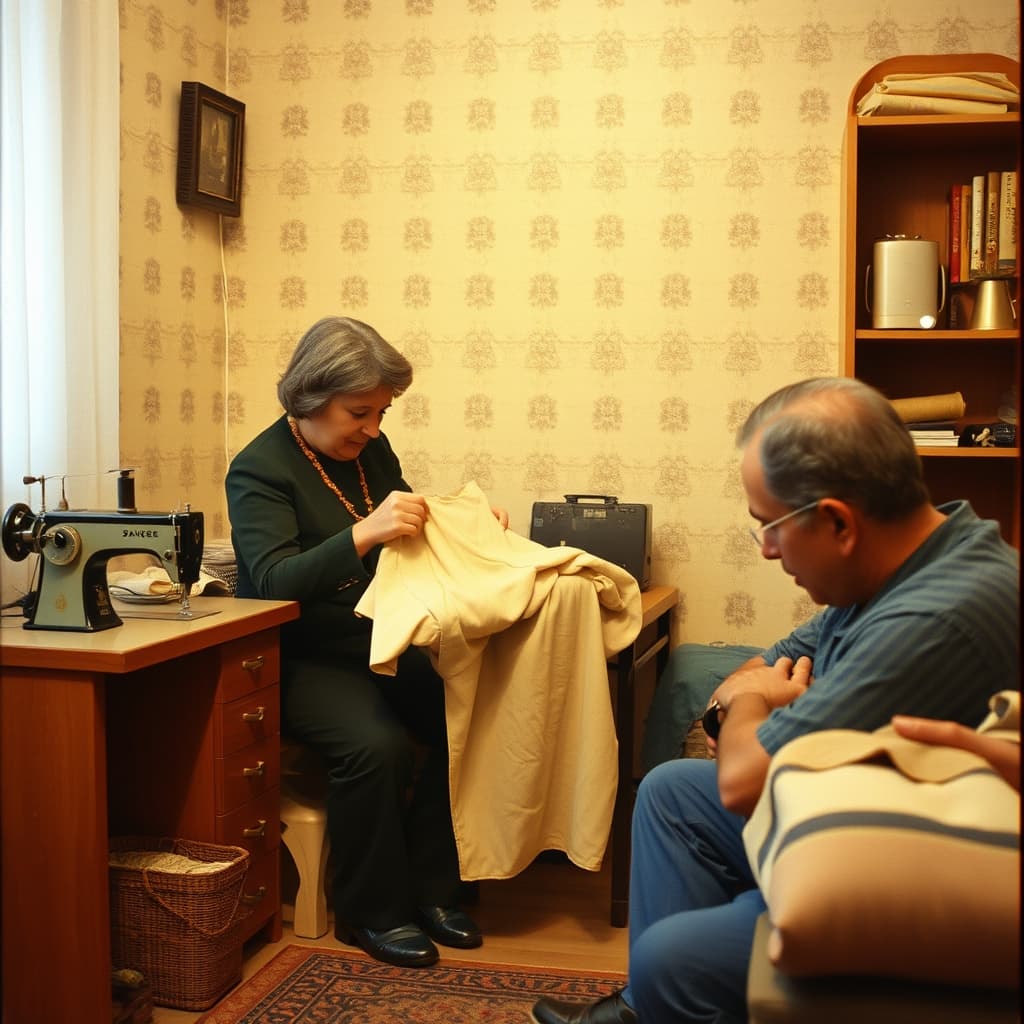
The visit to the sewing neighbour was not finished when the last stitch was made. A garment still had to be tried, accepted, folded and taken home. Before bayram, this collection could carry its own anticipation: the family’s preparations depended on work waiting in another flat, and the person who had done it depended on someone arriving when agreed.
These arrangements ranged from paid work to reciprocal help or a gift. Their warmth should not erase that difference. The collection visit shows how a relationship became reliable in practice. It involved a particular piece of clothing, a promised time and a conversation about whether the work was complete, rather than neighbourliness in the abstract.
The Final Fitting Could Change What Complete Meant
A garment that looked finished on a hanger might still need discussion when worn. The wearer could find the length different from what they expected or ask about movement at a sleeve. The sewer’s explanation and the customer’s response mattered. Finishing the stitches and agreeing on the result were related but distinct moments.
A last-minute request was not automatically part of the original job. It could require more time than remained before the celebration. Clear agreement helped preserve the relationship: what had been asked for, what had been done and what could reasonably be changed now. Familiarity did not make those questions unnecessary.
The Bundle Carried Instructions as Well as Clothing
Once the result was accepted, folding or wrapping prepared the piece for its short journey home. The way it was carried could help keep a pressed surface from being disturbed. A remark about how to store or use it might accompany the bundle, passing practical knowledge between the two households.
Those instructions belonged to the actual garment and material. An archive should record them from the maker or wearer rather than inventing a universal method. The remembered package also matters: a cloth, bag or other covering could be reused on another visit. It connected the sewing work to a household’s ordinary ways of carrying things.
Collection Time Affected the Neighbour’s Evening
A promised collection could determine when the sewer put away the work or made room for another task. If the customer arrived late, the garment remained a responsibility. Holiday preparations in the maker’s own home did not pause simply because another family’s clothing was waiting.
This is where an account of mutual help needs particularity. A neighbour might be flexible, but that flexibility was a choice, not unlimited availability. Ask who arranged the time, who came to collect and whether a delay changed the evening. The answers reveal the actual exchange behind a remembered dependable service.
The Return Home Made the Work Visible Again
At home, the garment might be shown to another family member or placed ready for the occasion. Comments about the finished result could reach the sewer later, or never. The person making the piece was not necessarily present when its use became part of the celebration.
A bayram photograph can therefore be connected with the sewing account when the association is known. It need not claim that every outfit in the picture was made by the same neighbour. One verified garment, its maker and its collection story offer more useful evidence than a broad claim that the entire street dressed together.
The collection visit gave the sewing relationship a clear test: could the piece leave the workshop corner and enter the family’s preparations as expected? Trust accumulated through those completed exchanges. Remembering the last fitting, the agreed time and the bundle carried home keeps the neighbour’s skill attached to both the celebration and the working evening that helped make it possible.