 Eski Pano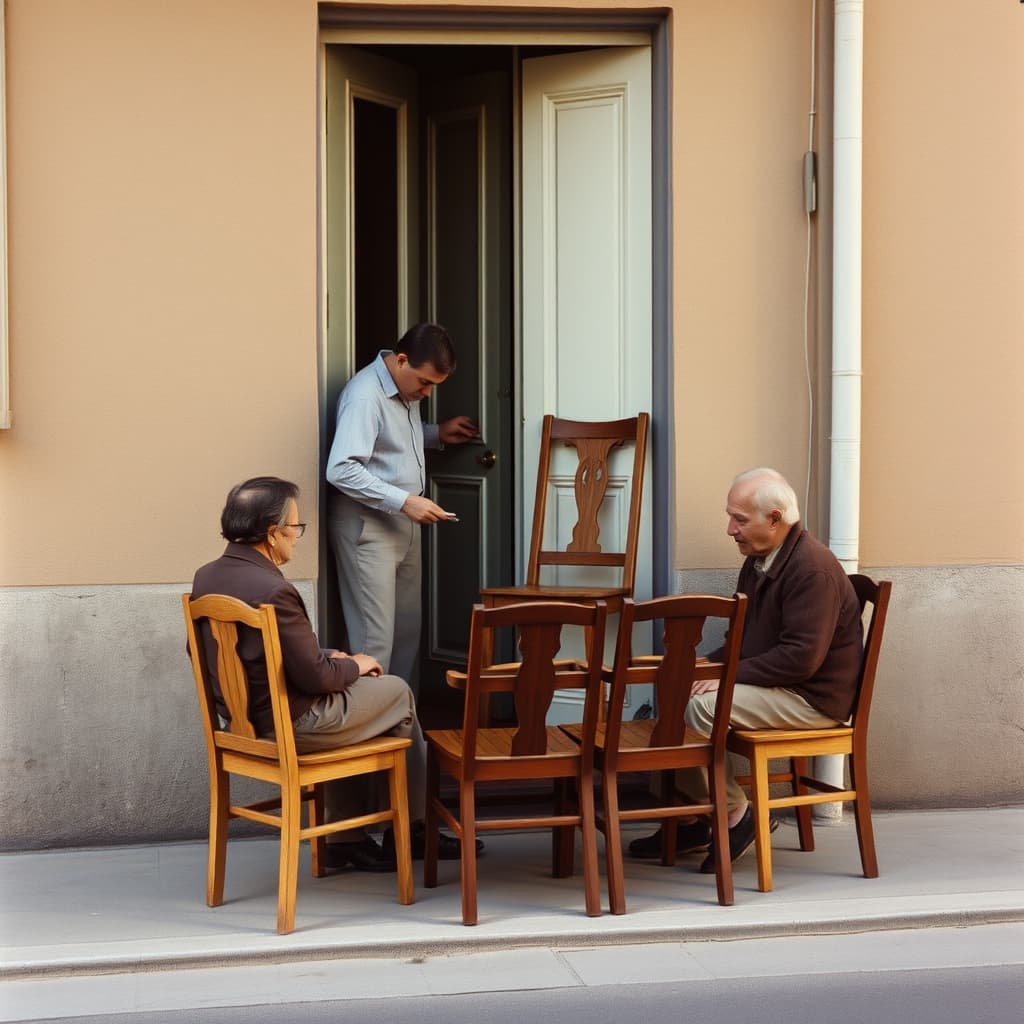
A gathering outside a doorway could look settled until another person arrived. Someone turned a chair, drew their feet closer or reached back towards the entrance for a spare seat. The arrangement changed without necessarily ending the conversation. Making room for one more pavement chair was a small act through which the street gathering showed whether, and how, it could receive someone.
The extra seat was not only an addition to the count. Its position changed who faced whom and who could hear a quiet remark. The newcomer might join the centre of the conversation or remain near its edge. Watching that movement gives a more precise view of neighbourhood sociability than treating every group of chairs as the same welcoming scene.
The Chair Had to Come from Somewhere
A spare seat could be brought from inside a home or shop, but its source should be identified only when known. Someone fetching it briefly left the gathering. Another person might hold a place while they returned. The apparent ease of the welcome depended on these ordinary efforts, even if they were soon forgotten by those already seated.
The added chair need not match the others. A different height or shape could make its occupant sit slightly forward or further back. What looks like an untidy assortment in a photograph may have been a practical response to the seats available at that moment. Matching furniture was not required for a conversation to continue.
A Small Turn Changed the Group
With the new seat in place, an existing chair might swivel towards it. A pair facing each other could become a loose triangle. Someone previously beside the doorway might now sit closer to the pavement. These shifts changed the conversation’s geometry without creating a formal meeting or a permanent claim on the street.
The arrangement also affected people who did not join. A passer-by could find the route narrowed or notice that the seats left a clear line past the entrance. Both belong in the account. Hospitality towards one arrival is not proof that the space worked equally well for everybody moving through it, carrying something or using assistance.
Joining Was Not the Same as Belonging
An available chair offered the possibility of staying, but it did not establish how comfortable the newcomer felt. They might know everyone, recognise only one person or stop briefly because their route happened to pass the group. An invitation could be accepted for a moment without becoming membership in a regular circle.
For this reason, memories of the gathering benefit from questions about duration and familiarity. Was the person there each evening or only on that occasion? Did they enter an ongoing story or introduce a new subject? These distinctions keep the scene attached to actual relationships rather than making the neighbourhood into an ideal community without edges.
An Empty Seat Changed Things Again
When someone left, their chair could stay in position for a while. A remaining neighbour might move it aside, rest an item on it or expect another arrival. The empty seat showed that the arrangement had a recent history. It was not simply unused furniture; it marked a place that had been occupied in the conversation.
Eventually the chairs returned indoors, or the group reorganised around those still present. The heart of this street scene lay in that capacity to change shape. Remembering who fetched a seat, who made space and who continued past it gives pavement sociability a human scale. One extra chair could alter an evening, but the meaning of the gesture depended on the particular people and street around it.