 Eski Pano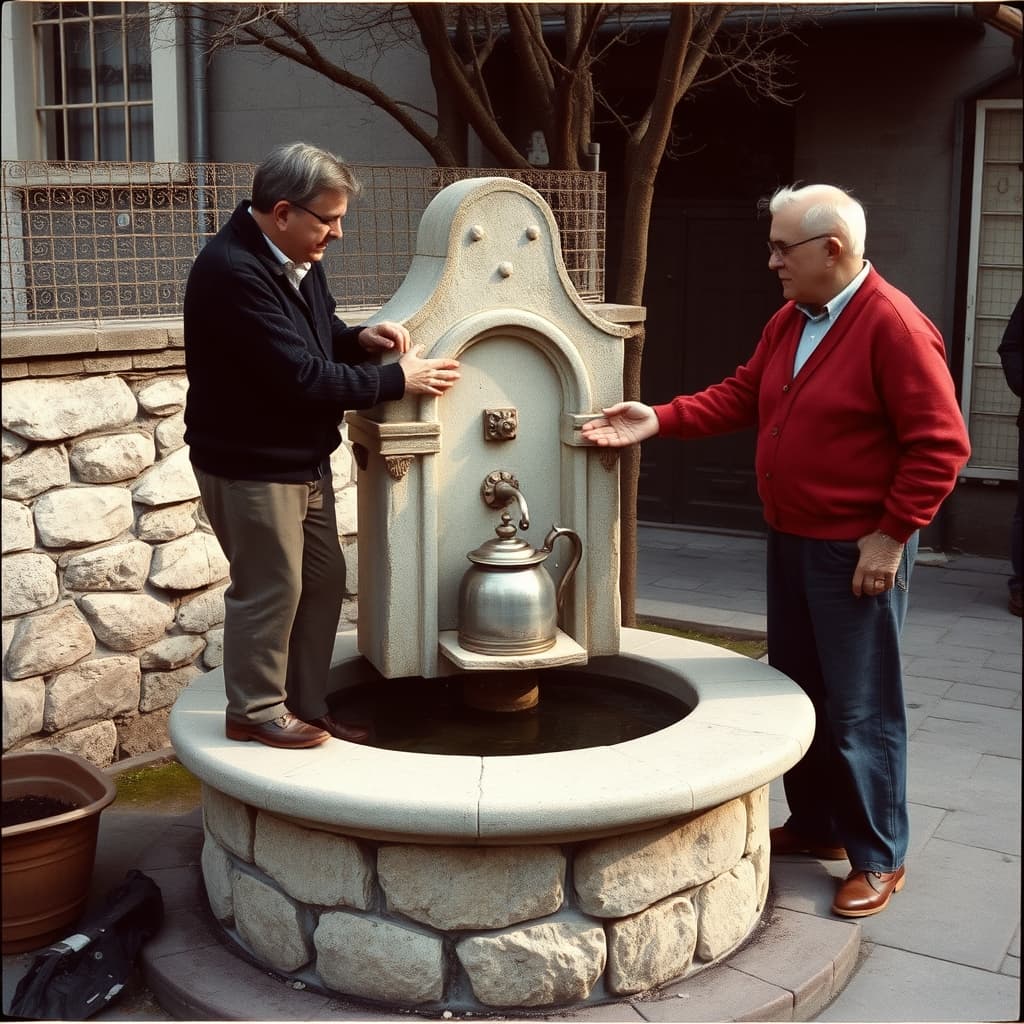
Setting a water vessel down could turn a journey into a pause. At a neighbourhood fountain, the hand was freed for a moment, the body no longer carried the full load, and another arrival became someone to greet rather than simply pass. The meeting place began with a practical reason to stop. Its conversation fitted around filling, waiting and preparing to carry water away.
That pause is easily lost in a broad account of fountains as landmarks. Yet it helps explain how a familiar place became social without requiring a planned visit. People could arrive for different reasons and stay for different lengths of time. A greeting did not erase the work of fetching water; it occupied a small interval within it.
A Place beside the Vessel
The position of a container shaped where its owner stood. A vessel near the spout needed attention, while one placed further back could mark a waiting position or simply be resting. Its location alone does not tell us which. A photograph captures an arrangement; the sequence of actions has to come from other images or a person who remembers it.
There might be little room to gather close together. A person making space for another container could move their own aside and change whom they faced. The conversation followed the arrangement of bodies and vessels rather than a fixed circle of seats. That shifting pattern belonged to the fountain as a working place, not just as a picturesque backdrop.
The Greeting Could Be Shorter than the Wait
Recognising someone did not always lead to a long exchange. A question about a household, a brief answer or a glance towards an arriving neighbour might be enough. People still had somewhere to go. Familiarity could be expressed in a few words without making everybody available for an extended conversation.
Others might remain after their practical task ended, allowing the meeting to outlast the reason for arriving. The difference matters. One person’s recollection of an unhurried gathering may sit beside another’s memory of trying to get home. Both accounts can describe the same fountain hour without one needing to be corrected into the other.
A Cooler Morning Changed the Stop
In a memory of a cooler morning, a cardigan could be part of the scene. Hands might return to pockets between tasks, or a sleeve be moved away from the vessel. These details belong to a particular remembered visit rather than establishing that every fountain gathering happened in the same weather or season.
Street lamps offer another layer of the setting when they appear in a dated image or account. Their light could make the place recognisable at a different hour, but a morning memory should not automatically be turned into a night scene. Keeping the hours separate lets the fountain hold several routines rather than one composite nostalgic picture.
Lifting the Container Ended One Kind of Conversation
When the vessel was lifted, the pause became a journey again. Someone might finish a sentence while adjusting their grip, or exchange a final word with a person still waiting. A companion could continue alongside for part of the route. The encounter then moved away from the fountain instead of ending exactly at its edge.
The useful detail is not merely that neighbours once talked beside running water. It is how an object put down, attended to and lifted again organised the opportunity. The fountain gave people a shared stopping point; their different tasks determined what they could make of it. Remembering that short interval keeps the meeting place connected to actual movements, unequal time and the paths leading back into the neighbourhood.