 Eski Pano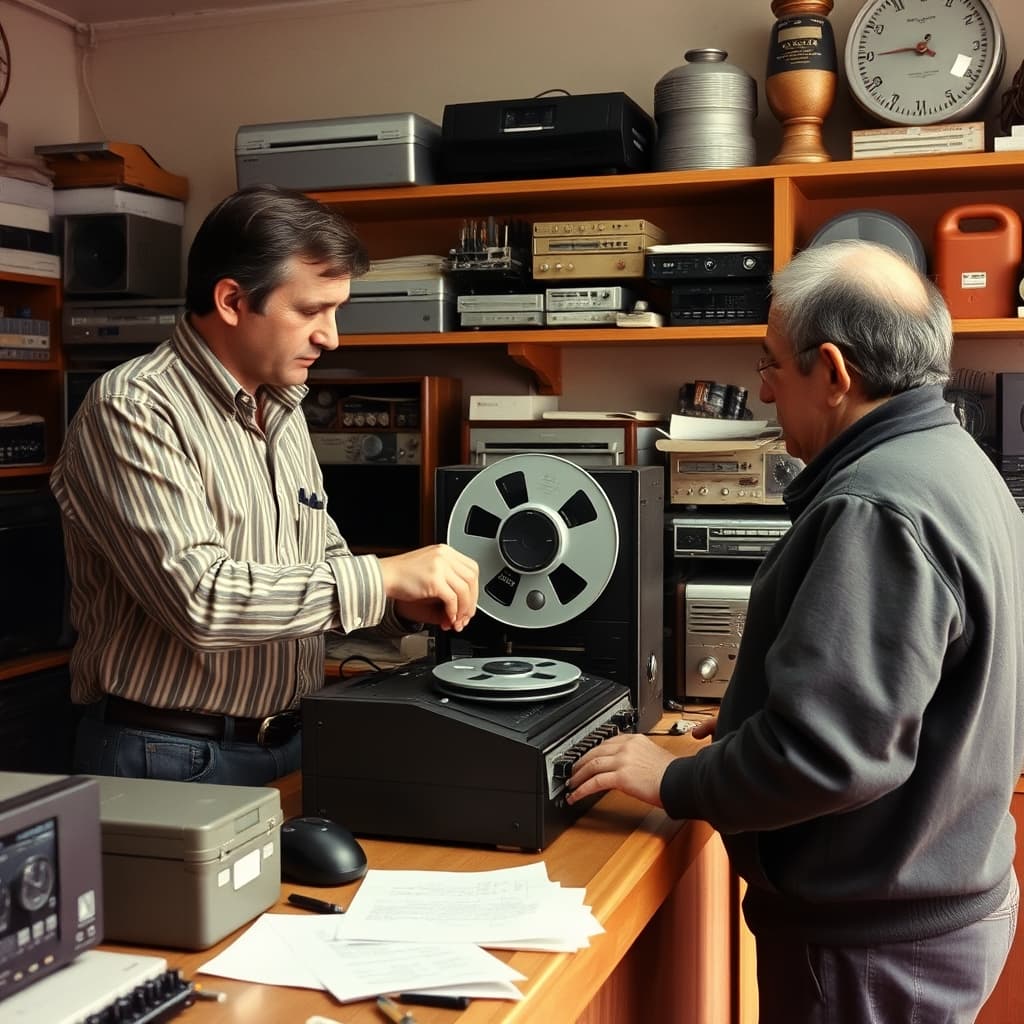
The return of a reel-to-reel recorder began before it was back in its usual place. At the repairer’s counter, the owner needed to understand what had been done and what the machine could now do. A familiar object had spent time outside the household. Collecting it linked the technical work to the listening routine that had prompted the visit.
A second life was not necessarily a return to factory condition. It could mean that a particular fault had been addressed and the recorder could serve an identified purpose again. The distinction matters: the machine’s appearance, its assessed condition and the sound held on its associated tapes were different parts of the story.
The Explanation Belonged to the Repair
A repair note or the technician’s account could identify the reported problem, work carried out and remaining limitations. Those details should come from the actual service record rather than be inferred from a recorder that looks clean. A changed part may be invisible from outside, while a cosmetic alteration may say little about performance.
For the owner, an explanation made the intervention understandable. They could connect an earlier difficulty with the work described, ask a question or learn that their original assumption had been wrong. The counter was therefore a place for translating a household complaint into a more precise account of the machine.
Familiar Controls Were Seen Again
A demonstration by the repairer could direct attention towards a control the owner already recognised. The same switch or lever might now be watched with a specific question in mind. The object was familiar, but the reason for looking at it had changed.
This should not become a universal operating sequence. Reel-to-reel machines and their associated recordings differ. A demonstration belongs to the particular assessed equipment, not an invitation to power up another old recorder or try a valuable tape. The remembered event can remain about what was shown without offering improvised restoration instructions.
The Household Had Kept a Place for It
During the machine’s absence, its usual surface might have stood empty or acquired another use. Bringing it home required deciding where it would go now. Its return could restore a former arrangement, or prompt a new one that better suited the room.
The reels and boxes nearby might have remained untouched while the device was away. Reuniting them did not prove that every tape was ready to play. It restored an association between equipment and stored sound, while leaving the condition of each recording a separate question. Keeping those two assessments apart makes the second-life account more honest.
A Repair Ended One Wait and Began Another
The owner had waited for the machine, but its return did not automatically organise an evening of listening. Time still had to be found, the intended recording identified and the household’s other activities accommodated. The repair made a routine possible; people determined when and whether it resumed.
Someone else in the home might chiefly notice that the recorder was back on the table. The person who arranged the repair could understand much more about the intervention. A shared object could therefore return with different meanings for the people who lived around it.
The repairer’s contribution became tangible through this handover: an account of the work, a machine collected and a place regained at home. The recorder’s second life lay neither in a perfect surface nor in a dramatic claim that all old sound had been rescued. It lay in a specific piece of equipment becoming available for a considered use again, with the repair and its limits still part of what the owner knew.