 Eski Pano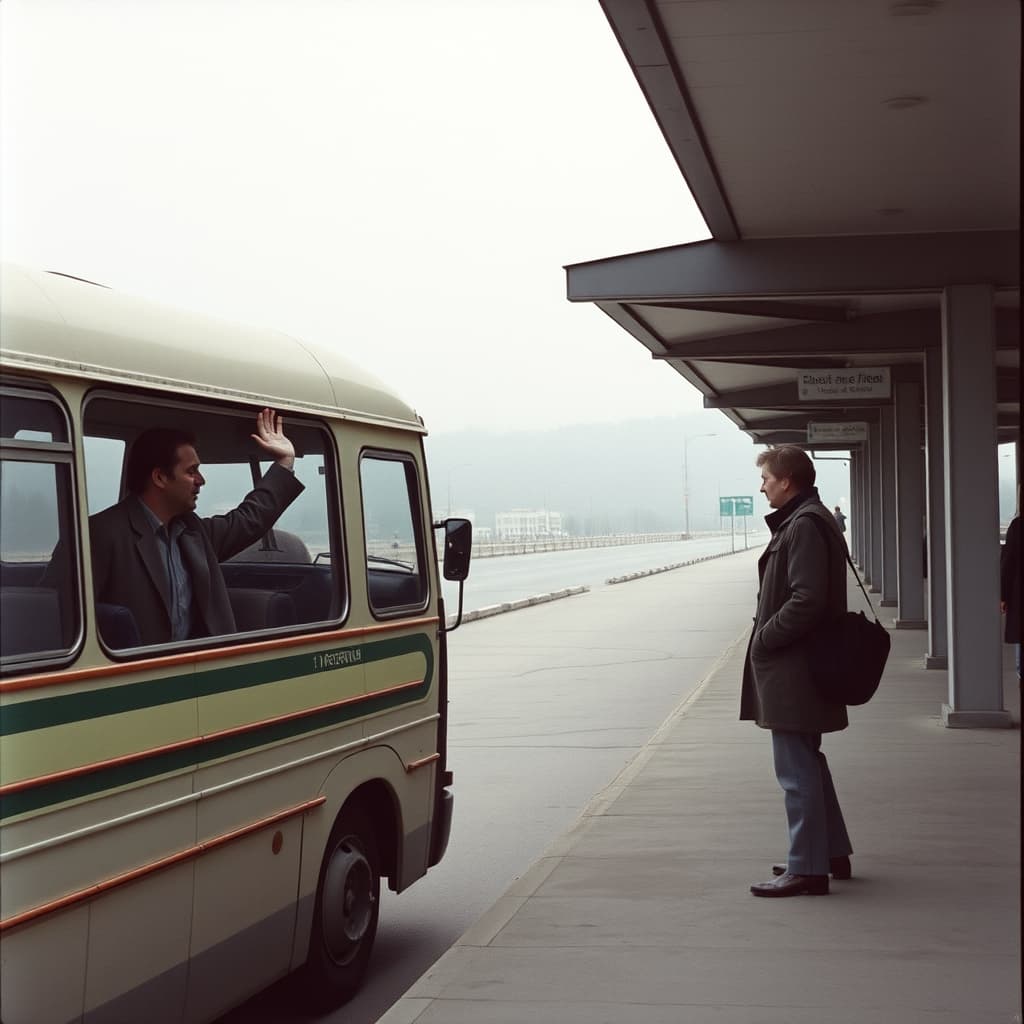
Boarding did not always finish a farewell. At an intercity terminal, a traveller could take their seat and look through the window for the people who had come with them. Those waiting outside searched the rows in return. The distance between them was still small, but the conversation had changed: one person was inside a vehicle preparing to leave, the others were not.
This search gave gurbet a particular scale. The word can carry the experience of living away from home, but its beginning in a family memory might be a face found beyond glass. A departure involved a destination and a reason for going; it also involved learning where to look during the last moments together.
The Seat Was Known from Inside
The traveller reached a place within the coach that might not be obvious to a companion outside. Another passenger could stand in the aisle, a bag needed arranging, or the seated person simply took time to turn towards the window. The outside search continued while these small tasks happened.
Recognition could arrive through a wave rather than a clear view of the face. A hand lifted, another answered, and the right part of the vehicle became identifiable. The farewell now depended on a shared line of sight. People did not need to see the whole interior to locate the person they had accompanied.
A Window Changed What Could Be Said
Words that had been easy at the terminal entrance might no longer pass clearly between the two sides. The exact situation depended on the vehicle and position. A gesture could do work that conversation had done moments earlier, without becoming an exact substitute for the sentence someone wanted to finish.
A nod might acknowledge that everything was ready. A raised hand might simply mean that the traveller had seen the companion. It is tempting to assign each gesture a complete emotional message, but memory often holds the movement more clearly than its precise meaning. The visible exchange can be valued without inventing its words.
Those outside Still Had Their Own Departure
A companion might wait for the coach to leave or turn away earlier. Practical obligations, terminal arrangements and personal preference shaped the choice. Staying until the last visible moment was not the only possible expression of care, and leaving earlier should not automatically be read as indifference.
The person outside then had a journey back from the terminal. It could repeat the route travelled together, now with one fewer person. A cool morning or a cardigan held around the shoulders belongs to the particular account, not to every departure. Such details locate the goodbye in a lived day.
The Habit Could Reappear on Another Journey
On a later departure, people might again look for the same kind of signal at a window. The traveller knew to turn; the companion knew to search. Repetition made the action familiar even when the destination or purpose had changed. A routine could hold affection without being announced as a family ritual.
Not all passengers had someone waiting outside, and not every seat allowed the same view. The window farewell is one terminal experience, not the measure of how much a journey mattered. A person travelling alone could carry an equally strong connection to home without anyone visible beyond the glass.
Bus terminals multiplied stories of distance through these ordinary rearrangements of people. The ticket took someone elsewhere; the window briefly kept them in view. Finding the face gave the farewell a last shared position before the routes separated. What survived as a quiet habit was the act of looking back, and the possibility that someone on the other side was still looking too.