 Eski Pano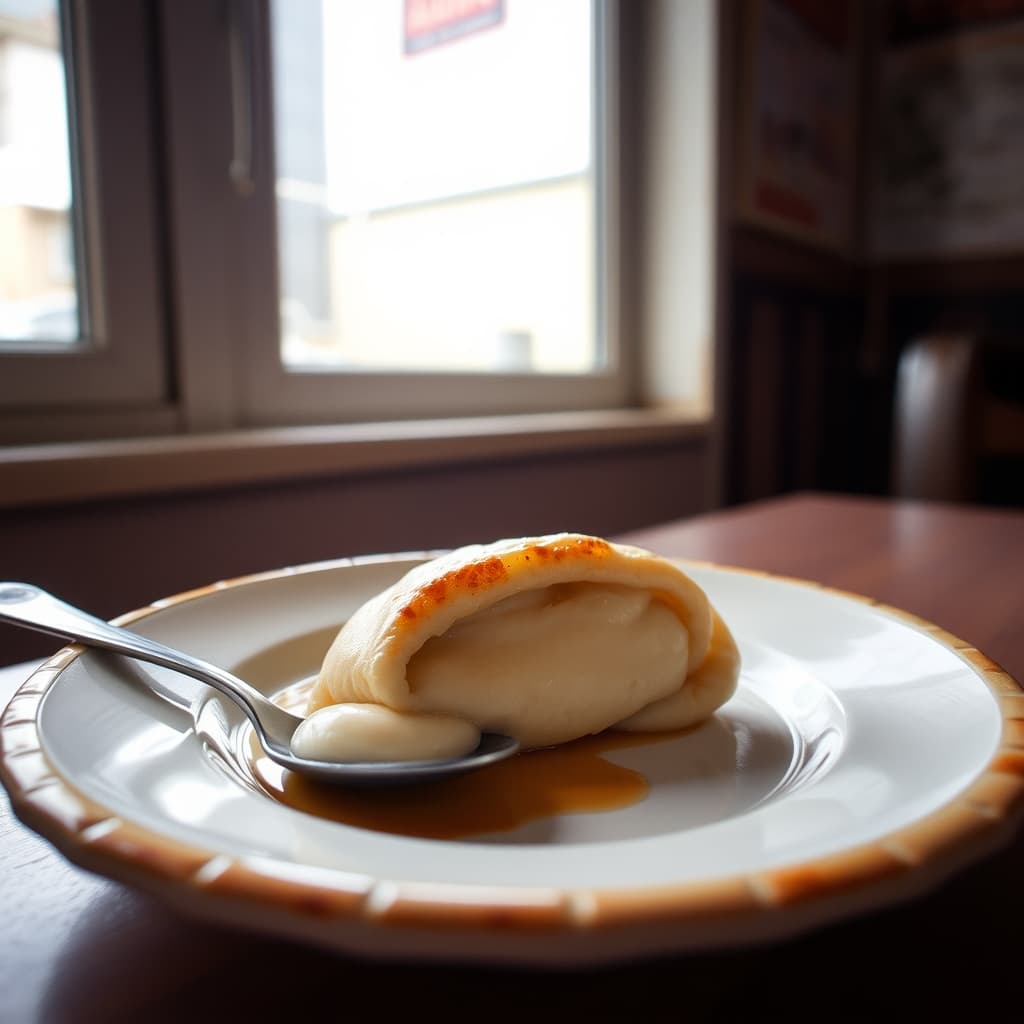
A portion of kazandibi from the neighbourhood muhallebici invited attention to its browned face. Against the paler pudding, that surface made the dessert recognisable before the spoon entered it. A diner could choose a mouthful that included both parts or begin elsewhere. The first taste was not only a meeting with sweetness, but with the contrast the portion displayed.
This is one way a shop dessert could become part of a household’s kitchen conversation. Someone compared what was served with a version they knew at home, or asked how a particular texture had been achieved. The shop offered a finished result; the family brought its own experience of preparing and eating puddings.
One Portion Held Two Visible Surfaces
The browned layer and pale interior could be seen together, depending on how the portion was presented. A fold or curve might expose one more prominently than the other. The plate therefore showed not just the dessert’s preparation, but the server’s arrangement of it.
Appearance gave the diner a starting point rather than a complete recipe. Colour could not establish the exact ingredients or all the steps used in the kitchen. A remembered portion should remain close to what was seen and tasted unless the shop’s actual method is documented.
The Spoon Chose a Balance
A mouthful taken through the browned face could bring a different balance from one chiefly taken from the pale part. The portion was the same, but the route of the spoon changed the encounter. The diner could discover that contrast while eating rather than by analysing it in advance.
The layer’s resistance and the pudding’s texture belonged to the actual serving. A description should not promise the same result from every shop or household. Kazandibi could be familiar precisely because someone knew a particular version well enough to notice when another one differed.
A Shop Visit Could Return as a Kitchen Question
Later, at home, the comparison might concern the presentation, the flavour or the way the serving held together. The remembered shop portion gave the conversation a concrete reference. It did not automatically make the shop’s version better or the household’s less accomplished.
A home cook worked with a different setting and purpose from a commercial kitchen. Family preference, available equipment and the number of portions could shape decisions. Recognising these differences lets the comparison remain interested and practical, rather than becoming a contest over a single supposedly correct dessert.
Knowing the Taste Did Not Reveal All the Work
The plate arrived after someone had prepared the pudding, managed its defining surface and arranged the portion. The diner saw the result of those decisions without necessarily seeing them made. Admiration for the first spoonful should leave room for that unseen work.
A remembered kitchen account can add detail when the person who made the dessert is known. Otherwise, it is better to keep the distinction between tasting a result and witnessing its preparation. Familiarity with kazandibi does not make every diner an eyewitness to the shop’s method.
The neighbourhood muhallebici kept older kitchen culture present partly by giving people a particular dessert to recognise, discuss and compare. Its browned face supplied the visual promise; the spoon tested that promise in a mouthful with its own balance. Carried into household conversation, the experience linked shop skill with domestic taste without merging their recipes. The memory remains strongest when it holds onto that specific portion, and the questions it brought back to the kitchen.