 Eski Pano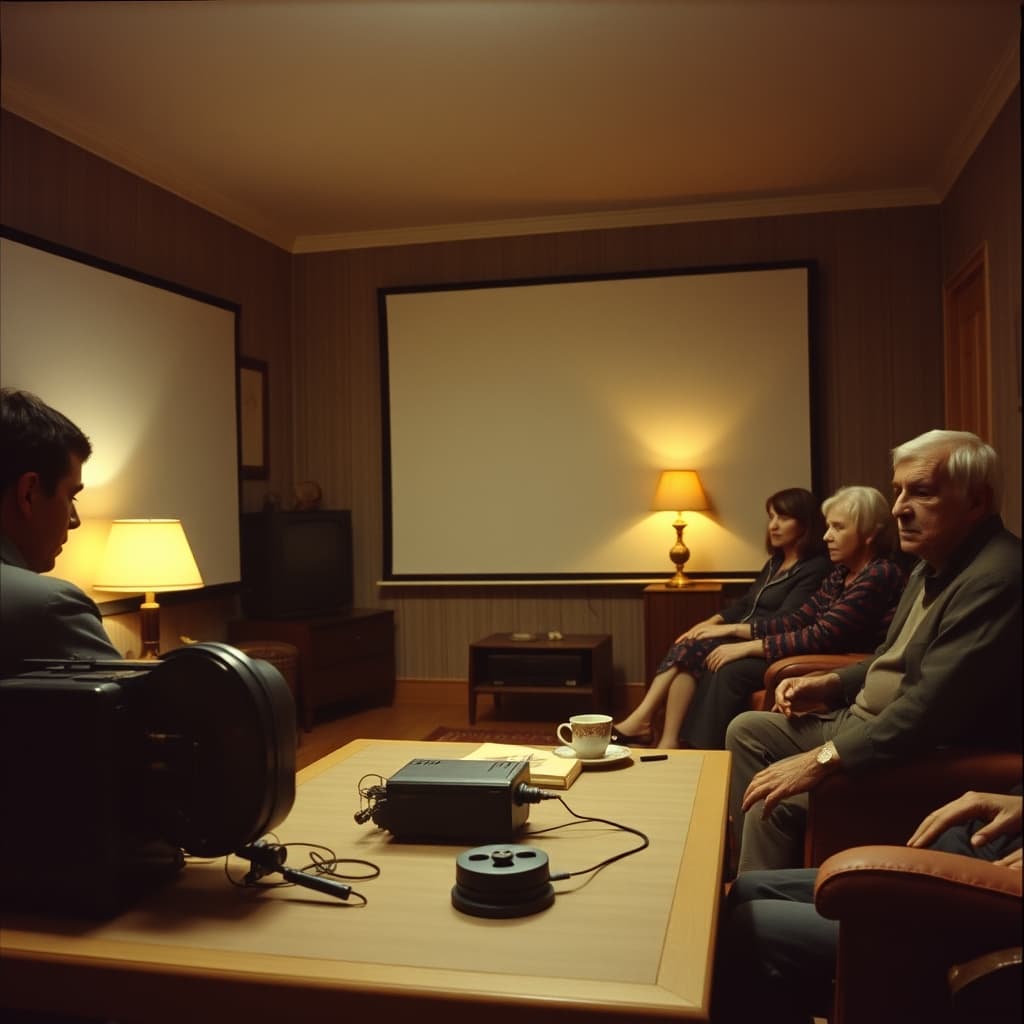
The last frame of a family film could leave the sitting room with something still to do. The moving image stopped, but the reel had to be readied for another viewing. Where a manual rewind was part of the arrangement, the turning handle became the remaining movement in a room that had spent the evening watching a different one.
That interval offered a distinct kind of family conversation. People no longer needed to keep their eyes on the screen. They could turn towards one another, name someone they had recognised or disagree about the place shown. Meanwhile, one person remained occupied with the physical film. The evening ended at different speeds for its participants.
The Image Had Gone, the Subject Had Not
A face glimpsed briefly could become easier to discuss after projection ended. One viewer might recognise a relative whom another knew only by name. Someone might remember the journey around a scene, while the camera had recorded only the arrival. The film supplied a visible fragment; the room supplied accounts of what lay outside it.
Those accounts did not automatically settle the matter. A confident recollection could be mistaken, and two people could remember different parts of the same day. The pause after viewing allowed uncertainty to be expressed without pretending that a moving image explained everything. It was possible to know who appeared and still not know exactly when.
One Hand Still Had a Job
The rewind handle distinguished the operator from the other viewers. Conversation could continue around that person, but attention remained divided between speech and the equipment. A family might remember the person who filmed more readily than the person who put the reel away. The closing work made the next screening possible even when it attracted little notice.
This is not an instruction for operating old equipment. The remembered handle could belong to different arrangements, and an unidentified machine should not be treated as ready to use. For the social story, what matters is that the film could not simply be dismissed like an image on a modern screen. Someone had responsibility for its physical return.
A Light Changed the Shape of the Gathering
With the room lit again, the arrangement of chairs became obvious. A viewer could see who had been sitting nearby, reach for a coat or notice the cups left from earlier. The shared direction towards a screen loosened into smaller exchanges. Some people stayed seated; others began the work of leaving.
A rewind could provide time for a final question, but it was not necessarily a ceremonial silence. Children might become restless, an adult might have another task, and the operator might prefer fewer interruptions. Describing the interval through these ordinary competing needs gives it more substance than calling every family screening magical.
The Next Viewing Began with What Was Said
A comment made after the film could influence what the family looked for next time. A newly recognised person, a disputed location or an overlooked gesture might draw attention on a later evening. Rewatching was not only repetition of the reel; it could be a return with a different question.
The rewind handle therefore marked a transition between two kinds of looking. During projection, viewers followed the sequence available on the film. Afterwards, they began arranging its meaning together, while one person arranged the material for storage. The family evening lingered in that overlap: an image already finished, a conversation still moving, and a reel not yet back in its box.