 Eski Pano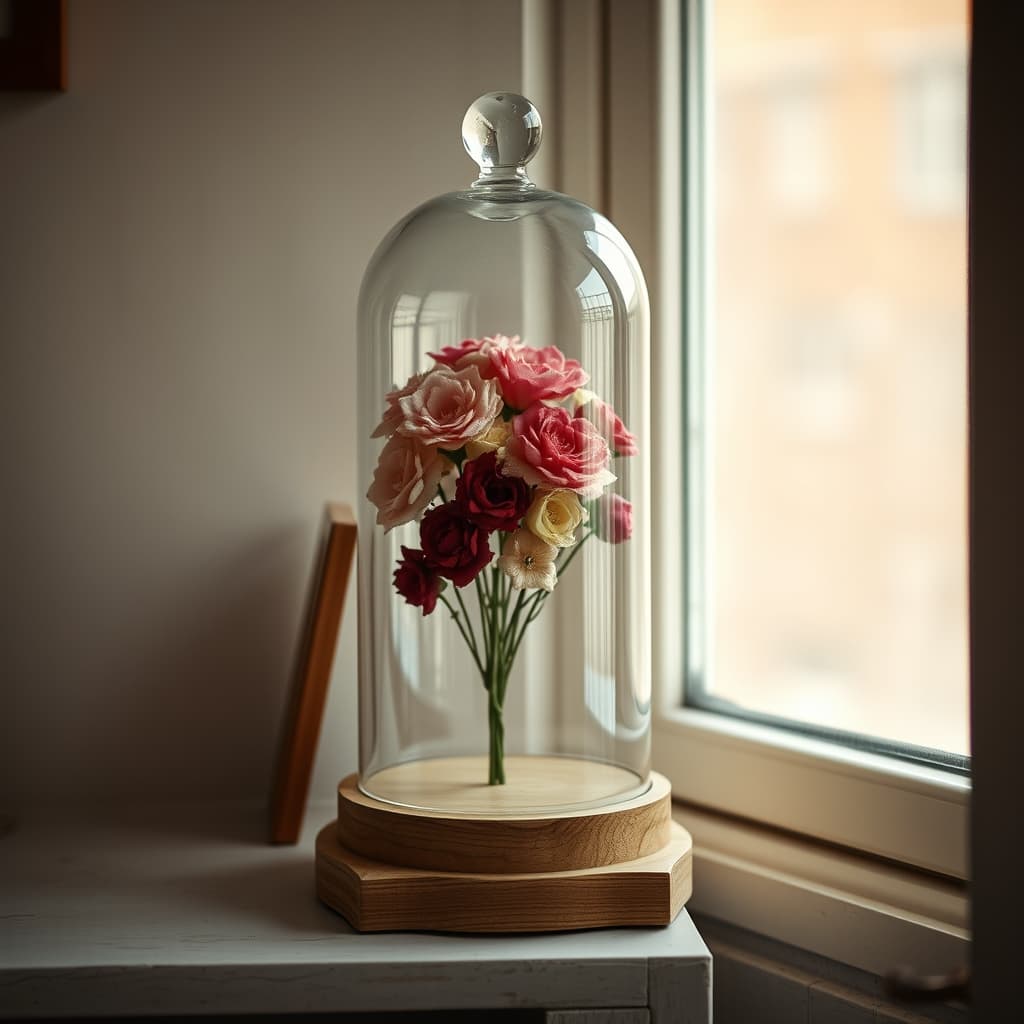
A glass dome could remain in the same corner of a grandmother’s home for so long that the family remembered its position before remembering its contents. It belonged beside a particular edge of the cabinet, beneath a reflection from the window, or within a familiar arrangement of other things. When it was moved, the empty place became unexpectedly noticeable.
Inheritance often concentrates attention on the object that changes hands. This dome asks for another part of the story: the room from which it came. Glass, base and enclosed display might travel together, while the surrounding furniture and light stayed behind. The new owner received something complete in one sense and separated from its setting in another.
The Corner Was Part of the Recognition
A visitor did not need to examine the display closely on every visit. Seeing its outline in the usual place could be enough to recognise the room. The dome’s curved surface caught surrounding light, so even the reflection belonged to the familiar view. Its apparent constancy came partly from the furniture around it.
The arrangement need not have been literally unchanged. Contents might have been adjusted, nearby objects replaced, or the dome itself moved briefly. Family memory can simplify such changes into a single enduring corner. A photograph offers a way to compare the remembered view with one recorded moment, rather than treating recollection as a floor plan.
A New Shelf Could Not Reproduce the Old Room
In another home, the dome might sit lower, receive light from a different direction or share a shelf with unfamiliar objects. These differences could make its size and shape newly apparent. Something once seen at the edge of a visit became an object encountered during an ordinary day.
Trying to repeat grandmother’s arrangement was one possible response, not an obligation of inheritance. A smaller home or a different household routine could require another place. Moving the dome did not necessarily erase its meaning. It could reveal which parts of the attachment concerned the object and which belonged to the room where it had first been known.
The Contents Needed Their Own Account
A family might agree that the dome mattered while disagreeing about what its enclosed display represented. An ornament, flowers or a keepsake should not be given a wedding, mourning or travel story solely because such a story sounds plausible. The object can remain meaningful when the reason for its original arrangement is uncertain.
An account from someone who remembered its placement could preserve that distinction. What did they actually see? What were they told? What did they infer much later? Keeping these forms of knowledge separate allows the inherited dome to carry a family association without acquiring a history nobody can support.
The Vacant Place Belonged to the Story Too
An empty corner could become the strongest reminder of the display’s previous presence. It showed the reach of an object that had occupied little physical space but had become part of the room’s identity. The person recalling it might point first to the cabinet rather than describe the glass.
The dome’s family legacy was therefore not limited to possession or monetary value. It included a way of recognising a home and noticing that the view had changed. In its new place, the glass could continue to hold an arrangement; in memory, it also held the outline of the corner it no longer occupied. Both belong to the inheritance.