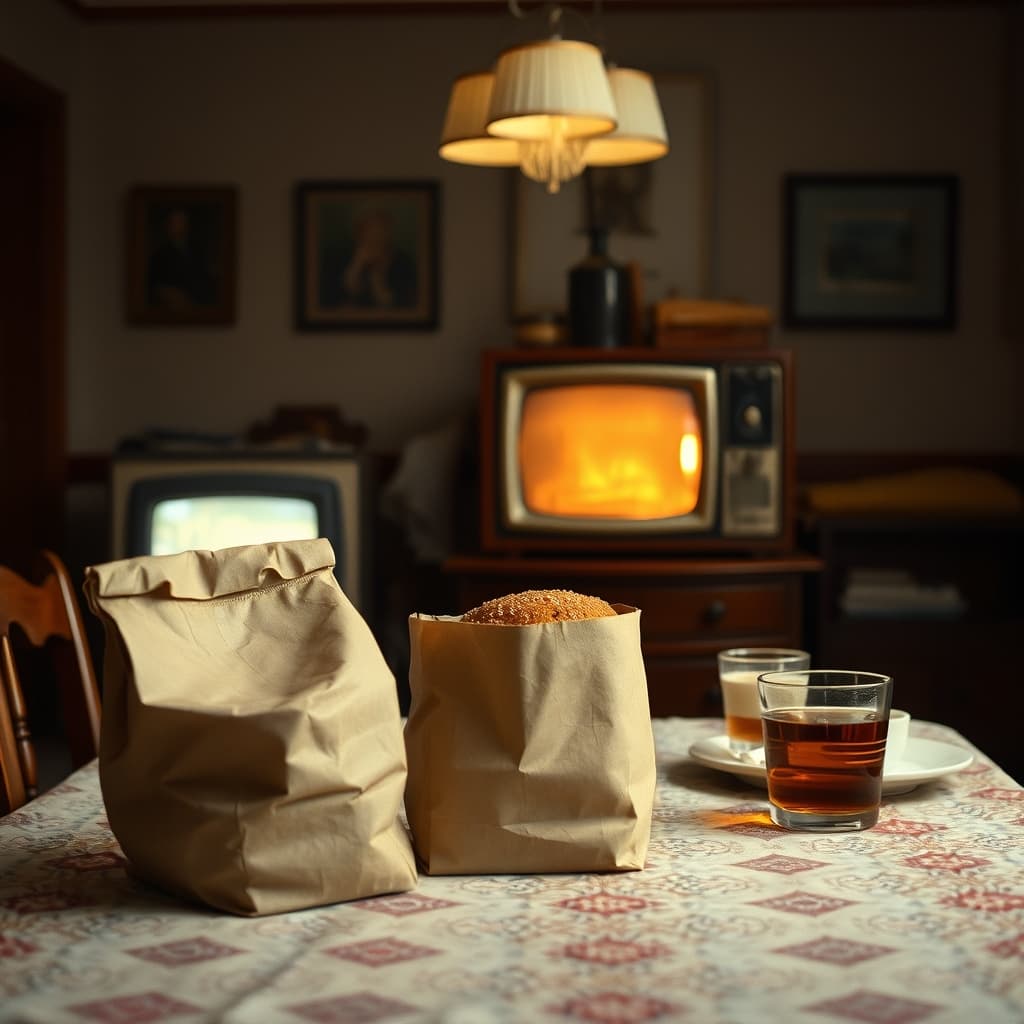
Eski Pano
There was a time when, the moment stone-oven simit entered the house, its smell spread not only through the kitchen but through every room. Before the sesame ring even reached the table, it left a warm trace through the entrance hall, the armchairs in the living room, the corridor, and even between the curtains. This scent felt especially distinct in grandmother’s house, because in those homes every food had its own small way of entering the scene. When simit arrived, water for tea was set to boil again, small plates were prepared, and the old films on television began to receive more attentive eyes. The light smokiness of the stone oven, the roasted smell of sesame, and the familiar shadow of the house came together until an ordinary snack turned into a sign that gathered the entire home into one shared feeling.
Seen through the lens of taste memory, stone-oven simit carries not only flour and sesame, but also the morning and evening rhythms of the neighborhood. Fresh from the oven, it is recognized at once by its crisp crust and dense interior, yet its most lasting quality lies in the shared response its arrival creates at home. One person splits it and eats it with white cheese, another dips it into tea, another slowly nibbles it while dropping sesame seeds everywhere. The forms of eating differ, but the feeling of gathering around the smell remains the same. Especially in grandmother’s house, simit did more than feed hunger; it became one of the most familiar signs of being ready for an unexpected guest, for a film hour stretching longer than expected, or for grandchildren who had come by in a cheerful crowd.
Part of the power of stone-oven simit in memory comes from the way it was made. Old neighborhood bakeries announced themselves by smell before one even reached the door. The deep aroma created by dough meeting hot stone was an invitation that flowed into the street, unlike the sealed orderliness of many places today. A simit brought home was therefore never just something purchased; it carried within it the bakery, the atmosphere of the street, and the warmth held by the hand that carried it. In the shadow of grandmother’s house that scent grew heavier and softer at once. Family members sitting under the light of old films followed black-and-white scenes on the screen while also turning toward the steam and crumbs rising from the paper bag. Smell, image, and family closeness worked together.
In the light of old films, simit held another meaning too: it softened the evening without stripping it of its quiet dignity. It was one of those foods that required no cutlery, no long preparation, and yet still brought a small sense of care to the table. A plate of olives, a little cheese, freshly brewed tea, and stone-oven simit were enough for a home to set its own intimate evening scene. Fast snacks may be far more varied today, but the power of stone-oven simit to fill the house with one smell came not only from taste, but from timing. Once that aroma entered, everyone understood that the evening would now be lived together.
Perhaps the whole house filled with the same smell because the simit came not only from the oven, but from an entire order of memory. The cool shadow of grandmother’s house, the trembling glow of television, the thin steam of tea, and the sesame warmth of the simit are remembered together rather than apart. That is why, when stone-oven simit comes to mind today, one remembers not only a flavor, but the way the household gathered, the pace of sharing, and the plain but powerful closeness of old evenings. Its smell remains not merely the scent of food, but the scent of lives approaching the same table.
Why the Whole House Filled with the Same Smell When Stone-Oven Simit Reached the Table in the Shadow of Grandmother’s House and the Light of Old Films