 Eski Pano
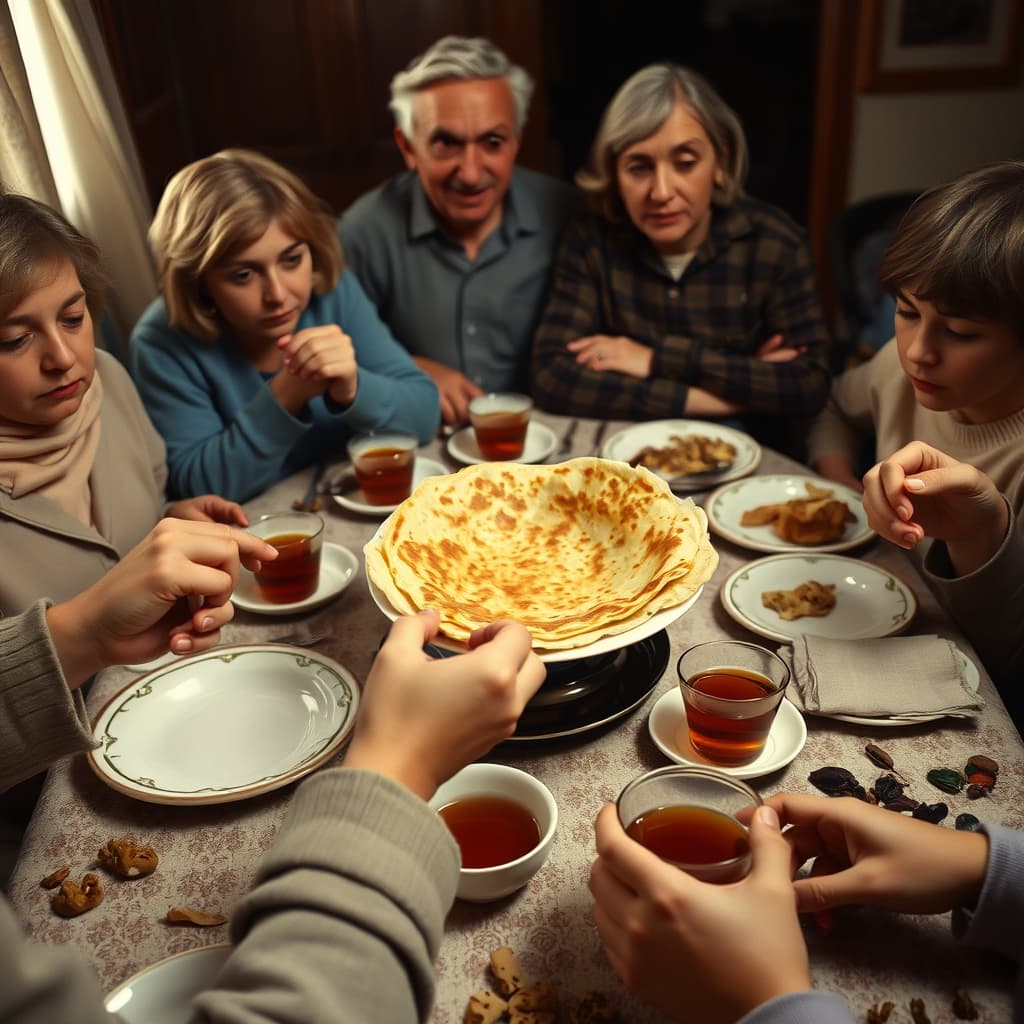
At a crowded family table, sac-cooked gözleme did not necessarily arrive as one finished stack. A plate could be emptied while another piece was still being cooked. The meal then acquired a small interval: somebody looked towards the cooking place, another continued with what remained, and the next arrival changed the table again.
That uneven sequence offers a way back into a remembered kitchen habit. Rather than imagining every diner eating the same first bite together, it follows the successive servings that a single cooking surface could make possible. The taste of the gathering belonged to this movement as well as to the filling inside the dough.
The First Plate Did Not Define the Whole Meal
Those nearest the first serving might begin before someone else had taken a seat. A person helping with another task could encounter the meal later. The table’s apparent togetherness therefore contained different starting points. Remembering who was still occupied gives the shared food a more accurate setting.
A filled gözleme might be cut or divided before passing, depending on the household. Different portions could contain more edge, more centre or a different distribution of filling. The actual account matters more than a rule about how all families served it. Two people could remember different textures from the same cooked piece.
The Next Arrival Drew Attention Back
As a new gözleme reached the table, space had to be made among used plates and glasses. A passing hand or a moved dish marked the change. The serving joined an ongoing meal, not a clean arrangement waiting untouched for a photograph.
The new piece could be welcome without making the previous one irrelevant. Someone might still have a portion, while another had finished. Offering and declining therefore belonged to the exchange. Sharing was not simply everyone taking the same amount at the same time.
The cooker’s experience was different again. What diners noticed as a fresh arrival was the end of work already underway at the sac. The next round might still be awaiting preparation. A meal remembered for abundant plates should leave room for the person whose own seat was repeatedly postponed.
A Filling Could Be Remembered through Its Place in the Sequence
Households used different fillings and methods, so a recollection should name only what is actually known. Cheese, greens or another filling should not be supplied merely to make a scene more appetising. Even when the exact ingredients are uncertain, a person may remember whether a particular piece came early or late in the meal.
That position can help explain the memory. A first portion taken while hungry and a later one accepted after conversation are different encounters with food. The distinction is experiential rather than a judgement about which serving was better. Appetite, company and the work still happening nearby all changed during the gathering.
These differences also recall the older habit of eating alongside cooking instead of waiting for every piece to be finished. It was one possible arrangement, not a necessary expression of tradition. Another household might gather the food first or organise the work so the cook could sit sooner.
The empty first plate and the next gözleme belong together in the table’s story. One shows that the meal was already happening; the other shows that it was still being made. Between them lay a brief pause that a finished stack cannot show. Remembering that pause brings back the moving hands, unequal starting times and repeated invitations that gave a crowded gözleme table its particular taste.