 Eski Pano
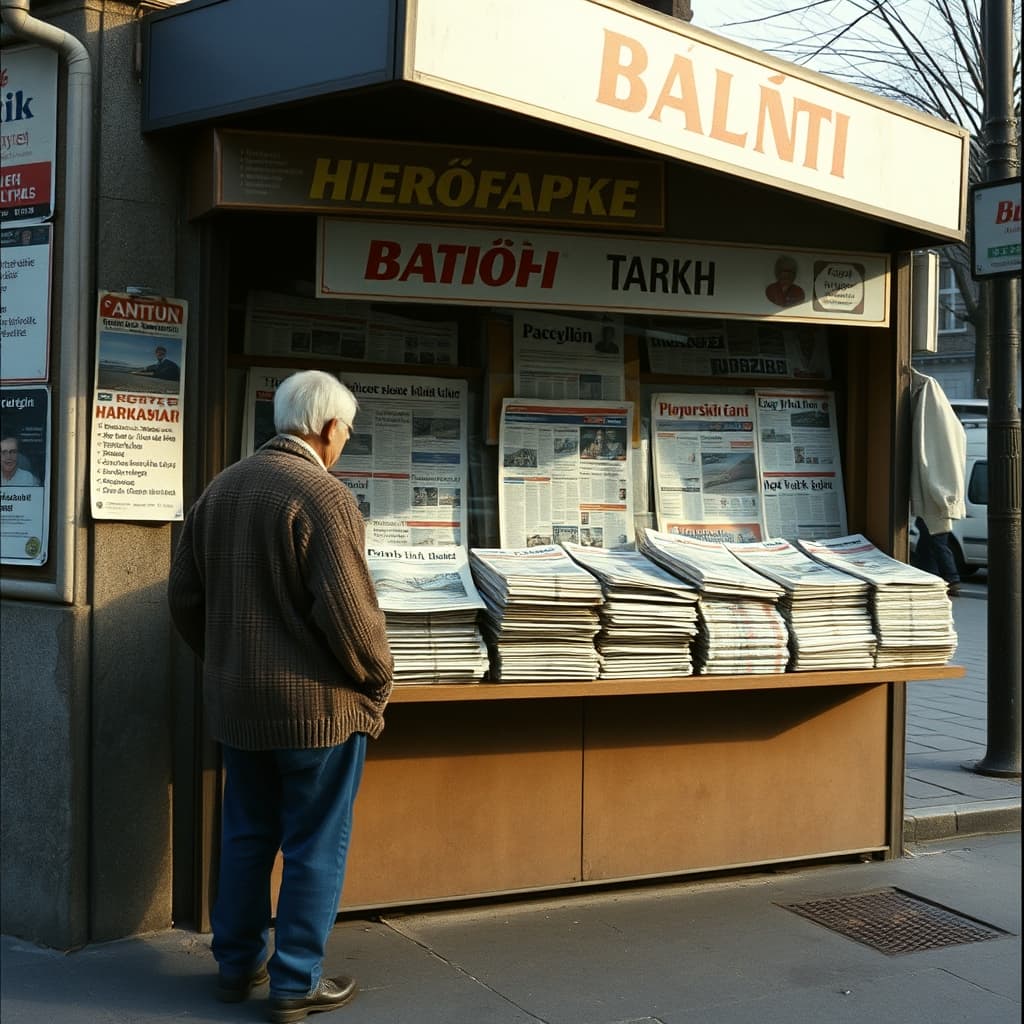
A passer-by could meet the morning news at a newspaper kiosk without yet owning a newspaper. A front page faced the street, and a headline became available to the eyes for the duration of a brief stop. Buying came later, if it came at all. The first encounter with the day’s printed account took place between the display and the pavement.
That small interval is easy to lose in memories of newspaper buying. The kiosk is remembered as the place where a familiar title was collected, but it also offered a view to people who did not complete a purchase. A folded page, the angle of the display and the distance from the counter shaped how much they could actually read.
A Headline Was Only Part of a Page
From the street, large lettering could be easier to see than the smaller story below it. A photograph might draw attention before the words, while a folded edge concealed another item. The displayed front page was not the whole issue, and the visible portion was not even necessarily the whole front page.
This matters when recalling what the neighbourhood knew that morning. Noticing a headline did not mean reading the report or accepting its account. One person might pause to examine the page; another caught a few words while passing. Their encounters with the same display could be quite different.
A Regular Customer Still Had a Choice
Someone who usually bought one title might recognise its place on the counter before asking for it. Familiarity shortened the exchange, but a changed display could briefly interrupt the routine. The expected paper might be behind another, already requested by someone else or not visible from that position.
The customer could ask, wait or choose to leave. These small decisions show that a habitual purchase was not an automatic one. The kiosk operator was serving people while also keeping the display arranged; the front page facing outward belonged within that working space.
A cardigan pulled closer on a cool morning can locate a specific recollection, but it cannot establish a whole era’s routine. Weather, light and the customer’s journey affected the pause. A person hurrying to work and someone walking without a deadline did not have the same time available for looking.
The News Continued beyond the Counter
Buying changed the relationship to the page. The newspaper could now be carried elsewhere and opened beyond the portion seen in the display. A headline encountered in the street acquired its surrounding report at a breakfast table, on a journey or during a break.
Another person might then read the copy, or hear someone describe it. The kiosk’s visible page and the household’s open newspaper were connected stages, not identical experiences. A remembered discussion may have begun with the displayed headline, but its details need to come from the actual account rather than an imagined conversation around the counter.
The distinction also makes room for people who only looked. Their moment at the kiosk was part of the street’s contact with news, even though no purchase followed. It should not be confused with a complete reading or treated as evidence that everyone shared the same information.
What the kiosk offered was a threshold between seeing a page and spending time with an issue. Its outward-facing newspaper let the morning become briefly legible to a passer-by. The forgotten detail is the pause before possession: somebody slowed, looked at what was available and decided how, or whether, that printed morning would continue with them.