 Eski Pano
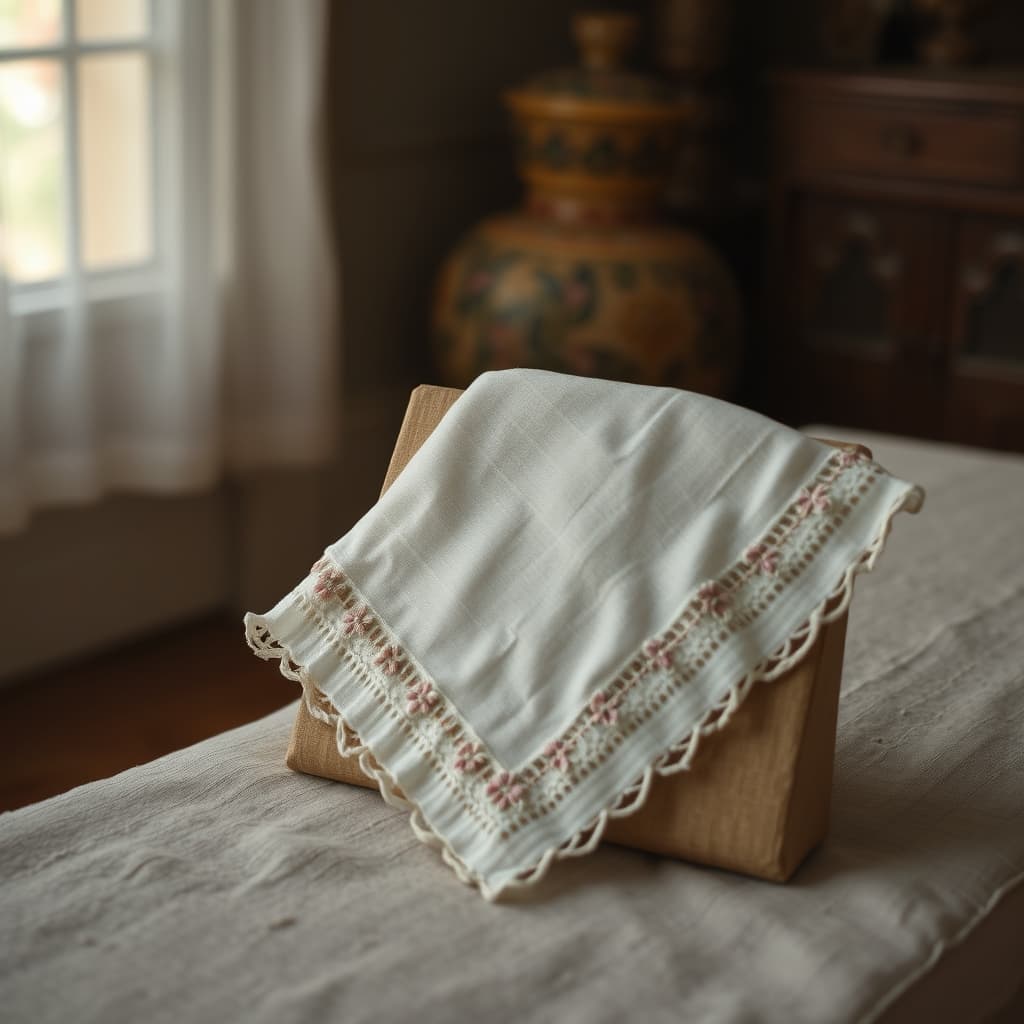
An embroidered handkerchief associated with a dowry room need not tell its story through a completed border. An unfinished corner, if present, offers a different encounter with the object. Part of the cloth carries work already done; another part retains the possibility of work that did not follow. The contrast makes waiting visible without explaining its cause.
That distinction is essential. A gap does not establish a broken engagement, a hurried departure or any other private event. Nor does it prove that the maker intended to continue. The handkerchief can invite attention to patience and skill while leaving the reason for its unfinished state unresolved.
The Finished Area Established a Rhythm
Repeated motifs or a line of stitches could give the completed portion a rhythm that the eye learns to follow. Where that sequence stops, the remaining cloth looks different. The interruption becomes noticeable because the existing work has established an expectation, not because the textile supplies a written explanation.
Different techniques can produce different kinds of stopping points. The name işlemeli mendil describes an embroidered handkerchief but does not identify every stitch, fibre or method used. Describing the visible arrangement first prevents the object from being assigned a process simply because it resembles another family textile.
A Pause Was Not a Failure of Skill
The work already present can demonstrate decisions about spacing, edge placement or the relationship between motif and cloth. An unfinished area does not cancel those decisions. It asks the viewer to distinguish the quality of the work from the fact that the whole design was not completed.
A family account may explain who worked on the handkerchief and whether several hands were involved. Without such evidence, the maker should not be invented. The familiar assumption that the future bride embroidered every item in a dowry can conceal other contributors or an object acquired rather than made within the household.
Waiting in the dowry room and waiting for another stitch are also different things. A finished piece could remain unused for years; a partly worked piece could be put aside for reasons unrelated to a marriage. The association with a dowry should therefore come from a supported account, not merely from the presence of a small decorated cloth in storage.
Later Hands Met an Earlier Stopping Point
A descendant encountering the handkerchief might want to complete the corner. That impulse can come from affection, but it changes the object from the state in which it was received. The wish to make it whole and the wish to preserve its unfinished evidence are not the same aim.
The gap can be recorded without repairing it or inventing a conclusion to the maker’s story. A view of the whole cloth and a closer view of the stopping point allow later observers to see the relationship. The unfinished area remains part of the object rather than a defect removed from its account.
There may also be uncertainty about whether the corner was ever meant to carry the same decoration. A deliberately restrained design and interrupted work can look similar at first glance. The honest description leaves that question open until stronger evidence becomes available.
The handkerchief’s patience is not a moral lesson imposed on an unknown maker. It lies in the visible accumulation of work, alongside the space where the expected continuation may be absent. In a dowry-room memory, that combination gives waiting a material form: stitches that remain, cloth still open and a future the object itself cannot confirm.