Eski Pano
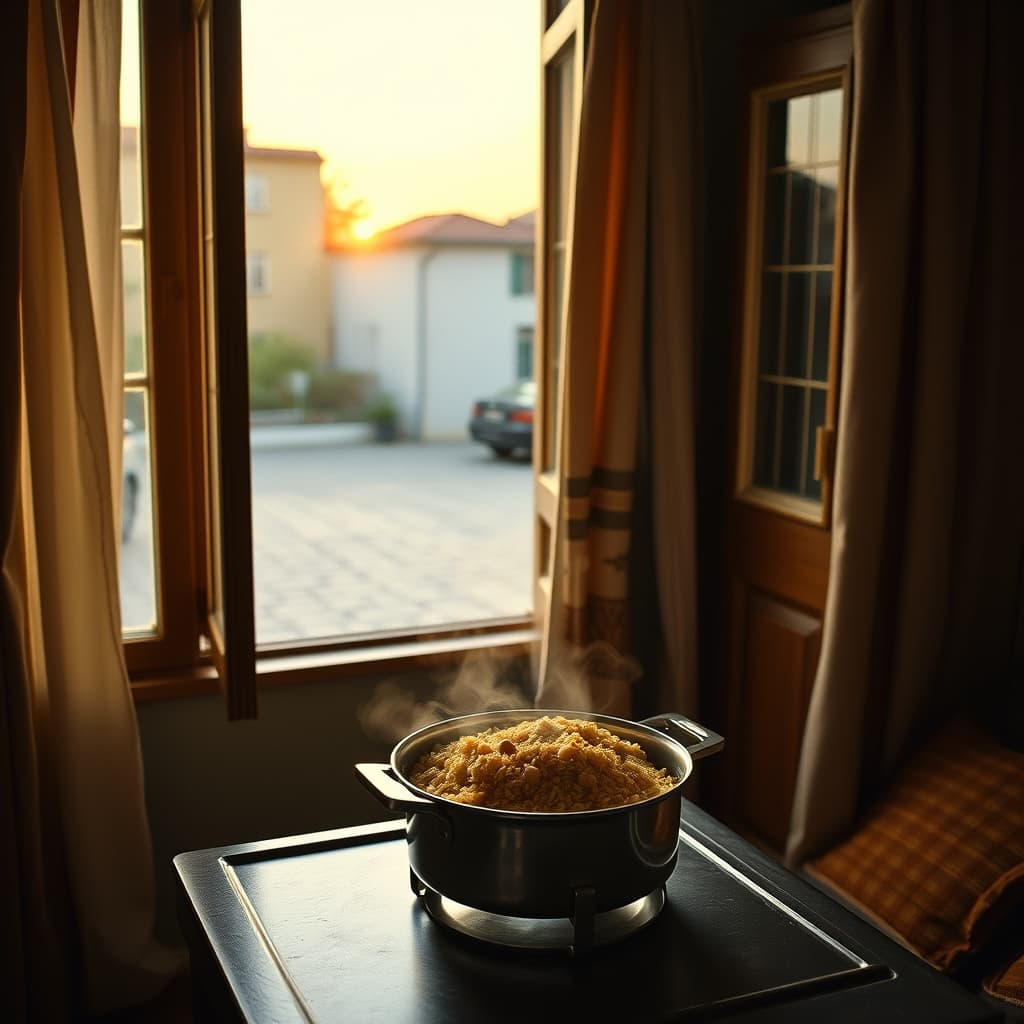
There was a time when the news of dinner was heard not in the kitchen, but in the street. Especially in summer, while the stone pavements retained the warmth of the day and windows stayed wide open, the smell of chickpea rice drifting from a side street became the first sign of a meal approaching home. Someone returning with an aluminum pot in hand spread that smell through the stairwell before even reaching the apartment, and from the doorframe it traveled into the sitting room, into the curtains, and into the appetite of children. The fact that street-bought chickpea rice could fill the whole house with one scent came not only from its strong steam, but from the more permeable domestic life of that era. The boundaries between home and street were not as thick as they are today, and the smell of food was one of the liveliest witnesses to that closeness.
From the perspective of taste memory, chickpea rice was more than a filling dish; it was one of the plain yet reassuring flavors of urban life. The loose grains of rice, the softness of the chickpeas, and the scent of black pepper or, in some homes, a little broth brought everyone at the table into the same mood the moment it arrived. It rarely required elaborate preparation, and precisely for that reason it fit easily into the rhythm of city living. The father returning late from work, the child just coming in from play, the mother taking yogurt from the kitchen, all were tied into the same evening by the steam of the rice. What arrived from the side street brought not only food, but the warm pulse of life outside. The cry of the vendor, the sound of a metal ladle striking the pot, and footsteps echoing on stone all reached the meal before it could be seen.
The reason this scent filled an entire house also had to do with old buildings and old habits of living. Windows remained open, doors half ajar, balconies stood close to one another, and stairwells were porous enough to carry sound and smell. As a result, steam rising from a dish did not stay in the kitchen, but spread lightly into every corner of the home. Someone leaving a notebook open in the children’s room or leaning on the balcony railing would both understand from the same smell that the rice from downstairs had arrived. The aroma functioned like an invitation that preceded the physical presence of the meal. On a silent summer evening stretching along the stone pavements, that invitation also recalled the neighborhood’s shared appetite. At the same hour, similar pots were being opened in other homes, bowls of yogurt were being set on tables, and the sound of spoons was preparing to begin.
What chickpea rice recalls today is not merely a taste, but the domestic closeness built by simple meals eaten together. Sometimes it was eaten by itself, sometimes with pickles, sometimes with ayran, sometimes with black pepper scattered over the top, but in any form it carried the feeling of a warm and familiar evening. For the entire house to fill with the same scent meant that the table had already begun to gather the family even before it was fully laid. That is why street-corner chickpea rice remains not only on the tongue, but in the walls of memory. Blending into a silent summer evening along the stone pavements, that smell reminds us that food once did more than satisfy hunger; it brought home and neighborhood together in a single breath.
When Street-Corner Chickpea Rice Reached the Table, Why Did the Whole House Fill with the Same Scent, Blending into a Silent Summer Evening Along the Stone Pavements?