Eski Pano
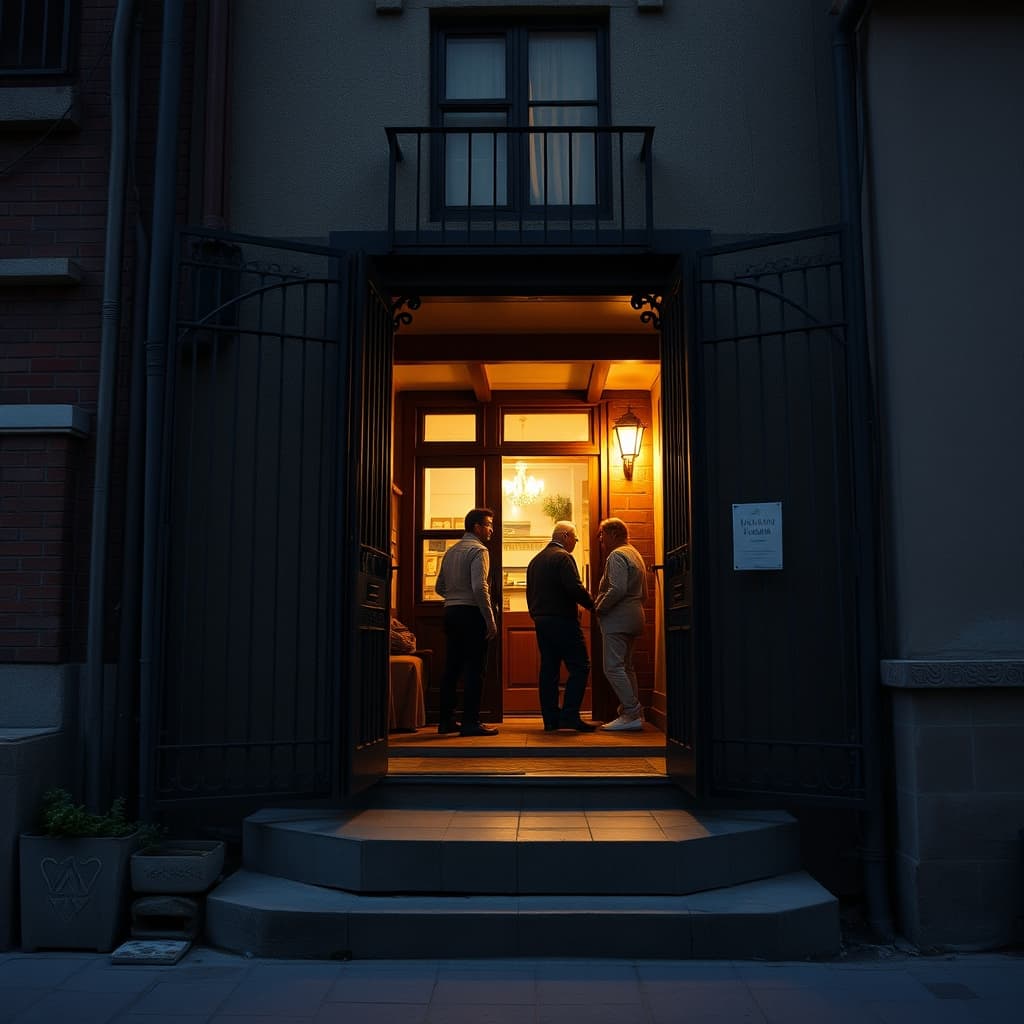
There was a time when apartment entrances were not spaces people simply passed through. Especially on summer evenings, as the heat of the day withdrew and doors stayed open longer, the entrance halls of buildings turned into one of the liveliest yet calmest scenes of old neighborhood life. A slight coolness settled over the stairwell, the dusty smell rising from the coal storage room clung to the walls, and the sounds of the street filtered in through the half-open iron gate. Children rushed inside between games to drink water, mothers paused on the threshold to catch their breath, and residents stopped here for a brief conversation before going upstairs. Part of the warmth of apartment entrances that smelled of coal came from exactly this: they were neither fully street nor fully home, but a shared breathing space belonging to the neighborhood.
From the standpoint of neighborhood culture, the apartment entrance was a small stage on which neighborliness became visible in daily form. The ring of the postman, the grocery boy leaving a parcel by the door, the child sitting on the step to tie a rubber shoe, the resident thinking of calling a repairman while holding a fan blade in hand, all crossed paths in that in-between zone. The smell of coal was one of the strongest details shaping its memory. Coal was the fuel of winter, yet even in summer, when it was unused, its scent remained there, carrying the previous season into warm evenings. In that way, the entrance hall became a place that held not only the moment, but traces of the entire year. Slightly mysterious to children, familiar to adults, cooling for the elderly, it preserved the common rhythm of older neighborhoods.
The warmth built in these entrances was not the result of luxury or polished design, but of repeated human contact. A chair pulled to the doorway for a few minutes, a building manager holding the dues notebook while speaking standing up, someone returning from the market and setting down bags on the landing to exchange two sentences with a neighbor, all of this turned the entrance into a social threshold. On summer evenings, street sounds influenced the interior while food smells from inside drifted outward. The scent of coal added another layer to this mixture, dense yet familiar. It carried something rarely found in the sterile lobbies of today: a sense of having been lived in. The walls may have been worn and the floor somewhat tired, but for that very reason the entrance could hold the warmth of neighborhood life.
The fact that apartment entrances remain in memory as one of the warmest scenes of old neighborhoods reminds us that neighborliness was built not through grand declarations, but through small encounters. People touched each other’s lives gently there. News of a funeral, an invitation to a wedding, a child’s school report, or the farewell of a young man leaving for military service was often first heard in this common space. That is why apartment entrances smelling of coal on summer evenings felt warm: people did not merely recognize one another there, they also carried the weight of daily life together. Those who remember that smell today are recalling not just a place, but the language of neighborliness that place made possible. The warmth belonged not to the walls, but to the small human closeness formed between them.
Why Were Apartment Entrances Smelling of Coal Storage on Summer Evenings the Warmest Scene of Old Neighborhoods?