Eski Pano
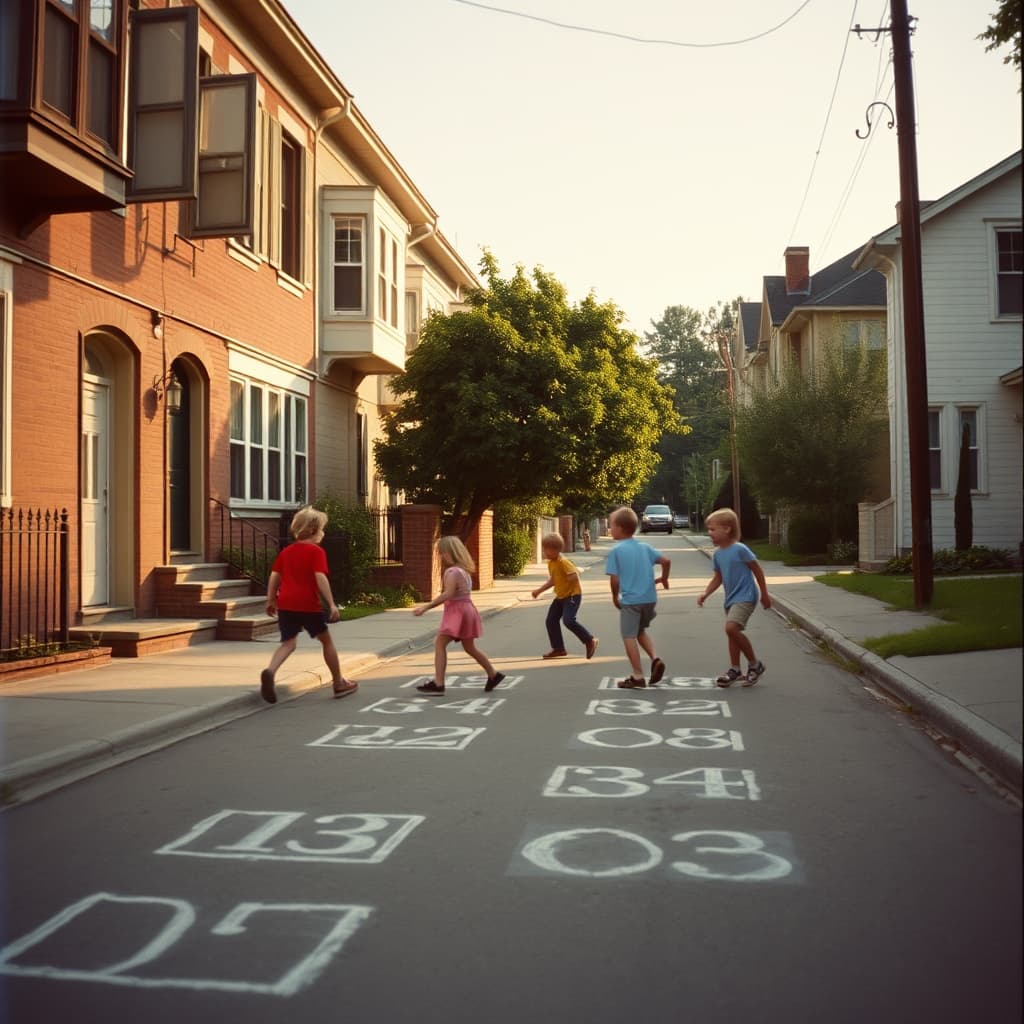
There was a time when the liveliest map of the neighborhood was drawn not on walls, but on the ground. Hopscotch squares traced in chalk across the pavement created a world that seemed temporary, yet remained valid throughout the day. As the sun climbed, the white lines faded a little, by afternoon someone’s foot redrew them into clarity, and by evening the sound of the whole neighborhood gathered around those few boxes. Children tossed a stone in turn and tried to keep their balance on one foot, and though the game looked small from the outside, it actually set the rhythm of the street. A mother calling from the window, an older brother returning from the grocer with bread, a woman seated at the doorway, all became part of the same daily scene around the pavement marked for hopscotch. Part of the warmth missing in today’s residential complexes disappeared along with that visible form of togetherness.
From the perspective of neighborhood culture, hopscotch was never only a children’s game. It signaled a way of living in which the street was shared and age differences did not divide people from one another. Children set up the game, yet they were not the only ones who belonged to the space. A passing neighbor would avoid stepping on the lines, someone about to pour water would first call out to the children, and an elderly person might watch the game from a window. The pavement existed not only for walking, but for encounter. The game created unwritten agreements that made the street feel safe and familiar. In such spaces, arranged by no formal authority, everyone took the presence of others into account, and the children’s game became part of the neighborhood’s shared time. For this reason, the hours spent with hopscotch carry much more than entertainment; they contain the daily rehearsal of neighborliness.
The reason that same warmth is not found in many of today’s residential sites is not architecture alone. More often, it lies in the way life has been divided. Closed play areas, security gates, and carefully planned common spaces certainly offer comfort, but they do not fully replace accidental encounters, greetings exchanged in passing, and the spontaneous mutual watchfulness that once existed. In the old street, children’s play and adult life touched each other visibly. The sound of a child playing hopscotch, the smell of tea brewing upstairs, and two sentences spoken outside the grocer all blended into the same evening. In many modern complexes, however, spaces are separated by age group, function, and schedule. Warmth was born where those divisions were fewer. A few chalk squares drawn on the pavement gave people the sense that no one in the neighborhood was entirely a stranger.
Looking back, it is no surprise that pavements marked with hopscotch remain warm in memory. What endured there was not only the game itself, but the life formed around it. A child knew someone would offer a hand after a fall, and adults could follow the flow of the day through the sounds of the neighborhood. Even if the chalk lines on the pavement were washed away by rain, they could be drawn again the next day. What lasted was the trust and closeness produced by that repetition. Perhaps that is exactly what feels absent in many residential complexes today: in place of regular but distant spaces, there used to be an imperfect yet shared daily life. Hopscotch squares on the pavement still warm us because they remain one of the simplest and clearest signs the old neighborhood left behind.
Why Is the Same Warmth Not Found in Today’s Residential Complexes as in the Hours Passed on Pavements Drawn with Hopscotch?